Old Maps of Winnebago County, Wisconsin for Genealogy
Trace your family roots with 111 historic maps of Winnebago County. These high-res maps reveal old neighborhoods, homesites, landmarks, and streets — helping you uncover where your ancestors lived and how the area evolved over time.
- Explore historic neighborhoods: Identify where your relatives may have lived in the 1800s or 1900s.
- Compare maps over time: Trace the changes in streets, buildings, and landmarks for multi-generational research.
- Perfect for genealogy & ancestry research: Used by family historians and researchers to map out lineage and migration.
These maps are an incredible resource for exploring your personal connection to Winnebago County's past.
Winnebago County, WI maps
(111)- 1910 Map of Fond du Lac
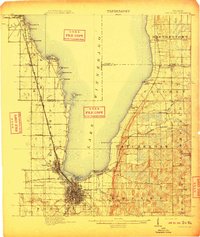 1910 Fond du Lac1910 Print · USGSThe southern shores of Lake Winnebago appear in high detail during this era of rapid railroad expansion and agricultural growth. Genealogists and local historians can trace early property locations near Rienzi Cemetery, Brothertown, and the busy rail yards of North Fond du Lac.2 unique versions available
 - 1911 Map of Neenah, 1949 Print
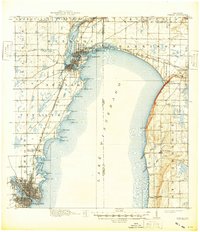 1911 Neenah1949 Print · USGSThe Fox River Valley was a thriving industrial and social corridor at the dawn of the twentieth century. Genealogists and historians can trace the early layouts of Neenah and Menasha or locate vanished landmarks like High Cliff PO and the Limeworks.
 - 1916 Map of Ripon
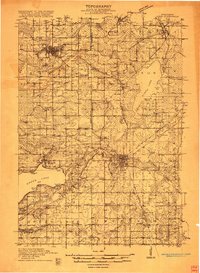 1916 Ripon1916 Print · USGSWisconsin’s Fox River Valley and the lakelands of Fond du Lac and Winnebago counties are captured here just before the close of the Great War. Genealogists can trace family roots through dozens of rural landmarks, from Center House to Fera School and the Eureka Lock.
 - 1918 Map of Ripon
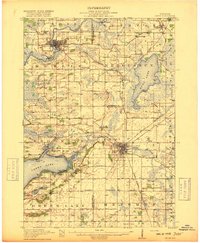 1918 Ripon1918 Print · USGSFond du Lac and Green Lake counties are shown here at the end of the Great War, when the rail lines still dictated the pace of commerce. Researchers can trace the early boundaries of Berlin and Ripon or locate rural landmarks like the Arcade School and Koro.
 - 1955 Map of Neenah, 1957 Print
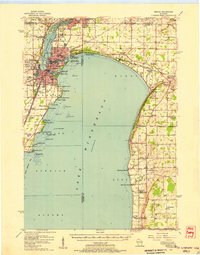 1955 Neenah1957 Print · USGSMid-century Wisconsin comes to life along the Fox River and Lake Winnebago as industrial towns like Neenah and Menasha expand. Genealogists and historians can trace old property lines near St Marys Cem or locate defunct landmarks like the Drive-in Theater and Clay Sch.3 unique versions available
 - 1955 Map of Neenah, 1957 Print
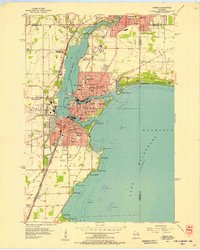 1955 Neenah1957 Print · USGSMid-century Neenah and Menasha show a bustling river-and-rail corridor at the mouth of Lake Winnebago. Genealogists and historians can trace neighborhood growth near Doty Island, locate family sites at Oak Hill Cem, or find recreation spots like Waverly Beach.3 unique versions available
 - 1955 Map of Fond Du Lac, 1957 Print
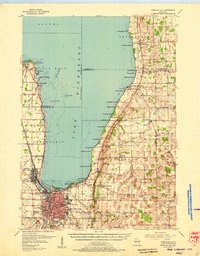 1955 Fond Du Lac1957 Print · USGSMid-century Fond du Lac County unfolds along the eastern shore of Lake Winnebago, where bustling city streets meet a coastline dotted with summer beaches and seaplane bases. Genealogists can trace family roots through Rienzi Cem, local parish schools like St Pauls Sch, and rural hamlets such as Taycheedah and Pipe.2 unique versions available
 - 1955 Map of Green Bay, 1968 Print
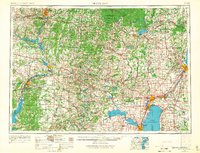 1955 Green Bay1968 Print · USGSCentral and Eastern Wisconsin are captured here in the mid-fifties, showing the industrial growth of the Fox Valley and Wisconsin River corridors. Genealogists and historians can trace rail lines like the Green Bay and Western through settlements like Weyauwega, Clintonville, and Pulaski.2 unique versions available
 - 1956 Map of Ripon, 1957 Print
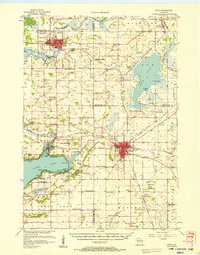 1956 Ripon1957 Print · USGSRipon and the surrounding Wisconsin lakelands are shown in the mid-fifties as the region's rail and agricultural patterns remained firmly intact. Researchers can locate numerous rural schoolhouses like Prairie Lawn Sch and trace the legacy of Ripon College or the historic settlement of Sacramento.
 - 1956 Map of Rosendale, 1957 Print
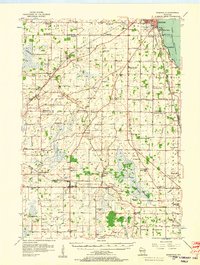 1956 Rosendale1957 Print · USGSWisconsin's farm country meets the shores of Lake Winnebago in the mid-fifties, just as the rural schoolhouse era was fading. Researchers can trace dozens of local landmarks like Paukotuk, Woodhull (Station), and several abandoned sites like Knott Sch.2 unique versions available
 - 1957 Map of Madison, 1967 Print
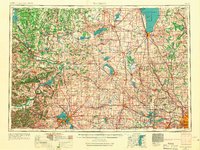 1957 Madison1967 Print · USGSSouth-central Wisconsin in the mid-fifties reveals a landscape of industrial hubs and glacial lakes linked by a dense rail and highway network. Genealogists and historians can trace the development of lakeside communities and find notable sites like Badger Ordnance Works and the Horicon National Wildlife Refuge.3 unique versions available
 - 1960 Map of Madison
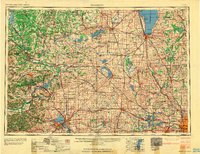 1960 Madison1960 Print · USGSCentral and Southern Wisconsin are captured in the late fifties, showing the region as its rail-and-river network matured. Trace the paths of the Soo Line RR or locate family roots near Lake Mendota and Horicon National Wildlife Refuge.2 unique versions available
 - 1961 Map of Oshkosh, 1962 Print
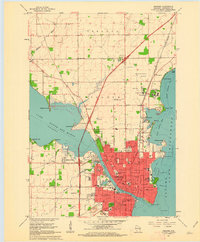 1961 Oshkosh1962 Print · USGSOshkosh and the Fox River waterfront are captured in detail during the early sixties, showing the city's transition from a rail-heavy industrial hub to a regional educational center. Genealogists can locate family sites near Riverside Cemetery, Wisconsin State College, or the Sunny View Sanatorium.2 unique versions available
 - 1961 Map of Poy Sippi, 1963 Print
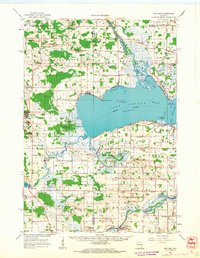 1961 Poy Sippi1963 Print · USGSThe Lake Poygan region of Wisconsin comes alive in this early 1960s survey, showing the intricate river-and-marsh economy before modern expansion. Researchers can trace family sites at Fountain Valley Sch & Ch, the Welsh Cem, or follow the banks of the Poy Sippi River through historic lakefront settlements like Tustin.2 unique versions available
 - 1961 Map of Oshkosh, 1963 Print
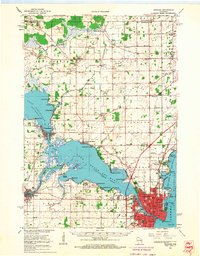 1961 Oshkosh1963 Print · USGSThe Fox River Valley in the early sixties showcases the expansion of Oshkosh and its lakefront settlements. Genealogists and historians can trace family roots through local sites like Calvary Cem, St Peters Cem, and the Winnebago State Hospital grounds.2 unique versions available
 - 1961 Map of Lake Poygan, 1966 Print
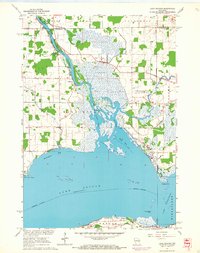 1961 Lake Poygan1966 Print · USGSWinnebago County river life is centered on the Wolf River delta during the early sixties. Genealogists can trace family roots through numerous country landmarks including St Pauls Cem, Becker Cem, and the village of Zittau.2 unique versions available
 - 1961 Map of Oshkosh NE, 1966 Print
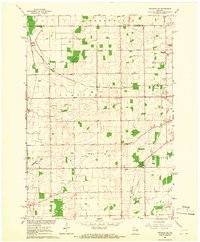 1961 Oshkosh NE1966 Print · USGSWinnebago County farm country and rail junctions are captured here in the early sixties. Researchers can trace the tracks of the Soo Line through Medina Junction and find local landmarks like Immanuel Ch, Clayton Cem, and Gillingham Sch.3 unique versions available
 - 1961 Map of Auroraville, 1966 Print
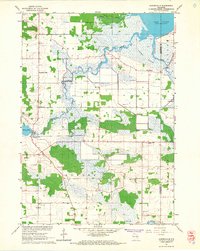 1961 Auroraville1966 Print · USGSWisconsin's wetlands and rural townships are captured here in the early sixties as the landscape transitioned between traditional farming and specialized bog cultivation. Trace family roots at the Welsh Cem or locate old community hubs like Fountain Valley and Auroraville.2 unique versions available
 - 1961 Map of Oshkosh NW, 1966 Print
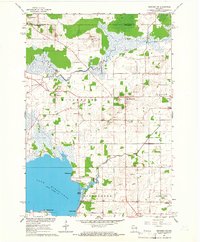 1961 Oshkosh NW1966 Print · USGSWinnebago County in the early sixties shows a landscape of river marshes and small farming hamlets centered around Winchester and Larsen. Genealogists and local historians can locate early family burials at Royer Cem and Bell Cem or trace the rural school districts at Mathison Sch.2 unique versions available
 - 1961 Map of Eureka, 1966 Print
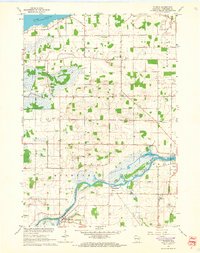 1961 Eureka1966 Print · USGSWinnebago County townships like Poygan and Rushford are captured in the early sixties as a network of river-side farms and rural schools. Researchers can trace family roots through several local landmarks like Oak Hill Cem and Liberty Sch.2 unique versions available
 - 1961 Map of Omro, 1966 Print
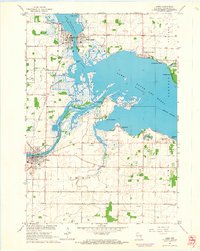 1961 Omro1966 Print · USGSThe confluence of the Wolf and Fox Rivers defines this corner of Wisconsin in the early sixties. Genealogists and historians can trace lakeside settlements like Rivermoor or find rural landmarks such as Pingry Sch and the Omro Union Cem.2 unique versions available
 - 1961 Map of Poy Sippi, 1968 Print
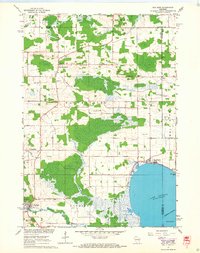 1961 Poy Sippi1968 Print · USGSThe marshlands and crossroads of Waushara County are captured here in the early 1960s as they meet the shores of Lake Poygan. Researchers can locate historic rural centers like Poy Sippi and Tustin, alongside parish sites like Emmaus Ch and St Johns Sch.2 unique versions available
 - 1974 Map of Fahrney Point, 1978 Print
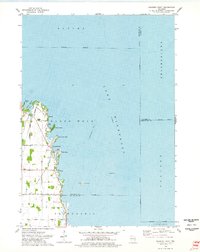 1974 Fahrney Point1978 Print · USGSThe western shores of Lake Winnebago are captured here in the mid-1970s, showing a mix of established lakeside retreats and expanding rural road networks. Trace the development of waterfront communities like Point Comfort and Decorah Beach or locate family-named landmarks such as Oaklawn Cem and the Jesuit Retreat.
 - 1974 Map of Indian Point, 1978 Print
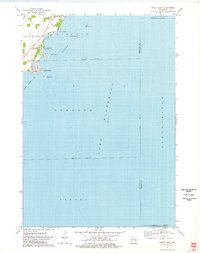 1974 Indian Point1978 Print · USGSThe western shores of Lake Winnebago are captured here in the mid-seventies, showing the intersection of lakeside life and residential growth. Genealogists and local historians can trace shoreline developments at Osh-O-Nee Shores, Paynes Point, and Island Park.
 - 1980 Map of Fond Du Lac
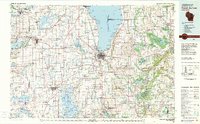 1980 Fond Du Lac1980 Print · USGSThe Fox River Valley and Horicon Marsh meet here during the late twentieth century, showing a transition from lakeside industry to glacial conservation. Genealogists can locate family sites at Estabrook Cem or trace the rail lines through Ripon and Waupun.
Showing maps 1-25 of 111
Top cities of Winnebago County
- Oshkosh historical maps
- Neenah historical maps
- Fox Crossing historical maps
- Omro historical maps
- Black Wolf historical maps
- Winneconne historical maps
See more
Frequently asked questions
- What are the different types of historical maps available for Winnebago County?
- What is the oldest map of Winnebago County?
- Where can I purchase historical maps of Winnebago County for my home or office?
- Where can I download high-res historical maps of Winnebago County?
- Are there historical topographic maps available for Winnebago County?
- Is there historical aerial imagery available for Winnebago County?
- Where are historical maps of Winnebago County sourced from?