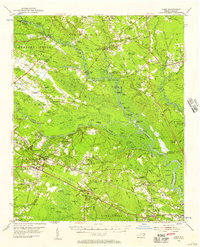
1954 Map of Acme
USGS Topo · Published 1957About this map
Moores Creek National Park and the winding Black River anchor this mid-century survey of the North Carolina coastal plain. The landscape is defined by its complex hydrology, where the Cape Fear River and Brunswick River converge near industrial and transit points like Acme and Navassa. An unusual geological feature of this region is the presence of elliptical bay outlines, noted here as short dashed blue lines on the original sheet, including Rattlesnake Bay and Staged Pine Bay. These depressions, alongside the expansive Buckhorn Savanna, illustrate a unique topographical pattern of wetlands and low-lying pines.
Find a feature on this map
164 named features on this map. Tap any name to fly to it.
Don’t see what you’re looking for? This feature index may not catch every label — zoom into the map to look around manually.
Map Details
Editions of this 1954 Acme Map
2 editions found
Other maps of this area
1942 · Burgaw
USGS Topo · 1:62,500
1942 · Wilmington
USGS Topo · 1:62,500
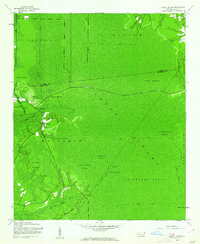
1943 · Honey Island
USGS Topo · 1:24,000
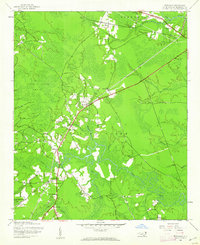
1943 · Winnabow
USGS Topo · 1:24,000
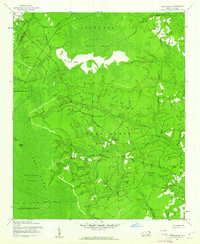
1943 · Lewis Swamp
USGS Topo · 1:24,000
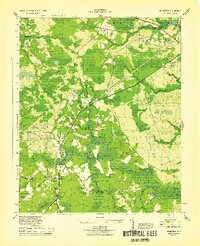
1944 · Winnabow
USGS Topo · 1:31,680
1944 · Lewis Swamp
USGS Topo · 1:31,680
1947 · Rocky Point
USGS Topo · 1:62,500
1948 · Wilmington
USGS Topo · 1:62,500
1950 · Winnabow
USGS Topo · 1:25,000