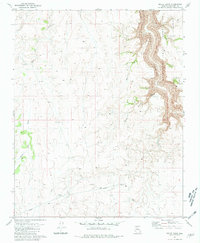
1981 Map of Baldy Basin
USGS Topo · Published 1981About this map
Cataract Canyon dominates the eastern edge of this high-plateau landscape, where the steep canyon walls mark a sharp boundary for the Havasupai Indian Reservation. This 1981 survey reveals a remote pastoral environment dependent on managed water resources in an arid climate. An Aqueduct system and several numbered water catchments, including Tank No 13 (Water) and Tank No 13 1/2 (Water), suggest a landscape organized for ranching or range management. The terrain transitions from the broad flats of Baldy Basin to the drainage of Black Tank Wash, with Sunnella Spring serving as a rare natural water source tucked near the canyon rim. The presence of these specific tanks and survey markers provides a clear view of how land was partitioned and utilized during the late twentieth century in Coconino County.
Find a feature on this map
10 named features on this map. Tap any name to fly to it.
Don’t see what you’re looking for? This feature index may not catch every label — zoom into the map to look around manually.
Map Details
Editions of this 1981 Baldy Basin Map
This is the sole edition of this map. No revisions or reprints were ever made.
Other maps of this area
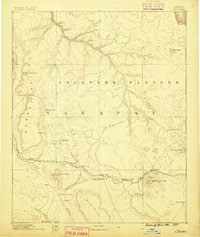
1886 · Chino
USGS Topo · 1:250,000
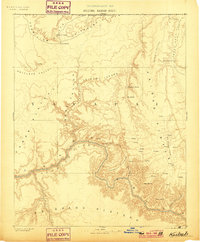
1886 · Kaibab
USGS Topo · 1:250,000
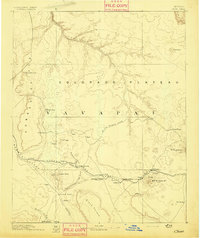
1891 · Chino
USGS Topo · 1:250,000
1948 · Williams
USGS Topo · 1:250,000
1953 · Grand Canyon
USGS Topo · 1:250,000
1954 · Williams
USGS Topo · 1:250,000
1956 · Williams
USGS Topo · 1:250,000
1957 · Grand Canyon
USGS Topo · 1:250,000
1958 · Grand Canyon
USGS Topo · 1:250,000
1960 · Williams
USGS Topo · 1:250,000