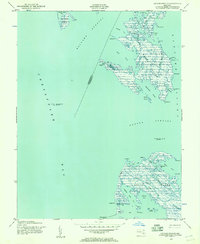
1942 Map of Kedges Straits
USGS Topo · Published 1957About this map
The maritime landscape of the lower Chesapeake Bay is defined here by the shifting marshlands and vital navigational aids that guided Maryland watermen during the early 1940s. Centered on South Marsh Island and the northern reaches of Smith Island, the map reveals an intricate network of tidal guts and ridges, such as Noah Ridge and Joes Ridge Creek, which dictated the movement of local fishing and crabbing fleets. This period precedes significant coastal erosion, showing a larger landmass at Holland Island than remains today.
Find a feature on this map
58 named features on this map. Tap any name to fly to it.
Don’t see what you’re looking for? This feature index may not catch every label — zoom into the map to look around manually.
Map Details
Editions of this 1942 Kedges Straits Map
This is the sole edition of this map. No revisions or reprints were ever made.
Other maps of this area
1898 · St. Marys
USGS Topo · 1:125,000
1903 · Crisfield
USGS Topo · 1:62,500
1903 · Bloodsworth Island
USGS Topo · 1:62,500
1903 · Deal Island
USGS Topo · 1:62,500
1906 · St. Marys
USGS Topo · 1:125,000
1917 · Ewell
USGS Topo · 1:62,500
1920 · Crisfield
USGS Topo · 1:62,500
1942 · Terrapin Sand Point
USGS Topo · 1:24,000
1942 · Ewell
USGS Topo · 1:24,000
1942 · Bloodsworth Island
USGS Topo · 1:24,000