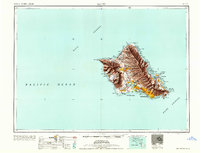
1961 Map of Oahu
USGS Topo · Published 1961About this map
Military installations and civil infrastructure dominate the landscape of Oahu in this mid-century survey. The footprint of Pearl Harbor is clearly defined by its distinct lochs, flanked by Hickam Air Force Base and the Honolulu International Airport. Further inland, the massive Schofield Barracks Military Reservation and the Lualualei Naval Ammunition Depot underscore the island's strategic importance during the Cold War era.
Find a feature on this map
89 named features on this map. Tap any name to fly to it.
Don’t see what you’re looking for? This feature index may not catch every label — zoom into the map to look around manually.
Map Details
Editions of this 1961 Oahu Map
This is the sole edition of this map. No revisions or reprints were ever made.
Other maps of this area
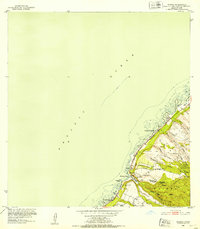
1952 · Waimea
USGS Topo · 1:24,000
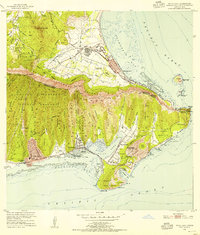
1952 · Koko Head
USGS Topo · 1:24,000
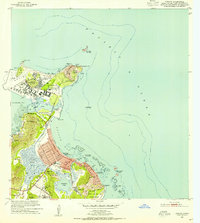
1952 · Mokapu
USGS Topo · 1:24,000
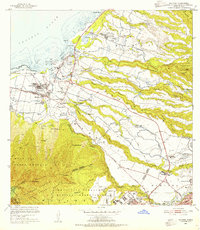
1953 · Haleiwa
USGS Topo · 1:24,000
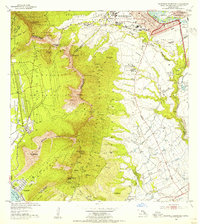
1953 · Schofield Barracks
USGS Topo · 1:24,000
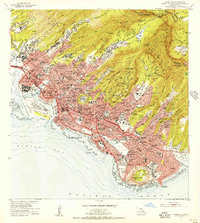
1953 · Honolulu
USGS Topo · 1:24,000
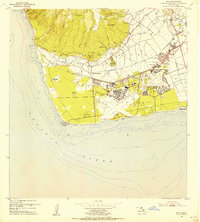
1953 · Ewa
USGS Topo · 1:24,000
1953 · Puuloa
USGS Topo · 1:24,000
1953 · Hauula
USGS Topo · 1:24,000
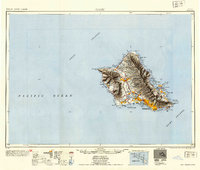
1954 · Oahu
USGS Topo · 1:250,000