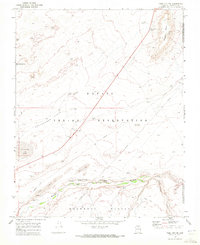
1969 Map of Tuba City NE
USGS Topo · Published 1972About this map
Juanita Begay Spring and Leechee Da Si Kaid Spring represent the vital water sources tucked into the base of the Moenkopi Plateau during the late 1960s. This portion of the Navajo Indian Reservation is defined by a landscape of shifting Sand Dunes and traditional land use, marked by features such as Shonto Well and scattered corrals. The topography descends from the heights of Middle Mesa down to the winding course of Moenkopi Wash, where the terrain transitions into the striking depths of Coal Mine Canyon. Human presence is sparse but deliberate, centered around natural springs and the infrastructure of a pipeline that traverses the northern reaches. The area around Greasewood Place and Greasewood Lake illustrates the delicate balance of life in this arid Coconino County region before modern development altered the remote character of the plateau.
Find a feature on this map
23 named features on this map. Tap any name to fly to it.
Don’t see what you’re looking for? This feature index may not catch every label — zoom into the map to look around manually.
Map Details
Editions of this 1969 Tuba City NE Map
This is the sole edition of this map. No revisions or reprints were ever made.
Other maps of this area
1883 · Marsh Pass
USGS Topo · 1:250,000
1886 · Echo Cliffs
USGS Topo · 1:250,000
1891 · Echo Cliffs
USGS Topo · 1:250,000
1892 · Marsh Pass
USGS Topo · 1:250,000
1956 · Marble Canyon
USGS Topo · 1:250,000
1959 · Marble Canyon
USGS Topo · 1:250,000
1961 · Marble Canyon
USGS Topo · 1:250,000
1967 · Bat Canyon
USGS Topo · 1:24,000
1967 · Begashibito Canyon
USGS Topo · 1:24,000
1969 · Tuba City SE
USGS Topo · 1:24,000