1900s (20th Century) Maps of Perdido Beach, Alabama
Explore 16 historic maps of Perdido Beach from the 1900s (20th Century). These maps offer a rare glimpse into what life looked like during the 1900s — showing old roads, neighborhoods, homes, and landmarks that have changed or disappeared over time.
Whether you're researching your family's past, planning a metal detecting trip, or studying how Perdido Beach's landscape evolved across the 1900s, these high-resolution maps are a powerful tool for exploring the history of this region.
- Focus on a specific era: All maps on this page are from the 1900s, giving you a focused view of this time period.
- See what’s changed: Compare century-old streets, trails, and buildings to today's modern landscape using overlays and satellite layers.
- Research with precision: Use these maps for genealogy, historical research, land use analysis, or educational projects.
- View, download, or print: Maps are fully viewable online in high resolution, and can be downloaded or printed for your own records.
Start exploring Perdido Beach's history through authentic maps from the 1900s. This is your window into the past.
Perdido Beach, AL maps
(16)- 1921 Map of Bon Secour
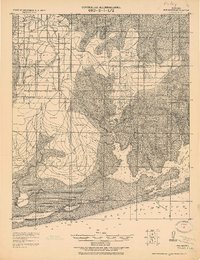 1921 Bon Secour1921 Print · USGSThe Alabama coast is captured here in the early twentieth century, showing a landscape of rail-connected towns and untouched shorelines. Researchers can trace early infrastructure like the Ft. Morgan and Summerdale RR and find quiet coastal outposts like Josephine P.O. and Bon Secour.2 unique versions available
 - 1921 Map of Fort Barrancas
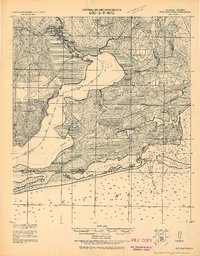 1921 Fort Barrancas1921 Print · USGSThe Florida-Alabama coast at the start of the 1920s reveals a landscape defined by naval history and maritime industry. Researchers can trace the military layout of Ft. Barrancas, locate Pensacola Light, and find vanished streets in Woolsey.
 - 1941 Map of Fort Barrancas
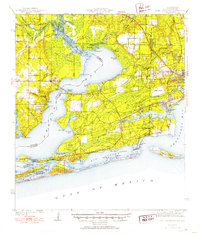 1941 Fort Barrancas1941 Print · USGSCoastal Florida and Alabama meet at the Perdido River during the early 1940s, showing a landscape of bayous, naval aviation, and growing bayside towns. Genealogists and historians can trace old homesteads near Millview, Fort Barrancas, and schools like Oakfield Sch.3 unique versions available
 - 1941 Map of Foley, 1964 Print
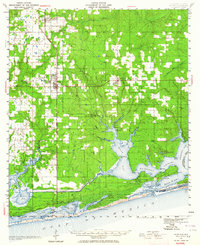 1941 Foley1964 Print · USGSCoastal Baldwin County in the early 1940s shows the working landscape of the Gulf before the era of major development. Researchers can trace the Louisville and Nashville Railroad line, find local landmarks like Stone Quarry Bayou, and locate early community sites such as Miflin Sch.3 unique versions available
 - 1943 Map of Fort Barrancas
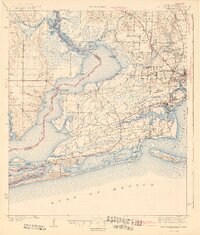 1943 Fort Barrancas1943 Print · USGSThe Florida-Alabama borderlands at Perdido Bay come alive in the early 1940s, showing a landscape of coastal swamps and growing Pensacola suburbs. Researchers can trace the grounds of Fort Barrancas, locate Oakfield Sch, or find family roots near Millview and Seminole.2 unique versions available
 - 1943 Map of Foley
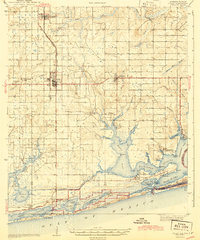 1943 Foley1943 Print · USGSCoastal Baldwin County in the early 1940s shows a landscape of rail-end farming hubs and quiet bayou settlements before the rise of modern tourism. Genealogists and historians can trace local family roots through sites like Summerdale Cem, the Little Rock School, and the fishing village of Bon Secour.2 unique versions available
 - 1944 Map of Miflin
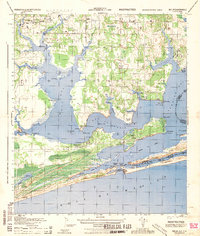 1944 Miflin1944 Print · USGSCoastal Alabama and the Florida borderlands are captured here during the mid-forties, showing the quiet maritime life of the Gulf shore. Researchers can trace family-named points and old settlements like Josephine, Perdido Beach, and the Josephine School.
 - 1944 Map of Perdido Bay South
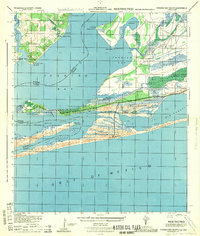 1944 Perdido Bay South1944 Print · USGSThe Florida-Alabama borderlands at Perdido Bay were a complex of waterways and barrier islands during the 1940s. Genealogists and maritime historians can trace old coastal landmarks like the Pontoon Swing Bridge, Perdido Beach, and the Old River.
 - 1957 Map of Pensacola, 1967 Print
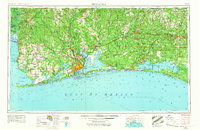 1957 Pensacola1967 Print · USGSThe Florida Panhandle and Alabama coast are seen here at the height of the Cold War, showcasing a unique mix of military aviation and emerging beach tourism. Genealogists and local historians can trace legacy sites like Old Corry Field, the lumber town of Bagdad, and the coastal reaches of Santa Rosa Island.3 unique versions available
 - 1959 Map of Pensacola
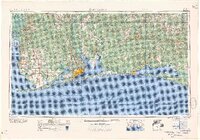 1959 Pensacola1959 Print · USGSThe Florida Panhandle and Alabama coast come alive in this late fifties survey of military aviation and maritime life. Genealogists can trace family roots in Bagdad, Loxley, and Milton while mapping the rails of the Louisville and Nashville.
 - 1960 Map of Pensacola
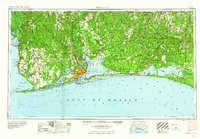 1960 Pensacola1960 Print · USGSThe Florida Panhandle and Alabama's eastern shore are shown during a period of rapid military and coastal growth. Genealogists and historians can trace the mid-century footprints of Warrington, the Pensacola NAS (Chevalier), and the Blackwater River timber lands.
 - 1970 Map of Perdido Bay, 1971 Print
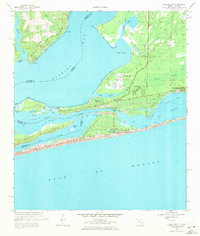 1970 Perdido Bay1971 Print · USGSPerdido Bay and the surrounding coastal reaches of Florida and Alabama are shown here during the early seventies. Researchers can trace the development of beachside communities like Seaglades and Gulf Beach or locate early marinas such as Holiday Harbor Marina.4 unique versions available
 - 1978 Map of Pensacola, 1980 Print
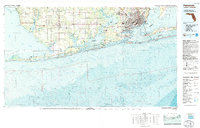 1978 Pensacola1980 Print · USGSThe Gulf Coast at the end of the 1970s reveals a landscape shaped by maritime industry and a heavy naval presence. Researchers can trace the development of Pensacola alongside quiet coastal hamlets like Magnolia Springs and the historic Fort Pickens State Park.3 unique versions available
 - 1980 Map of Orange Beach
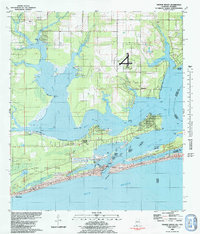 1980 Orange Beach1980 Print · USGSCoastal Alabama was entering a new era of development in the late seventies, centered on the waterways of Baldwin County. Local historians can trace the early layouts of Orange Beach, the residential expansion on Ono Island, and landmarks like Lay Cem or the U S Naval Res Wolf Field.2 unique versions available
 - 1994 Map of Perdido Bay
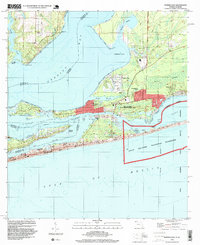 1994 Perdido Bay1994 Print · USGSCoastal Florida and Alabama meet at Perdido Bay in the mid-nineties, showing a landscape of growing beach communities and protected seashores. Trace local landmarks like the Holiday Harbor Marina, the residential blocks of Gulf Beach, and the wild expanses of Rabbit Island.
 - 1994 Map of Orange Beach, 1998 Print
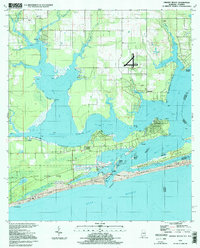 1994 Orange Beach1998 Print · USGSThe Alabama coast in the mid-nineties shows the intricate meeting of bayou and beach before modern development peaked. Researchers can trace the legacy of coastal settlements like Josephine, locate the Lay Cem, and explore the 1994 layout of Gulf State Park.
End of results
Showing maps 1-16 of 16
Top cities near Perdido Beach
- Foley historical maps
- Gulf Shores historical maps
- Orange Beach historical maps
- Robertsdale historical maps
- Elberta historical maps
- Summerdale historical maps
See more
Frequently asked questions
- What are the different types of historical maps available for Perdido Beach?
- What is the oldest map of Perdido Beach?
- Where can I purchase historical maps of Perdido Beach for my home or office?
- Where can I download high-res historical maps of Perdido Beach?
- Are there historical topographic maps available for Perdido Beach?
- Is there historical aerial imagery available for Perdido Beach?
- Where are historical maps of Perdido Beach sourced from?