Old Maps of Spanish Fort, Alabama for Academic Research
Study the evolution of Spanish Fort with 51 high-resolution historic maps. Whether you're teaching, researching, or modeling changes in land use, these maps provide essential visual documentation of urban, environmental, and geographic change.
- Analyze long-term change: Track patterns in development, transportation, and natural features.
- Ideal for environmental or urban studies: Support academic projects with primary historical map data.
- Use in the classroom or lab: Educators and researchers rely on these maps to bring historical context to life.
These maps are a powerful tool for teaching, research, and visualizing how Spanish Fort has changed over the decades.
Spanish Fort, AL maps
(51)- 1921 Map of Fairhope
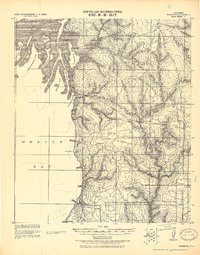 1921 Fairhope1921 Print · USGSThe eastern shore of Mobile Bay comes alive in the early twentieth century as coastal colonies and timber towns expand. Trace the early streets of Fairhope and Daphne or follow the New Orleans Mobile and Pensacola R. R. through Loxley.
 - 1922 Map of Mobile
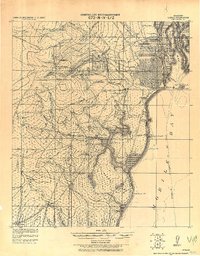 1922 Mobile1922 Print · USGSMobile and its coastal defenses are revealed in the early twentieth century as the city's rail and maritime networks expanded toward the bay. Genealogists and historians can trace family-named routes and vanished stations like Mertz Sta., Knobloch's Wharf., and Spring Hill College.
 - 1940 Map of Mobile
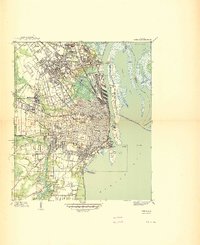 1940 Mobile1940 Print · USGSMobile at the brink of the 1940s reveals a thriving Gulf Coast port where urban industry meets the tidal marshlands. Genealogists and historians can trace the early layout of Prichard, identify long-standing institutions like the Visitation Convent, or locate coastal landmarks such as the Quarantine Sta and Monroe Park Armory.3 unique versions available
 - 1940 Map of Mobile, 1955 Print
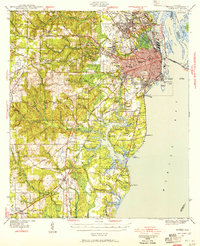 1940 Mobile1955 Print · USGSMobile and its surrounding bayou country appear here just before the mid-century, from the busy State Docks to the quiet reaches of Hollingers Island. Genealogists can locate family landmarks like St Marys Ch, Magnolia Cemetery, and several old rural schools.5 unique versions available
 - 1941 Map of Blakeley
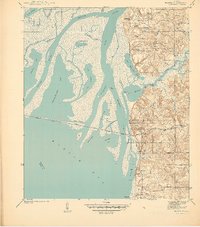 1941 Blakeley1941 Print · USGSThe Baldwin County shoreline and Tensaw delta are captured here just before the Second World War. Researchers can locate Civil War Trenches, Kings Battery, and family landmarks like Blakeley Cem and the settlement of Bridgehead.
 - 1941 Map of Bay Minette, 1955 Print
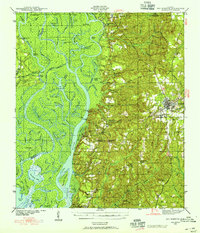 1941 Bay Minette1955 Print · USGSCoastal Alabama at the start of the 1940s is defined here by the complex river delta and the timber-rich uplands of Baldwin County. Genealogists and historians can trace old community centers like Whitehouse Forks, schools such as Stockton Sch, and the path of the Louisville and Nashville RR.2 unique versions available
 - 1941 Map of Fairhope, 1965 Print
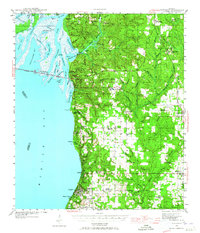 1941 Fairhope1965 Print · USGSEastern Baldwin County and the Mobile Bay shore come alive in the early 1940s, when coastal villages were connected by the Old Spanish Trail. Researchers can locate Civil War Trenches, family sites like Johns Log Cabin, and community centers like the Bohemian Hall.
 - 1942 Map of Blakeley
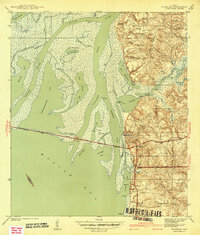 1942 Blakeley1942 Print · USGSThe Baldwin County shoreline and Mobile Bay delta appear here just before the mid-century boom, showing the intersection of military history and early coastal transit. Researchers can trace Civil War Trenches near Blakeley or locate old settlements like Park City and Bridgehead.2 unique versions available
 - 1943 Map of Mobile
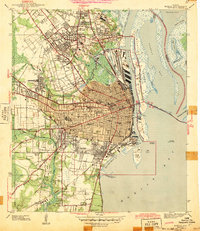 1943 Mobile1943 Print · USGSMobile and its bustling harbor at the height of the Second World War reveal a portrait of Alabama's port city before modern sprawl. Researchers can trace the layout of the State Docks, identify old neighborhood schools like Leinkauf Sch, or locate the historic grounds of Magnolia Cemetery.2 unique versions available
 - 1943 Map of Bay Minette
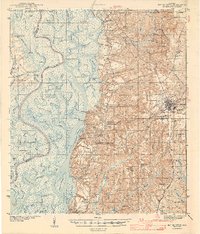 1943 Bay Minette1943 Print · USGSCoastal Alabama settlements and river landings appear in detail during the early 1940s. Researchers can trace the Louisville and Nashville rail lines through Bay Minette and locate family landmarks like Douglasville Cem and Magnolia Ch.2 unique versions available
 - 1943 Map of Blakeley
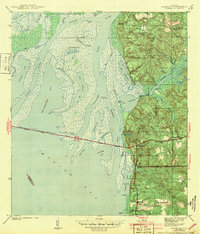 1943 Blakeley1943 Print · USGSUpper Mobile Bay and the Tensaw Delta are shown in the 1940s as a landscape of military ruins and early highway infrastructure. Researchers can trace the Old Spanish Trail through the marshes and locate historical sites like the Civil War Trenches and Blakeley Cem.2 unique versions available
 - 1943 Map of Fairhope
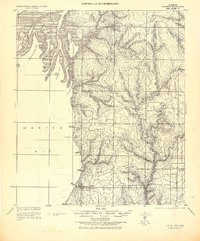 1943 Fairhope1943 Print · USGSCoastal Baldwin County's eastern shore and interior come into focus in the early 1940s, showing the early infrastructure of the Mobile Bay region. Researchers can trace the development of bayside towns like Fairhope and Daphne alongside the L. & N. R. R. rail corridor through Silverhill.
 - 1944 Map of Mobile
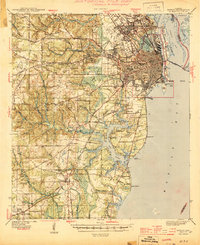 1944 Mobile1944 Print · USGSMobile and its surrounding coastal reaches are captured here during the height of the 1940s. Researchers can trace the city's growth from the dense urban grid out to Spring Hill, locating landmarks like Magnolia Cemetery and the Bankhead Tunnel.4 unique versions available
 - 1944 Map of Stapleton
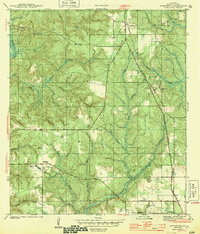 1944 Stapleton1944 Print · USGSCoastal Alabama settlements and the Greek colony of Malbis are preserved here just before mid-century. Genealogists can trace family names at Durant Cem and Sibley Cem, or locate landmarks like the New Home Sch and Malbis Fire Tower.2 unique versions available
 - 1944 Map of Fairhope
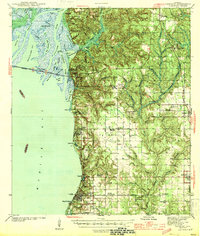 1944 Fairhope1944 Print · USGSThe Eastern Shore of Mobile Bay is captured in the mid-1940s, showing the early development of coastal towns and the rural interior. Researchers can trace land use through sites like the Gulf Coast Experiment Station, Bohemian Hall, and Civil War Trenches.3 unique versions available
 - 1953 Map of Bridgehead, 1954 Print
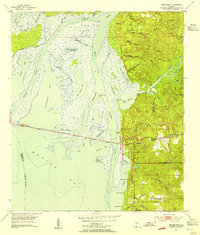 1953 Bridgehead1954 Print · USGSThe eastern shore of Mobile Bay appears in the early fifties as a landscape of tidal marshes and strategic bluffs. Genealogists and historians can locate Civil War Trenches near Fort McDermott and trace family roots at Blakeley Cem or D'Olive Cem.6 unique versions available
 - 1953 Map of Stapleton, 1955 Print
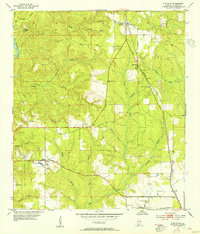 1953 Stapleton1955 Print · USGSMid-century Baldwin County is captured here as a landscape of timber and rail, centered on the growing community of Stapleton. Genealogists and researchers can trace local family landmarks and infrastructure from Malbis Cem and Loxley Sch to the winding path of the Old Spanish Trail.3 unique versions available
 - 1953 Map of Mobile, 1955 Print
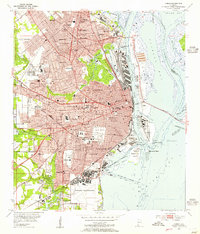 1953 Mobile1955 Print · USGSMobile and its neighboring industrial suburbs thrive in the mid-1950s as the riverfront reaches its peak as a rail and maritime gateway. Researchers can locate specific family homesites near Barton Academy, the sprawling Brookley Air Force Base, or the grounds of Magnolia Cemetery.5 unique versions available
 - 1953 Map of Mobile, 1968 Print
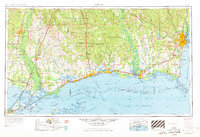 1953 Mobile1968 Print · USGSThe Gulf Coast comes alive in this mid-century survey, from the streets of Mobile to the marshes of New Orleans. Trace family roots in coastal towns like Pass Christian and Bayou La Batre or locate military landmarks including Keesler AFB.3 unique versions available
 - 1957 Map of Mobile
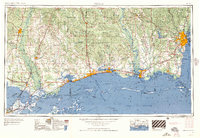 1957 Mobile1957 Print · USGSThe Gulf Coast in the mid-1950s reveals a bustling corridor of rail-and-river commerce connecting Alabama to Louisiana. Genealogists and historians can trace old settlements and military hubs from Keesler Afb to the coastal reaches of Ship Island and Bogalusa.3 unique versions available
 - 1957 Map of Pensacola, 1967 Print
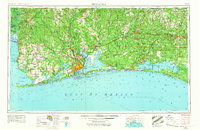 1957 Pensacola1967 Print · USGSThe Florida Panhandle and Alabama coast are seen here at the height of the Cold War, showcasing a unique mix of military aviation and emerging beach tourism. Genealogists and local historians can trace legacy sites like Old Corry Field, the lumber town of Bagdad, and the coastal reaches of Santa Rosa Island.3 unique versions available
 - 1959 Map of Pensacola
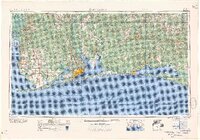 1959 Pensacola1959 Print · USGSThe Florida Panhandle and Alabama coast come alive in this late fifties survey of military aviation and maritime life. Genealogists can trace family roots in Bagdad, Loxley, and Milton while mapping the rails of the Louisville and Nashville.
 - 1960 Map of Pensacola
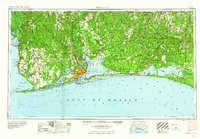 1960 Pensacola1960 Print · USGSThe Florida Panhandle and Alabama's eastern shore are shown during a period of rapid military and coastal growth. Genealogists and historians can trace the mid-century footprints of Warrington, the Pensacola NAS (Chevalier), and the Blackwater River timber lands.
 - 1960 Map of Mobile
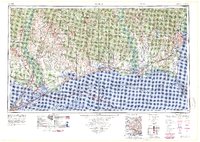 1960 Mobile1960 Print · USGSThe Gulf Coast at the dawn of the sixties shows a landscape of busy ports, military airbases, and barrier islands. Trace the rail lines of the Louisville & Nashville through BILOXI and Pascagoula or find family history in towns like Bayou La Batre and Poplarville.
 - 1963 Map of Mobile
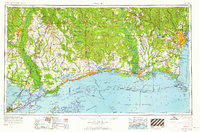 1963 Mobile1963 Print · USGSThe Gulf Coast at the dawn of the sixties shows a thriving maritime and military corridor from Louisiana to Alabama. Genealogists and historians can trace rail lines like the Louisville & Nashville RR and find landmarks from Brookley AFB to Fort Morgan.
Showing maps 1-25 of 51
Top cities near Spanish Fort
- Mobile historical maps
- Daphne historical maps
- Fairhope historical maps
- Prichard historical maps
- Saraland historical maps
- Bay Minette historical maps
See more
Top neighborhoods of Spanish Fort
Frequently asked questions
- What are the different types of historical maps available for Spanish Fort?
- What is the oldest map of Spanish Fort?
- Where can I purchase historical maps of Spanish Fort for my home or office?
- Where can I download high-res historical maps of Spanish Fort?
- Are there historical topographic maps available for Spanish Fort?
- Is there historical aerial imagery available for Spanish Fort?
- Where are historical maps of Spanish Fort sourced from?