1950s Maps of Barton Riverfront Industrial Park, Alabama
Explore 6 historic maps of Barton Riverfront Industrial Park from the 1950s. These maps offer a rare glimpse into what life looked like during the 1950s — showing old roads, neighborhoods, homes, and landmarks that have changed or disappeared over time.
Whether you're researching your family's past, planning a metal detecting trip, or studying how Barton Riverfront Industrial Park's landscape evolved across the 1950s, these high-resolution maps are a powerful tool for exploring the history of this region.
- Focus on a specific era: All maps on this page are from the 1950s, giving you a focused view of this time period.
- See what’s changed: Compare century-old streets, trails, and buildings to today's modern landscape using overlays and satellite layers.
- Research with precision: Use these maps for genealogy, historical research, land use analysis, or educational projects.
- View, download, or print: Maps are fully viewable online in high resolution, and can be downloaded or printed for your own records.
Start exploring Barton Riverfront Industrial Park's history through authentic maps from the 1950s. This is your window into the past.
Barton Riverfront Industrial Park, AL maps
(6)- 1953 Map of Barton, 1974 Print
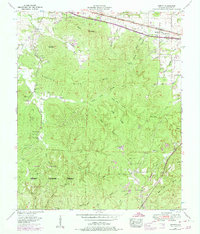 1953 Barton1974 Print · USGSColbert County's corridor between Cherokee and Barton is shown here in the mid-1950s, highlighting the transition from railside commerce to the deep hollows of Mills Mountain Ridge. Researchers can find legacy sites like Mountain Mills School, the Old Newsom Springs Cem, and the Barton Compressor Station.4 unique versions available
 - 1954 Map of Sinking Creek
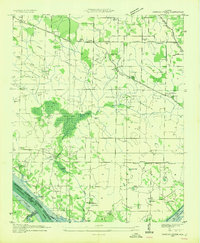 1954 Sinking Creek1954 Print · USGSLauderdale County is captured here in the mid-1930s as the Tennessee Valley Authority began transforming the landscape. Researchers can trace ancestral locations like Oakland, the Lipscomb Cem, and the Lovelace Sch before the reservoir waters rose.4 unique versions available
 - 1954 Map of Pride, 1958 Print
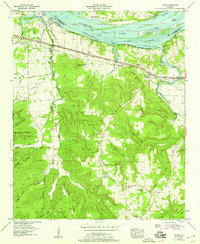 1954 Pride1958 Print · USGSColbert County and the Tennessee River corridor are captured here during the mid-fifties industrial expansion. You can trace the rail-and-river economy near Pride and find rural landmarks like Zion Ch, Barton Sch, and the riverside Colbert Steam Plant.
 - 1954 Map of Cherokee, 1958 Print
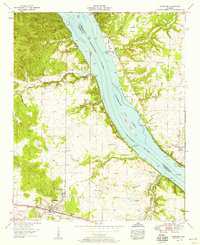 1954 Cherokee1958 Print · USGSCherokee and the Tennessee River valley are documented here in the mid-fifties as the region balanced its rail-town roots with new shoreline developments. Local historians can trace old wagon routes and family landmarks like Monk Chapel, Smithsonia, and the historic Natchez Trace.4 unique versions available
 - 1956 Map of Gadsden, 1966 Print
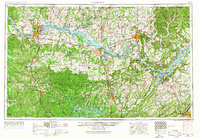 1956 Gadsden1966 Print · USGSNorth Alabama in the mid-1950s shows a region transformed by river engineering and federal industry. Genealogists and local historians can trace the development of the Tennessee Valley through the growth of Huntsville, the sprawling Redstone Arsenal, and the expansive Guntersville Lake.3 unique versions available
 - 1958 Map of Gadsden
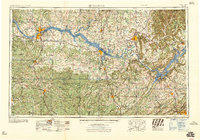 1958 Gadsden1958 Print · USGSNorth Alabama comes alive in the late 1950s as the Tennessee Valley Authority’s massive river projects and the rise of the space industry reshaped the landscape. Researchers can trace the mid-century footprints of Huntsville, Redstone Arsenal, and the riverside rail networks of the Southern railroad.
End of results
Showing maps 1-6 of 6
Frequently asked questions
- What are the different types of historical maps available for Barton Riverfront Industrial Park?
- What is the oldest map of Barton Riverfront Industrial Park?
- Where can I purchase historical maps of Barton Riverfront Industrial Park for my home or office?
- Where can I download high-res historical maps of Barton Riverfront Industrial Park?
- Are there historical topographic maps available for Barton Riverfront Industrial Park?
- Is there historical aerial imagery available for Barton Riverfront Industrial Park?
- Where are historical maps of Barton Riverfront Industrial Park sourced from?