1950s Maps of Dale County, Alabama
Explore 11 historic maps of Dale County from the 1950s. These maps offer a rare glimpse into what life looked like during the 1950s — showing old roads, neighborhoods, homes, and landmarks that have changed or disappeared over time.
Whether you're researching your family's past, planning a metal detecting trip, or studying how Dale County's landscape evolved across the 1950s, these high-resolution maps are a powerful tool for exploring the history of this region.
- Focus on a specific era: All maps on this page are from the 1950s, giving you a focused view of this time period.
- See what’s changed: Compare century-old streets, trails, and buildings to today's modern landscape using overlays and satellite layers.
- Research with precision: Use these maps for genealogy, historical research, land use analysis, or educational projects.
- View, download, or print: Maps are fully viewable online in high resolution, and can be downloaded or printed for your own records.
Start exploring Dale County's history through authentic maps from the 1950s. This is your window into the past.
Dale County, AL maps
(11)- 1950 Map of Ozark
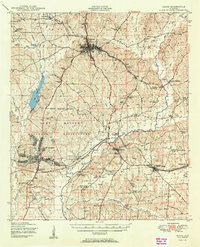 1950 Ozark1950 Print · USGSSoutheast Alabama in the postwar era is defined here by the rise of Camp Rucker and the steady rhythms of Dale County farming. Researchers can find many family landmarks, from Marley Mill to the Klondike School and Johnstown Cemetery.2 unique versions available
 - 1950 Map of Enterprise
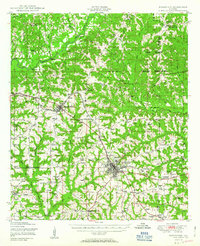 1950 Enterprise1950 Print · USGSEnterprise and the surrounding Wiregrass region of South Alabama appear here in the mid-century, defined by small farming communities and a growing military presence. Local historians can trace family-named landmarks like Dismukes Bridge and Weeks Bridge or locate rural landmarks such as Old Tabernacle Church and Shiloh School.2 unique versions available
 - 1950 Map of Brundidge
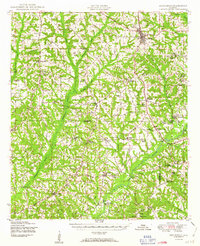 1950 Brundidge1950 Print · USGSBrundidge and the surrounding hills of Pike and Coffee Counties are captured here at mid-century as the local rail and river economy flourished. Genealogists can locate family landmarks like Arcus Cemetery or rural hubs such as Tarentum, Roeton, and Rocky Head.
 - 1953 Map of Dothan, 1966 Print
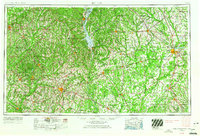 1953 Dothan1966 Print · USGSSoutheast Alabama and Southwest Georgia are captured during a period of massive hydraulic and military expansion in the mid-fifties. Genealogists and historians can trace rural landmarks like Antioch Church and School, the Andrew Jackson Monument, and the early footprint of Fort Rucker Military Reservation.3 unique versions available
 - 1954 Map of Dothan
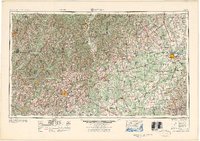 1954 Dothan1954 Print · USGSSoutheast Alabama and Southwest Georgia are seen here in the mid-fifties, during a decade of military expansion and rural transition. Genealogists can trace the location of country schools like Little Zion School or the grounds of Kolomoki Mounds State Park.
 - 1955 Map of Dothan
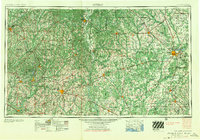 1955 Dothan1955 Print · USGSSoutheast Alabama and Southwest Georgia are captured here in the mid-fifties, showing a landscape of river-port history and growing military bases. Researchers can trace rural life via the Andrew Jackson Monument, Bauxite mines, and the Central of Georgia RR.
 - 1957 Map of Malvern
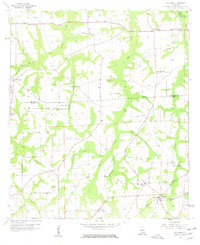 1957 Malvern1957 Print · USGSSoutheast Alabama at the edge of the Wiregrass region reveals a landscape of tight-knit farming communities and rural road networks during the late fifties. Genealogists can trace family roots through numerous local landmarks like Malvern Sch, Oak Grove Cem, and Bethlehem Ch.3 unique versions available
 - 1957 Map of Geneva, 1958 Print
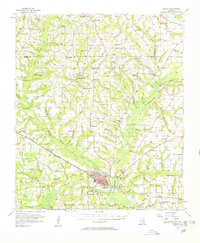 1957 Geneva1958 Print · USGSGeneva and its surrounding river valleys come into focus in the late 1950s, showing a landscape defined by the Choctawhatchee River and rural industry. Genealogists and local historians can trace family-named sites like McDuffie Cem, Vanlandingham Mill, and the Consolation Cem.2 unique versions available
 - 1957 Map of Hartford, 1958 Print
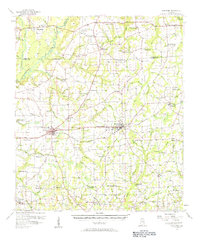 1957 Hartford1958 Print · USGSSoutheastern Alabama's rural landscape is captured here in the late fifties as small communities like Hartford and Slocomb anchored the tri-county area. Genealogists can locate family landmarks such as Wright Chapel Cem, the Wicksburg Sch, and the Tate Jr High Sch.
 - 1957 Map of Bellwood, 1959 Print
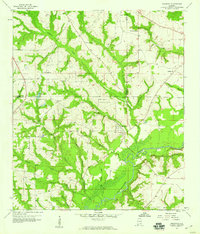 1957 Bellwood1959 Print · USGSGeneva and Coffee County in the late fifties show a landscape defined by the Choctawhatchee River and its rural creek valleys. Researchers can trace ancestral locations near Bellwood, Consolation Cem, and numerous country churches like Cool Springs Ch.2 unique versions available
 - 1957 Map of Clayhatchee, 1959 Print
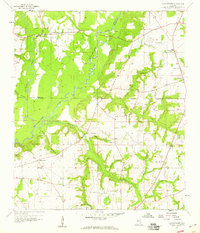 1957 Clayhatchee1959 Print · USGSThe Choctawhatchee River basin in the late fifties shows a landscape of tightly knit farming communities and country churches. Genealogists can trace family footprints through sites like Wicksburg Sch, Shiloh Cem, and Mt Gilead Ch.4 unique versions available
End of results
Showing maps 1-11 of 11
Top cities of Dale County
- Ozark historical maps
- Daleville historical maps
- Midland City historical maps
- Level Plains historical maps
- Newton historical maps
- Ariton historical maps
See more
Frequently asked questions
- What are the different types of historical maps available for Dale County?
- What is the oldest map of Dale County?
- Where can I purchase historical maps of Dale County for my home or office?
- Where can I download high-res historical maps of Dale County?
- Are there historical topographic maps available for Dale County?
- Is there historical aerial imagery available for Dale County?
- Where are historical maps of Dale County sourced from?