1960s Maps of Dale County, Alabama
Explore 17 historic maps of Dale County from the 1960s. These maps offer a rare glimpse into what life looked like during the 1960s — showing old roads, neighborhoods, homes, and landmarks that have changed or disappeared over time.
Whether you're researching your family's past, planning a metal detecting trip, or studying how Dale County's landscape evolved across the 1960s, these high-resolution maps are a powerful tool for exploring the history of this region.
- Focus on a specific era: All maps on this page are from the 1960s, giving you a focused view of this time period.
- See what’s changed: Compare century-old streets, trails, and buildings to today's modern landscape using overlays and satellite layers.
- Research with precision: Use these maps for genealogy, historical research, land use analysis, or educational projects.
- View, download, or print: Maps are fully viewable online in high resolution, and can be downloaded or printed for your own records.
Start exploring Dale County's history through authentic maps from the 1960s. This is your window into the past.
Dale County, AL maps
(17)- 1960 Map of Ewell, 1963 Print
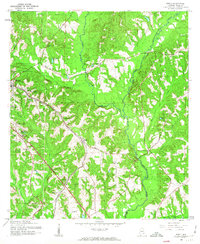 1960 Ewell1963 Print · USGSThe Dale County countryside outside Ozark was undergoing significant postwar development in the early sixties. Researchers can trace the path of the Atlantic Coast Line through rural Ewell or find family landmarks like Chalk Head Ch and Johnsons Pond.2 unique versions available
 - 1960 Map of Brundidge SE, 1963 Print
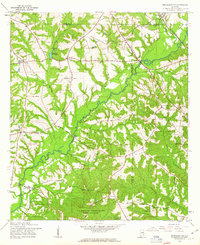 1960 Brundidge SE1963 Print · USGSCoffee County during the early sixties is captured here as a landscape of river-bottom farms and small rail stops. Genealogists can trace the rural communities of Tennille, Roeton, and Java alongside historic landmarks like Prestwood Millpond and New Tabernacle Ch.2 unique versions available
 - 1960 Map of Pinckard, 1963 Print
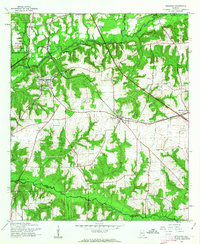 1960 Pinckard1963 Print · USGSSoutheast Alabama at the start of the sixties reveals a landscape of river-bottom farms and growing rail towns. Genealogists can locate family landmarks like New Hope Ch, the Woodham Cem, and the river crossing at William Grady Stembridge Bridge.3 unique versions available
 - 1960 Map of Enterprise NE, 1963 Print
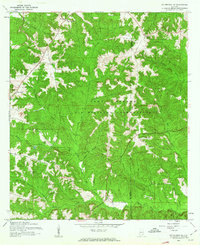 1960 Enterprise NE1963 Print · USGSIn the Alabama Wiregrass during the early sixties, the landscape was defined by rural church communities and the expansion of the military. Genealogists and historians can trace family sites at Wesley Chapel Cem, Old Tabernacle Ch, and the Fort Rucker U. S. Military Reservation boundary.2 unique versions available
 - 1960 Map of Daleville, 1964 Print
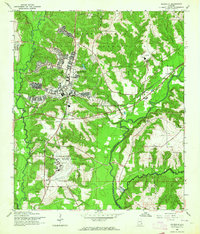 1960 Daleville1964 Print · USGSDaleville and the surrounding Wiregrass region are shown here at the height of military expansion during the early sixties. Researchers can trace the development of Fort Rucker aviation facilities alongside local sites like Moores Chapel and the Atlantic Coast Line railroad.3 unique versions available
 - 1960 Map of Enterprise, 1964 Print
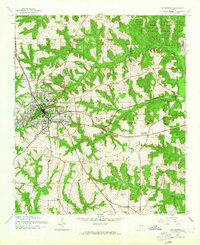 1960 Enterprise1964 Print · USGSEnterprise and the surrounding Wiregrass region are shown here in the early 1960s as military and rail infrastructure shaped the landscape. Researchers can trace rural life through landmarks like Macedonia Cem, Level Plains Crossroads, and the Atlantic Coast Line.3 unique versions available
 - 1960 Map of Ozark, 1964 Print
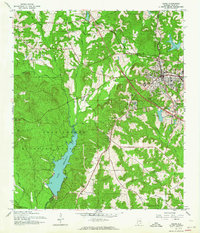 1960 Ozark1964 Print · USGSIn the early 1960s, the area around Ozark shows a landscape defined by the growth of the Fort Rucker Military Reservation. Researchers can trace family history at Old Salem Cem or locate the historic Marley Millpond and Hopeful Primitive Ch.2 unique versions available
 - 1962 Map of Enterprise NE
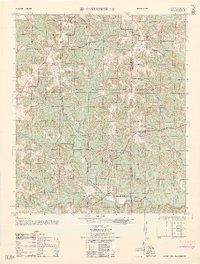 1962 Enterprise NE1962 Print · USGSSoutheast Alabama is captured in the early sixties as rural farm communities met the expansion of the military. Genealogists and local historians can trace the sites of El Bethel Church, the Ebenezer Cemetery, and old landmarks like the fire tower.
 - 1962 Map of Pinckard
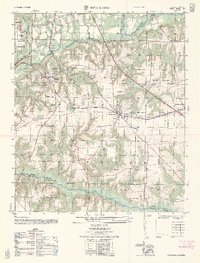 1962 Pinckard1962 Print · USGSSoutheast Alabama is captured here in the early sixties as the railroad and the Choctawhatchee river forks defined local life. Genealogists can locate family landmarks like the Woodland Cemetery, Pinckard High School, and the Union School Cemetery.
 - 1962 Map of Brundidge SE
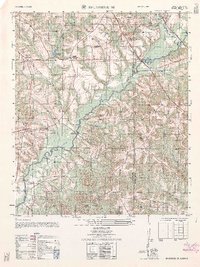 1962 Brundidge SE1962 Print · USGSCoffee and Dale counties in the early sixties reveal a landscape of river-bottom farms and emerging military installations. Genealogists can trace family roots through sites like Tennille, Roeton, and the Mt Olive Cemetery.
 - 1962 Map of Ewell
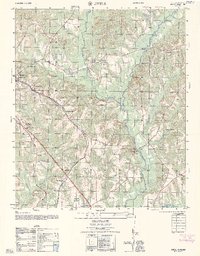 1962 Ewell1962 Print · USGSThe rural landscape of Dale County comes into focus in the early sixties as the railroad and highway systems expanded around Ewell. Researchers can trace old family roots at Friendship Church Cem, locate Matson, and find landmarks like the Ozark Municipal Airport.
 - 1969 Map of Dothan West, 1971 Print
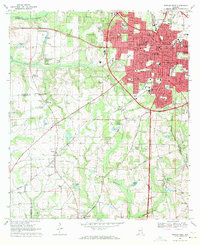 1969 Dothan West1971 Print · USGSDothan and its surrounding crossroads are captured here during a period of significant regional expansion in the late sixties. Researchers can trace historic schools and cemeteries such as Rehobeth High Sch, Carver High Sch, and Mt Zion Cem across the Wiregrass landscape.2 unique versions available
 - 1969 Map of Ariton, 1971 Print
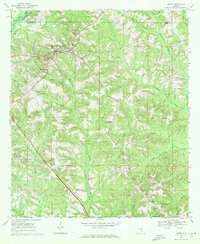 1969 Ariton1971 Print · USGSSoutheast Alabama's Wiregrass region comes alive in the late sixties as a busy rail junction where two major lines meet. Genealogists can trace family names at the Universalist Cem, Sammon Cem, or the Pleasant Grove Ch (Cem).2 unique versions available
 - 1969 Map of Skipperville, 1971 Print
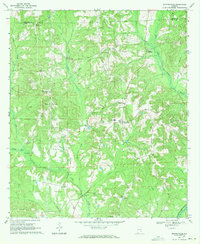 1969 Skipperville1971 Print · USGSThe rural crossroads and river valleys of Dale County are documented in this late-sixties survey. Researchers can trace family sites at Phillips Crossroads, locate the Skipperville Sch, or find old stream crossings like Bottoms Mill Bridge.
 - 1969 Map of Midland City, 1971 Print
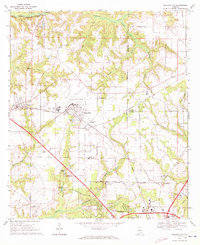 1969 Midland City1971 Print · USGSSoutheast Alabama at the end of the sixties reveals a landscape balancing its agricultural roots with new industrial and educational growth. Researchers can trace family-named landmarks like Murphy Millpond and historic rural sanctuaries including Mt Pleasant Ch and Magnolia Ch.2 unique versions available
 - 1969 Map of Clopton, 1971 Print
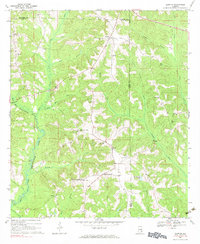 1969 Clopton1971 Print · USGSSoutheast Alabama in the late sixties reveals a network of crossroads communities and small rural churches. Genealogists can trace family roots at Mt Carmel Ch, Wesley Chapel, and the settlements of Clopton and Bertha along the Choctawhatchee River.2 unique versions available
 - 1969 Map of Echo, 1971 Print
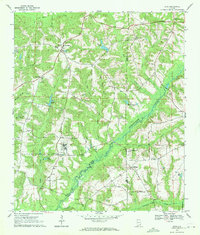 1969 Echo1971 Print · USGSThe rural landscape of Dale and Henry County is captured here in the late sixties, centered on the community of Echo. Genealogists and historians can trace numerous country sanctuaries such as Christian Hill Ch and New Hope Ch, or locate the U S MIL RES FORT RUCKER military boundary.2 unique versions available
End of results
Showing maps 1-17 of 17
Top cities of Dale County
- Ozark historical maps
- Daleville historical maps
- Midland City historical maps
- Level Plains historical maps
- Newton historical maps
- Ariton historical maps
See more
Frequently asked questions
- What are the different types of historical maps available for Dale County?
- What is the oldest map of Dale County?
- Where can I purchase historical maps of Dale County for my home or office?
- Where can I download high-res historical maps of Dale County?
- Are there historical topographic maps available for Dale County?
- Is there historical aerial imagery available for Dale County?
- Where are historical maps of Dale County sourced from?