1900s (20th Century) Maps of Atmore, Alabama
Explore 18 historic maps of Atmore from the 1900s (20th Century). These maps offer a rare glimpse into what life looked like during the 1900s — showing old roads, neighborhoods, homes, and landmarks that have changed or disappeared over time.
Whether you're researching your family's past, planning a metal detecting trip, or studying how Atmore's landscape evolved across the 1900s, these high-resolution maps are a powerful tool for exploring the history of this region.
- Focus on a specific era: All maps on this page are from the 1900s, giving you a focused view of this time period.
- See what’s changed: Compare century-old streets, trails, and buildings to today's modern landscape using overlays and satellite layers.
- Research with precision: Use these maps for genealogy, historical research, land use analysis, or educational projects.
- View, download, or print: Maps are fully viewable online in high resolution, and can be downloaded or printed for your own records.
Start exploring Atmore's history through authentic maps from the 1900s. This is your window into the past.
Atmore, AL maps
(18)- 1941 Map of Century, 1962 Print
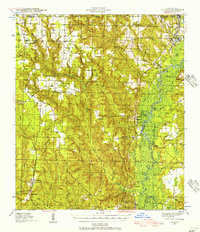 1941 Century1962 Print · USGSThe Florida-Alabama borderlands come alive in the early 1940s as a landscape of river-bottom wetlands and upland rail towns. Genealogists can trace family roots at Coon Hill Cem, Kays Chapel, and long-standing schools like Pine Barren Sch.2 unique versions available
 - 1942 Map of Perdido, 1965 Print
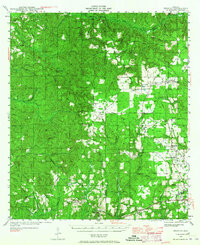 1942 Perdido1965 Print · USGSCoastal Alabama and its inland timberlands are captured here in the early 1940s, showing a transition from remote logging camps to growing railroad towns. Genealogists can locate family landmarks like Steadham Cem, the Langham Lottie Sch, and settlements at Lottie and Nokomis.
 - 1942 Map of Dyas, 1965 Print
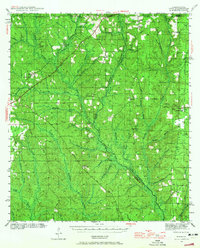 1942 Dyas1965 Print · USGSThe borderlands of Alabama and Florida are captured here during the early 1940s, highlighting a landscape shaped by timber and the Perdido River. Genealogists can locate family landmarks like Cain Cem, Nokomis Sch, and the St Stephens and St Louis RR.2 unique versions available
 - 1943 Map of Century
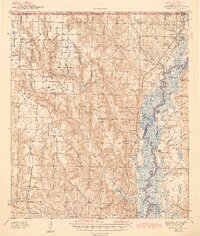 1943 Century1943 Print · USGSThe Florida-Alabama borderlands in the 1940s are defined by the winding Escambia River and a thriving rail-and-timber network. Researchers can trace rural life through family-named landmarks like Coon Hill Cem, Ward Sch, and Chumuckla Springs.2 unique versions available
 - 1944 Map of Dyas
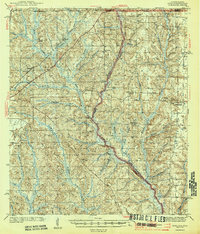 1944 Dyas1944 Print · USGSThe Alabama-Florida borderlands come to life in the mid-1940s, showing the rural communities and timberlands of Baldwin County. Trace old family names and landmarks like Cain Cem, New Providence Ch, and the Walnut Hill Fire Tower.2 unique versions available
 - 1944 Map of Perdido
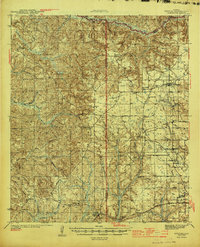 1944 Perdido1944 Print · USGSCoastal plain settlements and timber country in South Alabama come alive on this mid-forties survey. Trace family history at Lindsey Cem and St Johns Ch, or locate vanished rail stops along the Logging RR and St Louis - San Francisco RR.2 unique versions available
 - 1953 Map of Andalusia, 1965 Print
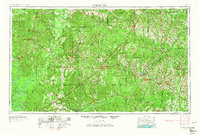 1953 Andalusia1965 Print · USGSSouth Alabama in the mid-twentieth century remains a land of pine forests and river-fed settlements. You can trace the vital rail corridors of the Louisville & Nashville and locate regional centers such as Andalusia, Brewton, and Monroeville.3 unique versions available
 - 1957 Map of Andalusia
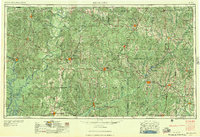 1957 Andalusia1957 Print · USGSSouthern Alabama in the mid-1950s was a landscape defined by timbered stretches and the rhythmic flow of the Alabama River. Researchers can trace the legacy of the rail era through the Central of Georgia tracks and the storied river bluffs at Choctaw Bluff.
 - 1957 Map of Pensacola, 1967 Print
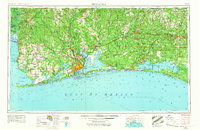 1957 Pensacola1967 Print · USGSThe Florida Panhandle and Alabama coast are seen here at the height of the Cold War, showcasing a unique mix of military aviation and emerging beach tourism. Genealogists and local historians can trace legacy sites like Old Corry Field, the lumber town of Bagdad, and the coastal reaches of Santa Rosa Island.3 unique versions available
 - 1959 Map of Pensacola
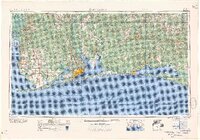 1959 Pensacola1959 Print · USGSThe Florida Panhandle and Alabama coast come alive in this late fifties survey of military aviation and maritime life. Genealogists can trace family roots in Bagdad, Loxley, and Milton while mapping the rails of the Louisville and Nashville.
 - 1960 Map of Pensacola
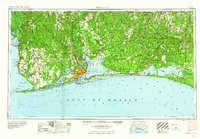 1960 Pensacola1960 Print · USGSThe Florida Panhandle and Alabama's eastern shore are shown during a period of rapid military and coastal growth. Genealogists and historians can trace the mid-century footprints of Warrington, the Pensacola NAS (Chevalier), and the Blackwater River timber lands.
 - 1960 Map of Atmore, 1961 Print
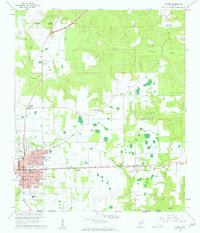 1960 Atmore1961 Print · USGSAtmore sits at a busy railroad junction on the Alabama-Florida line during a period of significant civic and agricultural growth. Researchers can trace the development of local neighborhoods and rural hubs like Canoe and Martinville, alongside landmarks such as Oak Hill Cemetery and the State Prison Farm.3 unique versions available
 - 1960 Map of Huxford, 1961 Print
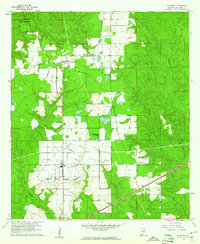 1960 Huxford1961 Print · USGSEscambia County's timber and rail landscape is captured here in the early sixties, showing the vital line of the St Louis - San Francisco Railroad. Genealogists can locate family landmarks like Sardis Ch, Miller Cem, and the massive Atmore State Prison Farm.4 unique versions available
 - 1978 Map of Bratt
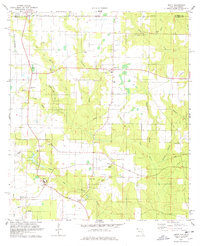 1978 Bratt1978 Print · USGSThe Florida-Alabama borderlands in the late seventies show a landscape of rural communities and timber-drainage networks. Genealogists and local historians can trace family-named landmarks like Davis Sch, Walnut Hill Ch, and the ST Louis-San Francisco rail line.
 - 1978 Map of Walnut Hill
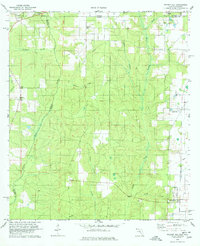 1978 Walnut Hill1978 Print · USGSThe Florida-Alabama borderlands along the Perdido River are shown here in the late seventies as a landscape of timber, rail, and rural crossroads. Researchers can locate family landmarks like Antioch Ch, the Dutch Cem, and the rail corridor of the St Louis - San Francisco.3 unique versions available
 - 1981 Map of Bay Minette
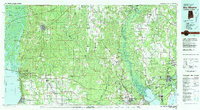 1981 Bay Minette1981 Print · USGSThe Alabama-Florida borderlands come to life in the early 1980s as the river delta meets the growing coastal communities. Researchers can trace the Louisville and Nashville rail lines or locate historical points like Twenty-two Mile Bluff and the Blackwater River State Forest.2 unique versions available
 - 1983 Map of Freemanville
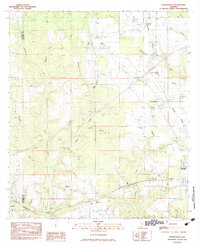 1983 Freemanville1983 Print · USGSEscambia County's borderlands are detailed in this early 1980s survey, showing the rural communities of Poarch and Freemanville at a crossroads of rail and river. Genealogists can locate Mothershed Cem or trace family roots near St Annas Ch and Nokomis.
 - 1986 Map of Atmore
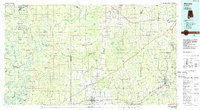 1986 Atmore1986 Print · USGSSouth Alabama’s river country and timberlands are captured here in the mid-eighties, showing the deep-water bends of the Alabama River and the expanding road networks. Genealogists and historians can trace family locations through small-town post offices and rural churches like Chrysler Ch and the settlement of Barlow Bend.2 unique versions available
End of results
Showing maps 1-18 of 18
Top cities near Atmore
- Century historical maps
- Flomaton historical maps
- McDavid historical maps
- Perdido historical maps
- Uriah historical maps
- Huxford historical maps
Top neighborhoods of Atmore
Frequently asked questions
- What are the different types of historical maps available for Atmore?
- What is the oldest map of Atmore?
- Where can I purchase historical maps of Atmore for my home or office?
- Where can I download high-res historical maps of Atmore?
- Are there historical topographic maps available for Atmore?
- Is there historical aerial imagery available for Atmore?
- Where are historical maps of Atmore sourced from?