1930s Maps of Limestone County, Alabama
Explore 17 historic maps of Limestone County from the 1930s. These maps offer a rare glimpse into what life looked like during the 1930s — showing old roads, neighborhoods, homes, and landmarks that have changed or disappeared over time.
Whether you're researching your family's past, planning a metal detecting trip, or studying how Limestone County's landscape evolved across the 1930s, these high-resolution maps are a powerful tool for exploring the history of this region.
- Focus on a specific era: All maps on this page are from the 1930s, giving you a focused view of this time period.
- See what’s changed: Compare century-old streets, trails, and buildings to today's modern landscape using overlays and satellite layers.
- Research with precision: Use these maps for genealogy, historical research, land use analysis, or educational projects.
- View, download, or print: Maps are fully viewable online in high resolution, and can be downloaded or printed for your own records.
Start exploring Limestone County's history through authentic maps from the 1930s. This is your window into the past.
Limestone County, AL maps
(17)- 1935 Map of Athens
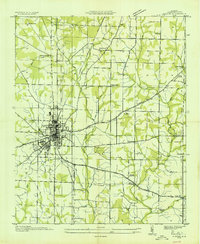 1935 Athens1935 Print · USGSMid-1930s Limestone County comes into focus as an agricultural landscape transitioning into a new era of infrastructure. Family researchers can locate rural anchors like Holt Store, Johnson Cem, and several local schools from Turner Hill Sch to St John Sch.
 - 1936 Map of Capshaw
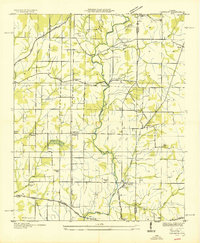 1936 Capshaw1936 Print · USGSLimestone and Madison counties are captured here in the mid-1930s as the Tennessee Valley Authority and Alabama Power began modernizing the rural landscape. Researchers can locate numerous vanished country schools like Grimett Sch, family landmarks such as McCully Mill, and the community at Wesley Chapel.
 - 1936 Map of Union Hill
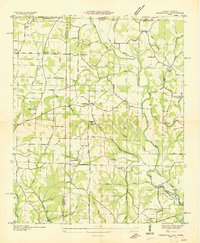 1936 Union Hill1936 Print · USGSThe Alabama and Tennessee borderlands are captured here in the mid-1930s as modern infrastructure arrived in a landscape of small family farms. Researchers can locate long-standing landmarks like Ridgeways Mill, Hester Cem, and the rural community of Good Springs.
 - 1936 Map of Decatur
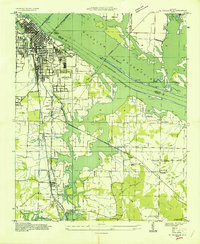 1936 Decatur1936 Print · USGSDecatur and the Tennessee River valley are captured here during the transformative years of the Tennessee Valley Authority. Trace early neighborhoods and rural landmarks like Blackwell Cem, Priceville Sch, and the Brick Kilns.
 - 1936 Map of Thorntontown
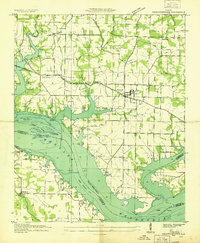 1936 Thorntontown1936 Print · USGSLauderdale County was undergoing a massive transformation in the mid-1930s as the Tennessee Valley Authority flooded the river basin. Researchers can trace the submerged geography of Former Islands or locate family sites like Fuqua Cem and Haraway Sch.
 - 1936 Map of Stewart Cross Roads
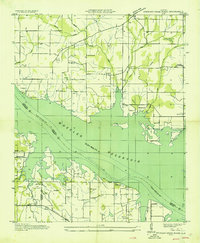 1936 Stewart Cross Roads1936 Print · USGSThe Tennessee River valley underwent a massive transformation in the mid-1930s as the new reservoir flooded the lowlands. You can trace submerged riverbanks and find upland landmarks like Stewart Cross Roads, Beulah Land, and St Luke Sch.
 - 1936 Map of Elkmont
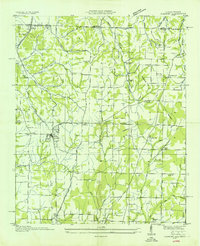 1936 Elkmont1936 Print · USGSThe Tennessee-Alabama borderlands come into focus in the mid-1930s, showing a landscape defined by the Louisville and Nashville rail line and rural industry. Genealogists can locate family landmarks like Hays Mill, Holland Gin, and old burial grounds including New Garden Cem.
 - 1936 Map of Ripley
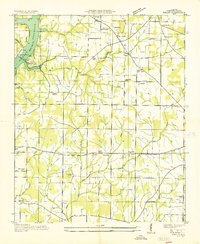 1936 Ripley1936 Print · USGSLimestone County is captured here in the mid-1930s as the new Wheeler Reservoir began reshaping the local landscape. Genealogists can locate family-named sites like Myers Cem and community centers like Peeks Store or Yarbrough Chapel.
 - 1936 Map of Ardmore
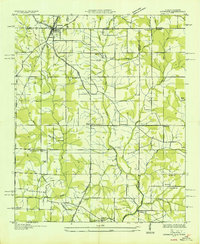 1936 Ardmore1936 Print · USGSThe Alabama-Tennessee borderlands appear here in the mid-1930s, showing the early growth of ARDMORE along the LOUISVILLE AND NASHVILLE railroad. Genealogists can trace family landmarks like Hatchett Cem and rural school sites such as Wooley Springs Sch.
 - 1936 Map of Hillsboro
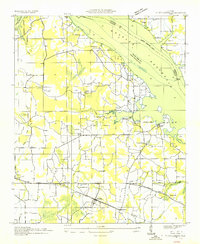 1936 Hillsboro1936 Print · USGSHillsboro and the Tennessee River banks are captured here during the transformative mid-1930s as the new reservoir began to fill. Local historians can locate early schools and churches such as Ebenezer Sch, Canaan Ch, and the riverside Milton Bluff.
 - 1936 Map of Mason Ridge
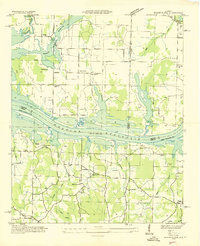 1936 Mason Ridge1936 Print · USGSThe Tennessee River valley underwent a total transformation in the mid-1930s as the new Wheeler Reservoir filled. Researchers can trace displaced landmarks like Cane Landing or visit upland sites like Needmore Sch and Kolb Cem.
 - 1936 Map of Tanner
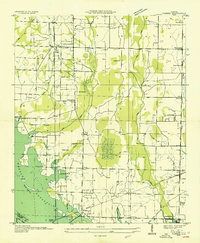 1936 Tanner1936 Print · USGSLimestone County is captured during the transformative years of the Tennessee Valley Authority project. Researchers can trace family sites and rural landmarks like Mooresville, Taylor Pride Cem, and the Alabama State Farm near the rising waters of Wheeler Reservoir.
 - 1936 Map of Cairo
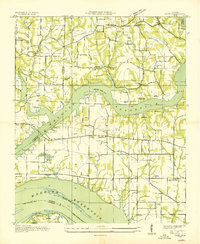 1936 Cairo1936 Print · USGSLimestone County and the newly formed Wheeler Reservoir are captured here during a pivotal era of regional change. Researchers can trace the submerged Former Tennessee River and locate community sites like Coxey and Temperance Oak Sch.
 - 1936 Map of Greenbrier
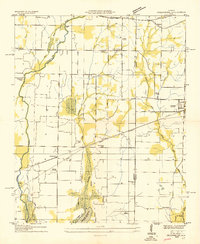 1936 Greenbrier1936 Print · USGSAlabama's Tennessee Valley was undergoing a massive transformation in the mid-1930s as the river was harnessed for power. Genealogists can locate family-named settlements like Peete Corners, small rural schools like Betz Sch, and old spiritual centers like Fletcher Chapel.
 - 1936 Map of Salem
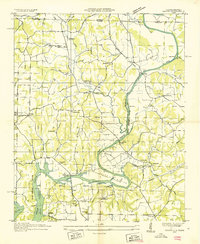 1936 Salem1936 Print · USGSNorthern Alabama in the mid-thirties shows a landscape being reshaped by the rising waters of Wheeler Reservoir. Genealogists can trace early homesteads and family sites like Conniegun Cem and Walnut Grove Ch.
 - 1938 Map of Tanner
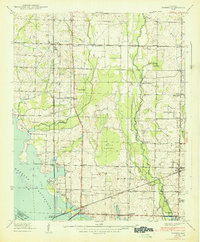 1938 Tanner1938 Print · USGSLimestone County in the late thirties shows a landscape transformed by the new Wheeler Reservoir and its rising waters. Genealogists can trace family holdings and community hubs like Anderson Plantation, Taylor Pride Cem, and Mooresville.
 - 1938 Map of Greenbrier
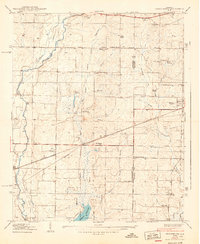 1938 Greenbrier1938 Print · USGSLimestone and Madison Counties are shown in the late 1930s as a landscape of rural schoolhouses and family cemeteries. Genealogists can trace local heritage through sites like Ragland Cem, Mt Pleasant Sch, and the crossroads at Burgreen Corner.3 unique versions available
End of results
Showing maps 1-17 of 17
Top cities of Limestone County
- Athens historical maps
- Ardmore historical maps
- Elkmont historical maps
- Lester historical maps
- Mooresville historical maps
Frequently asked questions
- What are the different types of historical maps available for Limestone County?
- What is the oldest map of Limestone County?
- Where can I purchase historical maps of Limestone County for my home or office?
- Where can I download high-res historical maps of Limestone County?
- Are there historical topographic maps available for Limestone County?
- Is there historical aerial imagery available for Limestone County?
- Where are historical maps of Limestone County sourced from?