Old Maps of Rainbow Gap Estates, Madison for Genealogy
Trace your family roots with 17 historic maps of Rainbow Gap Estates. These high-res maps reveal old neighborhoods, homesites, landmarks, and streets — helping you uncover where your ancestors lived and how the area evolved over time.
- Explore historic neighborhoods: Identify where your relatives may have lived in the 1800s or 1900s.
- Compare maps over time: Trace the changes in streets, buildings, and landmarks for multi-generational research.
- Perfect for genealogy & ancestry research: Used by family historians and researchers to map out lineage and migration.
These maps are an incredible resource for exploring your personal connection to Rainbow Gap Estates's past.
Rainbow Gap Estates, Madison maps
(17)- 1888 Map of Huntsville
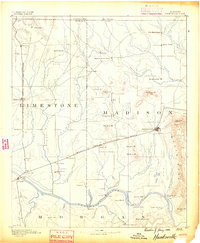 1888 Huntsville1888 Print · USGSMadison and Limestone counties in the late 1880s showcase a landscape defined by the Tennessee River and major early rail lines. Researchers can trace the layout of Huntsville or locate long-standing communities like Mooresville and Thompsons Mill.
 - 1892 Map of Huntsville
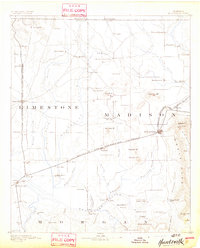 1892 Huntsville1892 Print · USGSNorth Alabama was a landscape of river ferries and rising rail hubs in the 1890s, caught here just as the region's industry began to modernize. Researchers can locate vanished landmarks like the Monte Sano Hotel and trace old family-named sites from Thompsons Mill to Lemans Ferry.6 unique versions available
 - 1936 Map of Madison
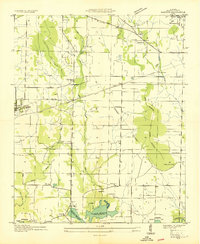 1936 Madison1936 Print · USGSMadison and its surrounding farmstead landscape are captured in the mid-1930s just as the Tennessee Valley Authority began transforming the river valley. Researchers can locate numerous vanished landmarks like Lankford Mill, trace the CHICKASAW BOUNDARY, and find family sites near Brandontown or Fuller Chapel.
 - 1948 Map of Madison, 1960 Print
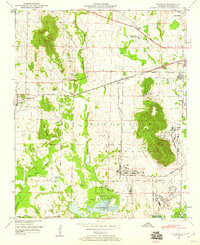 1948 Madison1960 Print · USGSPost-war Madison County shows a landscape transitioning from rural rail towns to a major federal military hub. Trace family history and land changes through the Royal Cem, the Huntsville Arsenal Airfield, and the Southern Railway corridor.2 unique versions available
 - 1950 Map of Madison
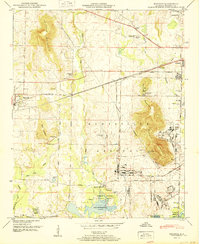 1950 Madison1950 Print · USGSMadison and the surrounding Alabama countryside are captured here just as the post-war military presence was reshaping the region. Local researchers can trace family lands near Rainbow Mountain or locate ancestral sites like Lincoln Sch and Jamar Cem.2 unique versions available
 - 1956 Map of Gadsden, 1966 Print
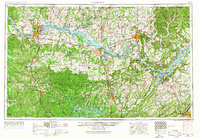 1956 Gadsden1966 Print · USGSNorth Alabama in the mid-1950s shows a region transformed by river engineering and federal industry. Genealogists and local historians can trace the development of the Tennessee Valley through the growth of Huntsville, the sprawling Redstone Arsenal, and the expansive Guntersville Lake.3 unique versions available
 - 1958 Map of Gadsden
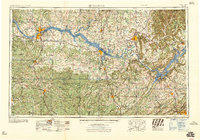 1958 Gadsden1958 Print · USGSNorth Alabama comes alive in the late 1950s as the Tennessee Valley Authority’s massive river projects and the rise of the space industry reshaped the landscape. Researchers can trace the mid-century footprints of Huntsville, Redstone Arsenal, and the riverside rail networks of the Southern railroad.
 - 1960 Map of Gadsden
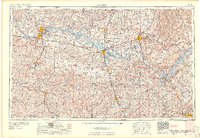 1960 Gadsden1960 Print · USGSNorthern Alabama in the mid-1950s is defined by the mighty Tennessee River and its massive reservoirs. Trace the development of Huntsville and Redstone Arsenal or explore the vast William B Bankhead National Forest.2 unique versions available
 - 1963 Map of Gadsden
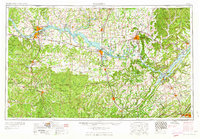 1963 Gadsden1963 Print · USGSNorthern Alabama underwent a dramatic mid-century transformation as the Tennessee Valley became a hub for defense and industry. Researchers can trace the development of the Redstone Arsenal, the route of the Natchez Trace Parkway, and long-standing rail lines like the Southern Railway.
 - 1964 Map of Madison, 1966 Print
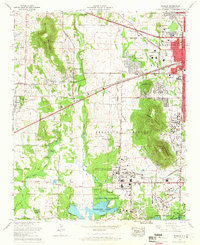 1964 Madison1966 Print · USGSMadison and West Huntsville are caught in a period of significant growth during the mid-sixties space race. Genealogists and historians can trace the intersection of new suburbs like Skyline Acres with older landmarks such as Fletcher Chapel and the Southern Railway.
 - 1975 Map of Madison, 1977 Print
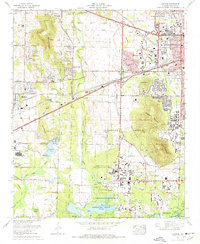 1975 Madison1977 Print · USGSMadison and Huntsville were undergoing significant expansion during the mid-seventies as aerospace technology reshaped the local economy. Genealogists and historians can trace the foundations of the University of Alabama in Huntsville or locate local burial grounds like Farley Cem and Moore Cem near the Redstone Arsenal.4 unique versions available
 - 1984 Map of Huntsville, 1986 Print
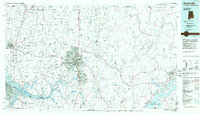 1984 Huntsville1986 Print · USGSNorthern Alabama and the Tennessee borderlands are captured in the mid-eighties as Huntsville and the Redstone Arsenal expand. Researchers can trace rural landmarks from Woodlin Mill to the Cumberland Plateau and old rail lines like the Southern.3 unique versions available
 - 2011 Map of Madison, 2011 Print
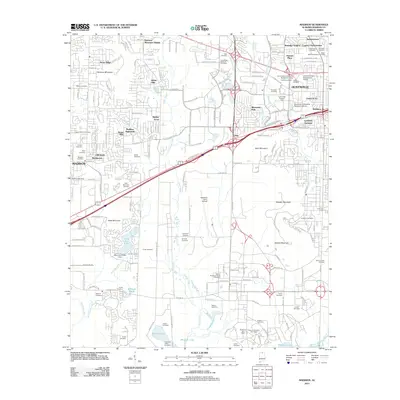 2011 Madison2011 Print · USGSHuntsville and Madison are seen here during a period of intense aerospace development and suburban expansion. Genealogists and researchers can find dozens of historic family plots like Gooch-Dublin Cemetery alongside space-age icons such as the Saturn V Dynamic Test Stand.
 - 2014 Map of Madison, 2014 Print
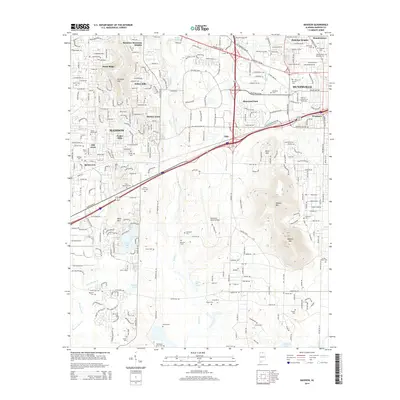 2014 Madison2014 Print · USGSMadison and Huntsville appear during a period of rapid modern growth in Northern Alabama. Researchers can trace dozens of family burial sites like Gooch-Dublin Cem and Jordan Lanier Cem located near the Redstone Army Airfield.
 - 2018 Map of Madison, 2018 Print
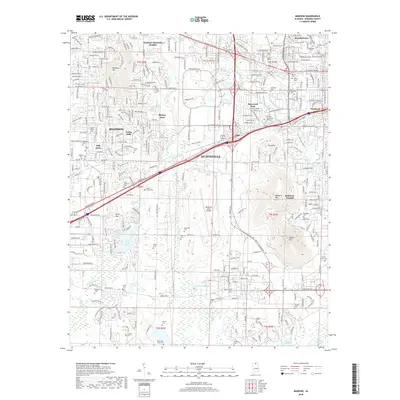 2018 Madison2018 Print · USGSHuntsville and Madison are shown during a period of rapid modern growth, with the expansive military grounds of the Redstone Arsenal at the center. Genealogists and local historians can trace dozens of early family sites including Gowan Cem and Lipscomb Cem.
 - 2020 Map of Madison, 2020 Print
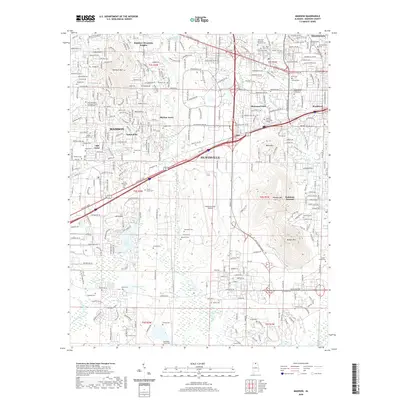 2020 Madison2020 Print · USGSMadison and Huntsville appear here during a period of significant growth, where military installations and university campuses meet expanding residential suburbs. Genealogists can trace family sites at the Slave Cem, Key-Blow Cem, or the Oakwood Memorial Gardens Cem.
 - 2024 Map of Madison, 2024 Print
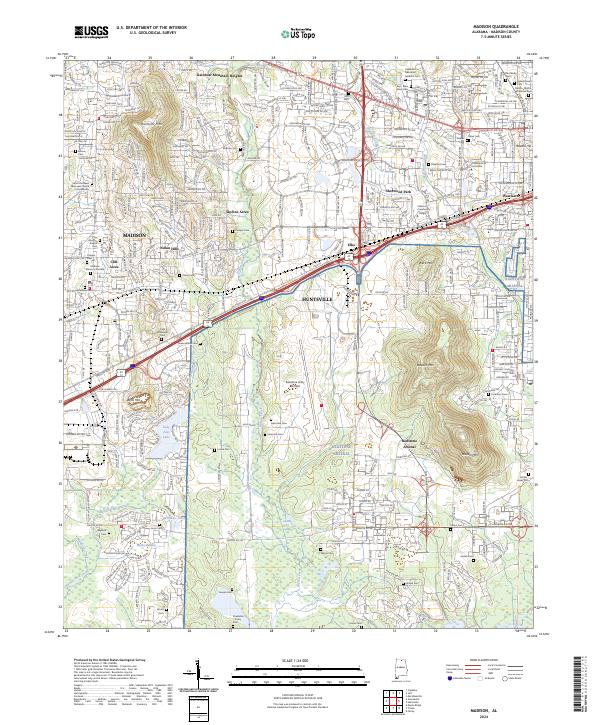 2024 Madison2024 Print · USGSMadison and Huntsville show their modern growth in the twenty-first century, anchored by the massive Redstone Arsenal and the Wheeler National Wildlife Refuge. Researchers can locate dozens of burial sites, including the Powhatan Toney Cem, Inman Cem, and Madison Memory Gardens.
End of results
Showing maps 1-17 of 17
Top cities near Rainbow Gap Estates
- Huntsville historical maps
- Decatur historical maps
- Madison historical maps
- Athens historical maps
- Meridianville historical maps
- Moores Mill historical maps
See more
Frequently asked questions
- What are the different types of historical maps available for Rainbow Gap Estates?
- What is the oldest map of Rainbow Gap Estates?
- Where can I purchase historical maps of Rainbow Gap Estates for my home or office?
- Where can I download high-res historical maps of Rainbow Gap Estates?
- Are there historical topographic maps available for Rainbow Gap Estates?
- Is there historical aerial imagery available for Rainbow Gap Estates?
- Where are historical maps of Rainbow Gap Estates sourced from?