1900s (20th Century) Maps of Eagar, Arizona
Explore 13 historic maps of Eagar from the 1900s (20th Century). These maps offer a rare glimpse into what life looked like during the 1900s — showing old roads, neighborhoods, homes, and landmarks that have changed or disappeared over time.
Whether you're researching your family's past, planning a metal detecting trip, or studying how Eagar's landscape evolved across the 1900s, these high-resolution maps are a powerful tool for exploring the history of this region.
- Focus on a specific era: All maps on this page are from the 1900s, giving you a focused view of this time period.
- See what’s changed: Compare century-old streets, trails, and buildings to today's modern landscape using overlays and satellite layers.
- Research with precision: Use these maps for genealogy, historical research, land use analysis, or educational projects.
- View, download, or print: Maps are fully viewable online in high resolution, and can be downloaded or printed for your own records.
Start exploring Eagar's history through authentic maps from the 1900s. This is your window into the past.
Eagar, AZ maps
(13)- 1954 Map of Saint Johns, 1968 Print
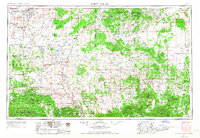 1954 Saint Johns1968 Print · USGSThe high plateau of the Arizona-New Mexico border is captured here in the mid-1950s, showing the intersection of tribal lands and national forests. Researchers can trace the cattle country and mountain outposts from Saint Johns to Pie Town and McNary.3 unique versions available
 - 1957 Map of Saint Johns
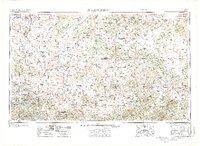 1957 Saint Johns1957 Print · USGSThe Arizona-New Mexico borderlands are captured here in the mid-fifties, showing the high-country settlements and federal lands before modern development. Genealogists and historians can trace old homesteads and landmarks like the Red Hill Post Office, Lyman Reservoir, and the mountain communities of Eagar and Springerville.
 - 1958 Map of Saint Johns
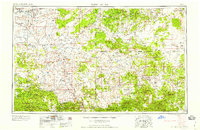 1958 Saint Johns1958 Print · USGSEastern Arizona and western New Mexico appear here in the late fifties, showcasing the high plateau and forest landscapes along the Continental Divide. Researchers can trace early ranching routes and water systems like Lyman Reservoir or locate remote settlements such as Fence Lake and Atarque.2 unique versions available
 - 1962 Map of Saint Johns
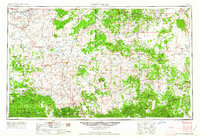 1962 Saint Johns1962 Print · USGSEastern Arizona and the New Mexico borderlands come alive in the early sixties, showing a landscape of high-plateau ranching and early national monuments. Trace the path of the Atchison Topeka and Santa Fe or locate old water sources like Salado Springs and Lyman Reservoir.
 - 1969 Map of Coyote Hills, 1972 Print
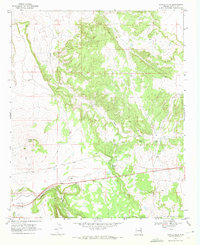 1969 Coyote Hills1972 Print · USGSApache County's high ranching country is captured here in the late sixties, showing the vital relationship between water and livestock. Researchers can trace the network of corrals and jeep trails connecting Coyote Ranch with water sources like Horseshoe Spring and Coyote Spring.
 - 1969 Map of Eagar, 1972 Print
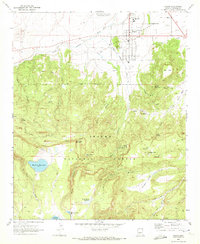 1969 Eagar1972 Print · USGSIn the late sixties, the Round Valley region of eastern Arizona supported a growing community alongside the high-country ranching tradition. Researchers can locate the Amity Ditch irrigation system, family-named sites like Saffell Knoll, and the Mexican Hay Lake reservoir.2 unique versions available
 - 1969 Map of Springerville, 1972 Print
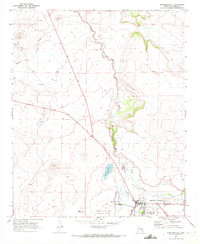 1969 Springerville1972 Print · USGSSpringerville sat at a crossroads of ranching and early aviation in the late sixties, anchored by the high country of Round Valley. Genealogists and historians can trace local landmarks like the town cemetery, the Little Colorado River's path, and Becker Lake.2 unique versions available
 - 1969 Map of Nelson Reservoir, 1972 Print
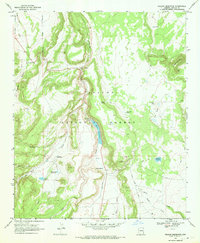 1969 Nelson Reservoir1972 Print · USGSThe high timberlands of the Apache National Forest are captured here in the late sixties, centered on the vital waters of Nelson Reservoir. Trace early infrastructure and local landmarks like Correjo Crossing, Lockhart Well, and several high-altitude reservoirs.
 - 1981 Map of Springerville, 1982 Print
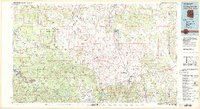 1981 Springerville1982 Print · USGSThe high-country settlements of eastern Arizona come into focus during the early eighties, from the timber towns of Lakeside and Pinetop to the ranching center of Springerville. Trace family roots in McNary and Eagar or locate historic landmarks like the Williams Creek National Fish Hatchery.2 unique versions available
 - 1997 Map of Springerville, 2000 Print
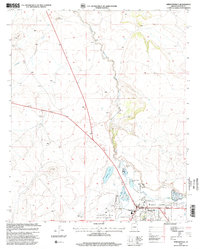 1997 Springerville2000 Print · USGSEastern Arizona's high-country ranching and forest management are documented in this late-century revision of the Round Valley area. Researchers can trace the water rights and boundaries of Springerville through Becker Lake, the Voigt Ranch, and the Little Colorado River corridor.
 - 1997 Map of Coyote Hills, 2000 Print
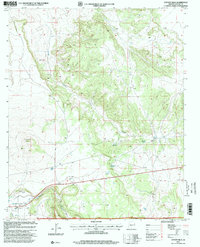 1997 Coyote Hills2000 Print · USGSApache County high country in the late 1990s reveals a landscape of ranching and remote forest tracks. Genealogists and local historians can trace the legacy of Coyote Ranch and the settlement of Coyote near the waters of Nutrioso Creek.
 - 1997 Map of Nelson Reservoir, 2000 Print
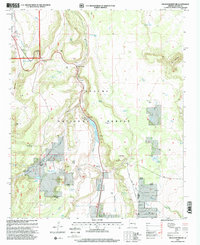 1997 Nelson Reservoir2000 Print · USGSThe Apache National Forest landscape in the 1990s reveals a sophisticated network of ranching and water management. Researchers can trace the legacy of local families and forest use through Butler Cemetery, Herchede Ranch, and the waters of Nelson Reservoir.
 - 1997 Map of Eagar, 2000 Print
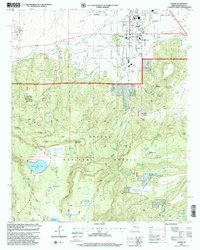 1997 Eagar2000 Print · USGSEagar and the high meadows of the Apache National Forest are documented here in the late nineties as they balance growth with deep-rooted ranching. Researchers can trace local landmarks like Mexican Hay Lake, the Sawmill area, and the Amity Ditch.
End of results
Showing maps 1-13 of 13
Top cities near Eagar
Frequently asked questions
- What are the different types of historical maps available for Eagar?
- What is the oldest map of Eagar?
- Where can I purchase historical maps of Eagar for my home or office?
- Where can I download high-res historical maps of Eagar?
- Are there historical topographic maps available for Eagar?
- Is there historical aerial imagery available for Eagar?
- Where are historical maps of Eagar sourced from?