1950s Maps of Gila Bend, Arizona
Explore 10 historic maps of Gila Bend from the 1950s. These maps offer a rare glimpse into what life looked like during the 1950s — showing old roads, neighborhoods, homes, and landmarks that have changed or disappeared over time.
Whether you're researching your family's past, planning a metal detecting trip, or studying how Gila Bend's landscape evolved across the 1950s, these high-resolution maps are a powerful tool for exploring the history of this region.
- Focus on a specific era: All maps on this page are from the 1950s, giving you a focused view of this time period.
- See what’s changed: Compare century-old streets, trails, and buildings to today's modern landscape using overlays and satellite layers.
- Research with precision: Use these maps for genealogy, historical research, land use analysis, or educational projects.
- View, download, or print: Maps are fully viewable online in high resolution, and can be downloaded or printed for your own records.
Start exploring Gila Bend's history through authentic maps from the 1950s. This is your window into the past.
Gila Bend, AZ maps
(10)- 1950 Map of Theba, 1955 Print
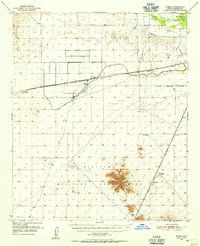 1950 Theba1955 Print · USGSMaricopa County's arid river lands are captured here in the 1950s, showing the early infrastructure of the Gillespie Ranch and the Gila Bend Indian Res. Researchers can locate rural landmarks like Theba, the Southern Pacific railroad sidings at Smurr, and the desert peaks of the White Hills.
 - 1951 Map of Gila Bend
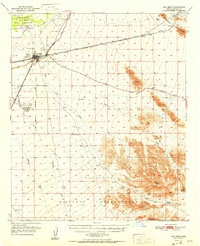 1951 Gila Bend1951 Print · USGSGila Bend and the surrounding Sonoran Desert are documented here in the early fifties during a period of mid-century aviation and rail expansion. Researchers can locate the Gila Bend Indian Reservation, the Southern Pacific rail line, and remote landmarks like Jack in the Pulpit.3 unique versions available
 - 1951 Map of Theba
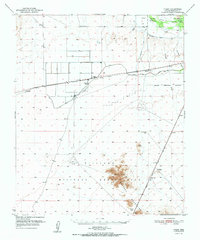 1951 Theba1951 Print · USGSMaricopa County's arid river valley and rail corridor are captured here in the mid-century, showing the irrigation-driven growth around Theba and Gillespie Ranch. Researchers can trace the Southern Pacific line through sidings at Smurr and Piedra, or locate the Gila Bend Indian Res.2 unique versions available
 - 1951 Map of Cotton Center, 1952 Print
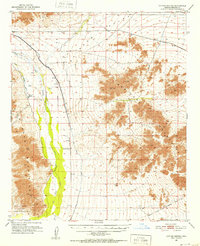 1951 Cotton Center1952 Print · USGSMaricopa County's desert ranching and irrigation systems are captured here in the early fifties, showing the vital role of the Gila River. Researchers can trace the historic Butterfield Stage Route and explore the agricultural layouts of Cotton Center and the Enterprise Ranch.2 unique versions available
 - 1953 Map of Ajo, 1971 Print
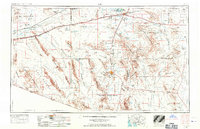 1953 Ajo1971 Print · USGSThe Arizona desert at mid-century reveals a landscape of massive copper mines, tribal reservations, and military testing grounds. Genealogists and historians can trace rail stopovers like Dateland and Mohawk or locate remote sites like the Reward Mine and Gu Achi (Santa Rosa).2 unique versions available
 - 1954 Map of Phoenix, 1964 Print
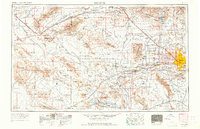 1954 Phoenix1964 Print · USGSMid-century Arizona is captured here as the Phoenix metropolitan area begins its rapid expansion into the surrounding desert. Genealogists and historians can trace the development of agricultural hubs like Buckeye and Tolleson, or locate remote landmarks like the Vulture Mine and Nottbusch Cem.5 unique versions available
 - 1957 Map of Ajo
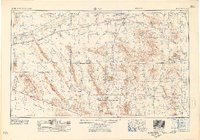 1957 Ajo1957 Print · USGSSouthern Arizona in the fifties reveals a landscape of massive copper mines, remote desert wells, and tribal reservations. Genealogists and historians can trace old cattle outposts like Whitewing Ranch, the Tracy's Trading Post, and the copper works at Ajo.
 - 1957 Map of Phoenix
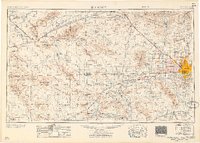 1957 Phoenix1957 Print · USGSGreater Phoenix and the central Arizona desert during the mid-fifties reveal a landscape of growing suburbs and active desert mines. Researchers can trace the legacy of local landmarks like Wickenburg Prison, the Vulture Mine, and the Tonopah Post Office.
 - 1958 Map of Ajo
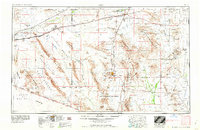 1958 Ajo1958 Print · USGSThe high desert of Pima and Yuma Counties during the late fifties shows a landscape of remote copper mines and military flight paths. Researchers can trace the Southern Pacific Railroad through Gila Bend and find heritage sites like O'Neills Grave or the Christmas Gift Mine.2 unique versions available
 - 1958 Map of Phoenix
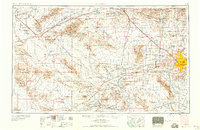 1958 Phoenix1958 Print · USGSThe Phoenix Valley enters a period of postwar expansion, where desert irrigation meets massive military aviation footprints. Trace the development of Phoenix and Glendale alongside the legendary Vulture Mine and the auxiliary runways of Luke Air Force Base.
End of results
Showing maps 1-10 of 10
Top cities near Gila Bend
Frequently asked questions
- What are the different types of historical maps available for Gila Bend?
- What is the oldest map of Gila Bend?
- Where can I purchase historical maps of Gila Bend for my home or office?
- Where can I download high-res historical maps of Gila Bend?
- Are there historical topographic maps available for Gila Bend?
- Is there historical aerial imagery available for Gila Bend?
- Where are historical maps of Gila Bend sourced from?