Old Maps of Calabasas, Arizona
Explore 13 old maps of Calabasas, spanning from 1905 to today. These high-resolution historic maps reveal how streets, neighborhoods, landmarks, and natural features evolved over time — perfect for genealogy, metal detecting, research, and local history exploration.
What you can do with these maps:
- See how Calabasas changed over time: Compare historical maps to modern-day views to trace roads, homesites, rail lines & more.
- View detailed metadata: Each map includes creators, publishers, year, scale, and archive source.
- Overlay maps with satellite & LiDAR: Visualize the past alongside modern tools to explore terrain & human change.
- Trusted historical sources: Maps sourced from the USGS, Library of Congress, and other archives.
- Access maps your way: View online, download high-res files, or order prints for personal or research use.
Start exploring old maps of Calabasas to uncover forgotten places, hidden landmarks, and the deep history beneath your feet.
Calabasas, AZ maps
(13)- 1905 Map of Nogales
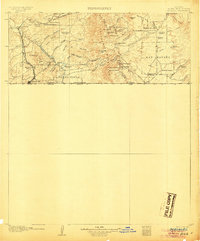 1905 Nogales1905 Print · USGSThe Arizona-Mexico borderlands are captured here at the height of the mining boom and the expansion of the Southern Pacific RR. Genealogists and historians can trace family landholdings from Calabasas to Lochiel or locate remote sites like The Mowry Mine and Fuller's Ranch.4 unique versions available
 - 1933 Map of Calabasas
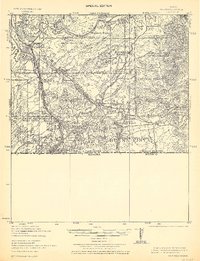 1933 Calabasas1933 Print · USGSNogales and the Santa Cruz River valley are shown here in the 1930s, documenting a critical era of border history and ranching. Trace early landmarks like Camp Stephen D. Little, the 3R Mine, and historic family lands at Buena Vista Ranch.2 unique versions available
 - 1956 Map of Nogales, 1963 Print
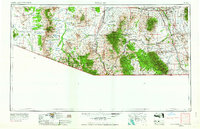 1956 Nogales1963 Print · USGSSouthern Arizona in the mid-fifties is captured here from the Papago tribal lands to the San Pedro valley. Genealogists and historians can trace border settlements like Sasabe, the legacy of Tombstone, and old mining sites including the Mary G Mine.4 unique versions available
 - 1958 Map of Nogales
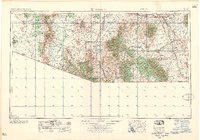 1958 Nogales1958 Print · USGSSouthern Arizona in the late fifties was a landscape of international borders and high-desert outposts, dominated by the Huachuca Mountains and the Papago Indian Reservation. Local historians can trace old mining camps like Ruby and Greaterville or locate historic military grounds at the Fort Huachuca Military Reservation.
 - 1958 Map of Nogales, 1959 Print
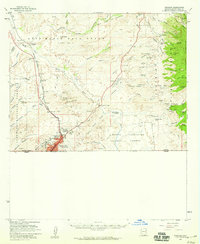 1958 Nogales1959 Print · USGSNogales and the surrounding Santa Cruz River valley are captured in the late fifties as a bustling hub of international commerce and mining. Researchers can trace dozens of hard-rock claims like the Robert E Lee Mine, locate the Calabasas site, and find family landmarks such as Yerba Buena Ranch.3 unique versions available
 - 1959 Map of Nogales
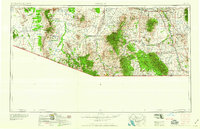 1959 Nogales1959 Print · USGSThe Southern Arizona borderlands appear in the late fifties as a complex landscape of military ranges, tribal lands, and high-desert mining towns. Local historians can trace the Southern Pacific rail lines connecting Tombstone and Benson or locate family ranches such as Canoa Ranch.
 - 1981 Map of Rio Rico
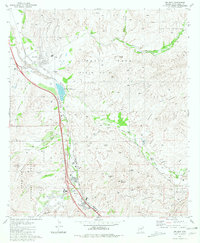 1981 Rio Rico1981 Print · USGSSouthern Arizona’s Santa Cruz Valley comes into focus in the early 1980s, showcasing a landscape where ancient Spanish colonial history meets modern ranching and industry. Researchers can find the historic Guevavi Mission (Ruins), old workings like the Lion Mine, and the sprawling Luis Maria Baca land grant.2 unique versions available
 - 1994 Map of Nogales
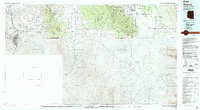 1994 Nogales1994 Print · USGSThe Arizona-Sonora borderlands come into focus in the mid-1990s, showcasing the intricate Spanish land grants and mining districts that shaped the region. Genealogists and historians can trace old mining camps like Washington Camp and Duquesne or locate the historic Mowry Mine.2 unique versions available
 - 1996 Map of Rio Rico, 2003 Print
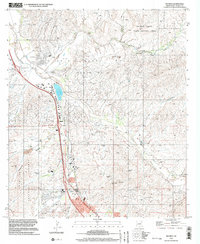 1996 Rio Rico2003 Print · USGSThe Santa Cruz River valley comes alive in the mid-1990s as a hub of mining and transport south of Tucson. Researchers can trace the Old Railroad Grade, locate the historic Calabasas (Site), or explore old mining sites like the Uncle Sam Mine and Lion Mine.
 - 2012 Map of Rio Rico, 2012 Print
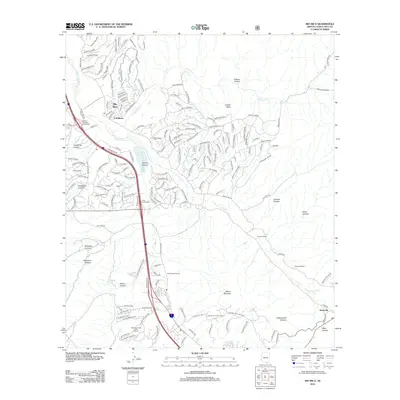 2012 Rio Rico2012 Print · USGSThe Santa Cruz River valley south of Tucson shows a landscape of modern development overlaid on traditional ranching country during the early 2010s. Researchers can trace the layout of Rio Rico or locate historic sites like Guevavi Ranch and Pete Kitchens Ranch.
 - 2014 Map of Rio Rico, 2014 Print
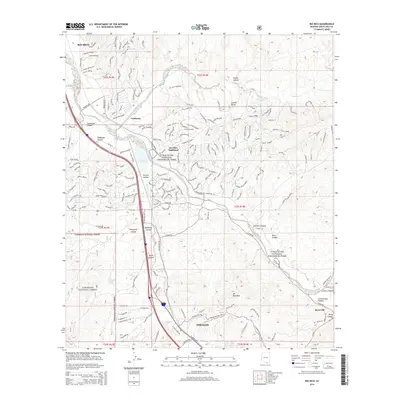 2014 Rio Rico2014 Print · USGSThe Arizona borderlands near Nogales are shown in detail during a period of modern growth and historical preservation. Genealogists and researchers can trace the roads of Rio Rico and locate sites like Calabasas and Tumacacori National Historical Park.
 - 2018 Map of Rio Rico, 2018 Print
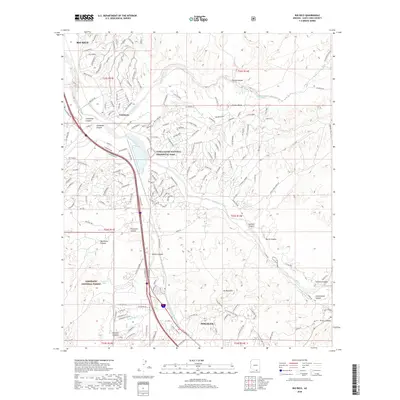 2018 Rio Rico2018 Print · USGSThe Santa Cruz River corridor north of the border shows its modern suburban and industrial character in the late 2010s. Trace the reach of Tumacacori National Historical Park and the rugged canyons of Coronado National Forest alongside the growing streets of Rio Rico.
 - 2021 Map of Rio Rico, 2021 Print
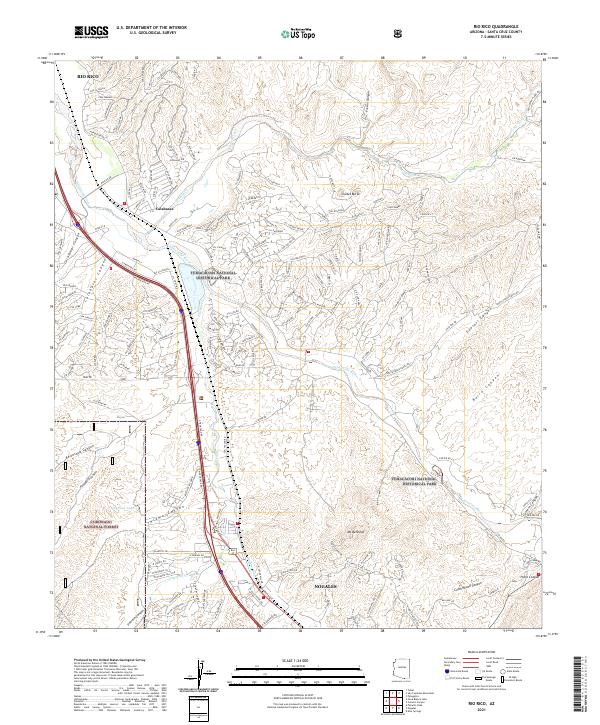 2021 Rio Rico2021 Print · USGSThe Santa Cruz River valley comes alive in this survey of the borderlands south of Tucson, showing the development of Rio Rico and Calabasas. Trace the intersection of modern growth and protected heritage sites like Tumacacori National Historical Park and Mt Benedict.
End of results
Showing maps 1-13 of 13
Top cities near Calabasas
- Nogales historical maps
- Town of Patagonia historical maps
- Patagonia historical maps
- Sonoita historical maps
Frequently asked questions
- What are the different types of historical maps available for Calabasas?
- What is the oldest map of Calabasas?
- Where can I purchase historical maps of Calabasas for my home or office?
- Where can I download high-res historical maps of Calabasas?
- Are there historical topographic maps available for Calabasas?
- Is there historical aerial imagery available for Calabasas?
- Where are historical maps of Calabasas sourced from?