Old Maps of Cross County, Arkansas
Explore 121 old maps of Cross County, spanning from 1939 to today. These high-resolution historic maps reveal how streets, neighborhoods, landmarks, and natural features evolved over time — perfect for genealogy, metal detecting, research, and local history exploration.
What you can do with these maps:
- See how Cross County changed over time: Compare historical maps to modern-day views to trace roads, homesites, rail lines & more.
- View detailed metadata: Each map includes creators, publishers, year, scale, and archive source.
- Overlay maps with satellite & LiDAR: Visualize the past alongside modern tools to explore terrain & human change.
- Trusted historical sources: Maps sourced from the USGS, Library of Congress, and other archives.
- Access maps your way: View online, download high-res files, or order prints for personal or research use.
Start exploring old maps of Cross County to uncover forgotten places, hidden landmarks, and the deep history beneath your feet.
Cross County, AR maps
(121)- 1939 Map of Vanndale, 1941 Print
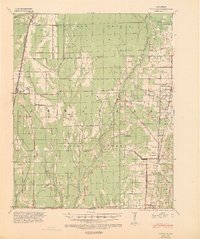 1939 Vanndale1941 Print · USGSCross and Poinsett counties are captured here in the late 1930s, showing a landscape defined by the distinct rise of Crowleys Ridge. Genealogists can locate family landmarks like Union Grove Cem and several country schools, including Rose Sch and Rolf Sch.2 unique versions available
 - 1939 Map of Wynne, 1941 Print
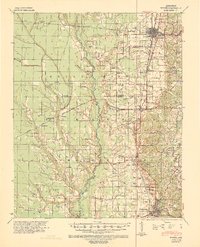 1939 Wynne1941 Print · USGSEastern Arkansas at the end of the thirties was a region defined by the L'Anguille River and a thriving network of small rail towns and rural parishes. Researchers can trace ancestral roots through dozens of local landmarks like Wick Mill, Smith Chapel, and Bible Union Sch.2 unique versions available
 - 1939 Map of Hunter, 1942 Print
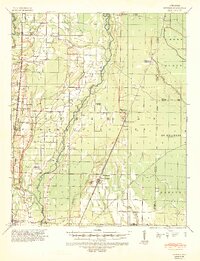 1939 Hunter1942 Print · USGSWoodruff and Cross counties were at the peak of their rail-driven economy just before the war, when timber and agriculture dominated the Delta. Genealogists can trace family names at Odd Fellows Cem or locate rural landmarks like Hillmann Jr High Sch and the Whitehall Ch & Cem.2 unique versions available
 - 1940 Map of Deckerville, 1942 Print
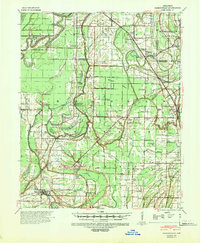 1940 Deckerville1942 Print · USGSCrittenden and Poinsett counties are shown here as the local river-and-rail economy matured before the war. Genealogists can trace family landmarks like the King Solomon Sch & Cem, Booker Sch, and New Bethlehem Ch & Cem.
 - 1940 Map of Princedale, 1942 Print
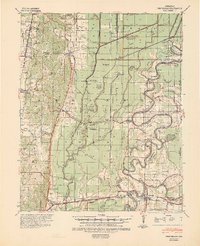 1940 Princedale1942 Print · USGSEastern Arkansas at the cusp of World War II is mapped here as a land of managed floodways and emerging rail towns. Genealogists can trace family footprints at Hare Farm Sch, Sharps Chapel, and along the banks of the St Francis River.2 unique versions available
 - 1940 Map of Whitmore, 1942 Print
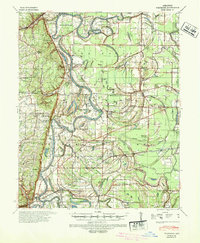 1940 Whitmore1942 Print · USGSSt. Francis County in the early 1940s shows a complex river-and-rail landscape shaped by the meanders of the St Francis River. Researchers can trace old family settlements and rural institutions like Wittsburg, the Church of Bethlehem, and Walters Cem.2 unique versions available
 - 1940 Map of Tilton, 1947 Print
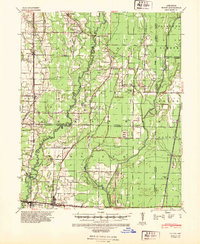 1940 Tilton1947 Print · USGSEastern Arkansas at the start of the 1940s is captured here as a landscape of river-fed bottoms and thriving rail-side towns. Genealogists and local historians can trace family roots through the numerous rural landmarks like Fakes Chapel & Cem, Pumpkin Bend Cem, and Weldon Sch.2 unique versions available
 - 1953 Map of Memphis, 1966 Print
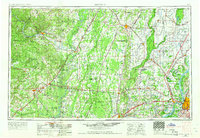 1953 Memphis1966 Print · USGSEastern Arkansas and the Memphis riverfront are shown here during the mid-century period of regional growth and river management. Local historians can trace the paths of the Chicago Rock Island & Pacific RR through Forrest City or locate river landmarks like President's Island.3 unique versions available
 - 1956 Map of Memphis
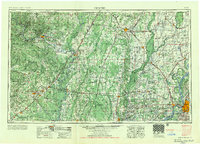 1956 Memphis1956 Print · USGSThe Mississippi Delta and the bluffs of West Tennessee meet in the mid-fifties, showing a landscape defined by massive river systems and rail hubs. Researchers can trace the path of Crowleys Ridge or locate vanished river landings near Centennial Island and Island No 35.
 - 1956 Map of Tilton
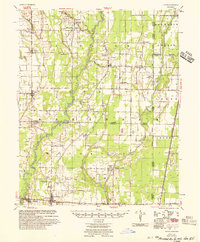 1956 Tilton1956 Print · USGSThe Arkansas Delta comes into focus in the mid-1950s, showing a landscape of drainage canals and rail-line towns. Researchers can trace family roots at Pumpkin Bend, Beedeville, and the crossroads of McCrory.
 - 1956 Map of Whitmore, 1957 Print
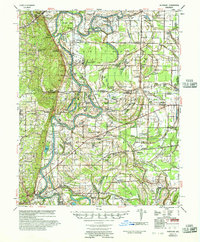 1956 Whitmore1957 Print · USGSThe St. Francis River delta was a landscape of intricate oxbows and rural congregations in the mid-fifties. Genealogists can trace family roots at Shiloh Ch & Cem or Locust Grove Ch & Cem and locate vanished school sites like Reiff Sch.
 - 1956 Map of Princedale, 1957 Print
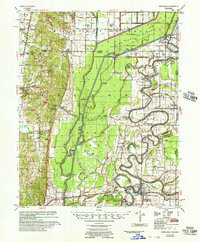 1956 Princedale1957 Print · USGSCross County in the mid-fifties is captured here as a landscape defined by the winding St Francis River and a massive network of drainage ditches. Researchers can locate many family-named landmarks and vanished rural hubs like Bay Village, Burr Place, and the Wildwood Ch & Sch.
 - 1956 Map of Hunter, 1968 Print
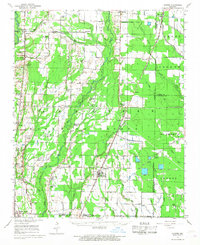 1956 Hunter1968 Print · USGSEastern Arkansas at the mid-century mark reveals a landscape defined by the ST LOUIS SOUTHWESTERN rail line and the CACHE RIVER bottomlands. Researchers can locate numerous family-named landmarks and rural hubs, including Woodmans Cem, Beard Sch, and Whitehall Ch & Cem.
 - 1957 Map of Deckerville, 1958 Print
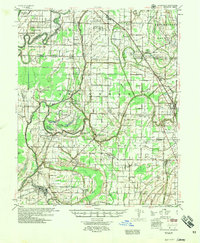 1957 Deckerville1958 Print · USGSThe Arkansas delta in the mid-fifties is captured here during its peak era of rail-and-river transport and intensive drainage. Genealogists can trace hundreds of rural family landmarks, including New Bethlehem Ch & Sch, St Peter Sch, and Prosperity Ch Sch & Cem.
 - 1958 Map of Hunter
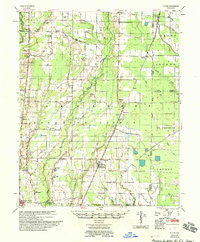 1958 Hunter1958 Print · USGSEastern Arkansas at the dawn of the space age reveals a landscape defined by the Cache River and an extensive rail network. Genealogists and historians can trace family roots through numerous rural sites like Odd Fellows Cemetery, Beard School, and Whitehall Church and Cemetery.
 - 1958 Map of Wynne
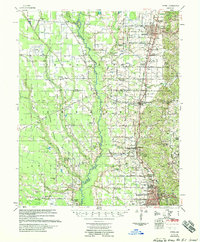 1958 Wynne1958 Print · USGSEastern Arkansas in the late fifties shows a landscape of vibrant rail towns and rural parishes between Wynne and Forrest City. Genealogists and historians can trace dozens of landmarks like Slonikers Mill, Cogbill Cem, and Hedge Providence Ch.2 unique versions available
 - 1958 Map of Vanndale
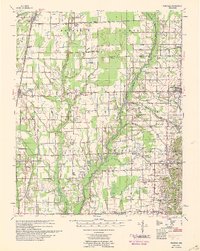 1958 Vanndale1958 Print · USGSCross and Poinsett Counties are captured in the late fifties, showing a landscape defined by the L'Anguille River and the regional rail lines. Researchers can trace rural genealogy through landmarks like Tilton Sch & Ch, Union Grove Cem, and Slocum Cem.2 unique versions available
 - 1960 Map of Whitmore, 1966 Print
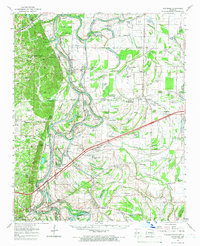 1960 Whitmore1966 Print · USGSIn the Arkansas delta during the early sixties, the river loops and rail lines shaped every community. Genealogists can trace family landmarks like Wittsburg Cem, Newcastle, and rural schools such as Campbell Sch near the Missouri Pacific RR.
 - 1962 Map of Princedale, 1968 Print
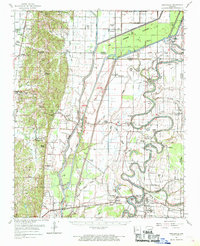 1962 Princedale1968 Print · USGSEastern Arkansas in the early sixties reveals a landscape shaped by Poinsett Ridge and the winding St. Francis River. Genealogists and local historians can trace family locations like Yarbo Place, rural landmarks such as McDonald Ch, and the stop at Cherry Valley Halt.
 - 1965 Map of Whitmore
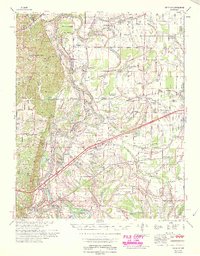 1965 Whitmore1965 Print · USGSEastern Arkansas at the mid-century reveals a landscape shaped by the St Francis River and the high ground of Crowley s Ridge. Researchers can trace the heritage of rural communities through dozens of landmarks like Wittsburg Cemetery, Harris Chapel, and Campbell Sch.
 - 1966 Map of Princedale
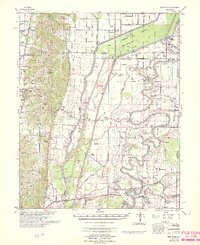 1966 Princedale1966 Print · USGSEastern Arkansas river life in the mid-sixties centered on the complex drainage of the St Francis River. Genealogists can trace family landmarks like Burr Place and Harefarm Cem or rural centers like Wildwood Ch & Sch.
 - 1971 Map of Fair Oaks, 1973 Print
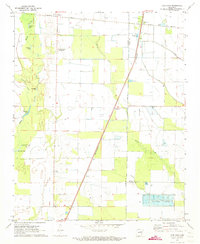 1971 Fair Oaks1973 Print · USGSFair Oaks and the surrounding Arkansas Delta are captured here in the early seventies, where rail lines and irrigation dominate the landscape. Researchers can trace the junction of two major railroads and locate sites like Penrose, Morton, and the Minnow Ponds.
 - 1974 Map of Joyland, 1976 Print
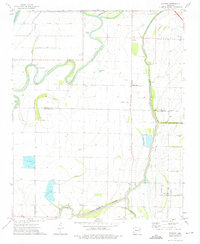 1974 Joyland1976 Print · USGSThe Delta lowlands of Poinsett and Crittenden counties are shown in the mid-seventies, defined by the winding St Francis River and its complex irrigation network. Genealogists can trace rural communities like Black Oak and Galilee, or locate family sites near Tyronza Cem and New Hope Ch.2 unique versions available
 - 1977 Map of Deckerville
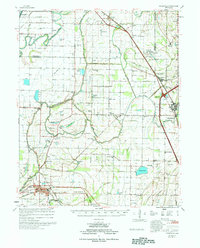 1977 Deckerville1977 Print · USGSCrittenden and Poinsett counties are shown in the mid-seventies, an era when extensive drainage ditch networks supported a thriving agricultural delta. Genealogists can trace family names through sites like New Bethlehem Cem, Philadelphia Ch, and the settlement at Shannonville.
 - 1980 Map of Tilton
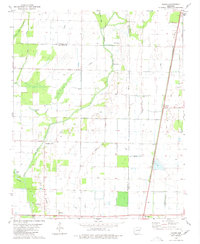 1980 Tilton1980 Print · USGSNear the Woodruff and Jackson county lines in the 1970s, this area shows a landscape of bayous and rail-side settlements. Genealogists and local historians can trace the rural communities of Pumpkin Bend and Tilton, or locate the Morton Cem and Betts Cem.
Showing maps 1-25 of 121
Top cities of Cross County
- Wynne historical maps
- Parkin historical maps
- Cherry Valley historical maps
- Hickory Ridge historical maps
Frequently asked questions
- What are the different types of historical maps available for Cross County?
- What is the oldest map of Cross County?
- Where can I purchase historical maps of Cross County for my home or office?
- Where can I download high-res historical maps of Cross County?
- Are there historical topographic maps available for Cross County?
- Is there historical aerial imagery available for Cross County?
- Where are historical maps of Cross County sourced from?