1960s Maps of Pulaski County, Arkansas
Explore 17 historic maps of Pulaski County from the 1960s. These maps offer a rare glimpse into what life looked like during the 1960s — showing old roads, neighborhoods, homes, and landmarks that have changed or disappeared over time.
Whether you're researching your family's past, planning a metal detecting trip, or studying how Pulaski County's landscape evolved across the 1960s, these high-resolution maps are a powerful tool for exploring the history of this region.
- Focus on a specific era: All maps on this page are from the 1960s, giving you a focused view of this time period.
- See what’s changed: Compare century-old streets, trails, and buildings to today's modern landscape using overlays and satellite layers.
- Research with precision: Use these maps for genealogy, historical research, land use analysis, or educational projects.
- View, download, or print: Maps are fully viewable online in high resolution, and can be downloaded or printed for your own records.
Start exploring Pulaski County's history through authentic maps from the 1960s. This is your window into the past.
Pulaski County, AR maps
(17)- 1960 Map of Little Rock
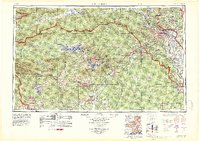 1960 Little Rock1960 Print · USGSCentral Arkansas in the late fifties shows a landscape of growing military bases and massive new reservoirs. Local historians can trace the mid-century expansion of Little Rock and Hot Springs alongside the industrial works at Bauxite and the Pine Bluff Arsenal.
 - 1961 Map of North Little Rock, 1962 Print
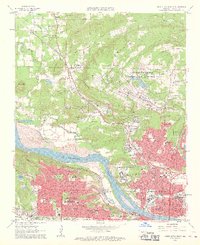 1961 North Little Rock1962 Print · USGSThe riverfront and uplands of the Little Rock metro area are captured here in the early sixties, as suburban growth began to reach toward the hills. Genealogists and local historians can locate dozens of institutions, from St Josephs Orphanage and Shorter College to Palestine Cem.4 unique versions available
 - 1961 Map of Little Rock, 1962 Print
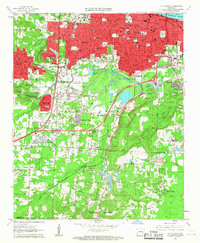 1961 Little Rock1962 Print · USGSLittle Rock and its southern suburbs are captured in the early sixties during a transformative era of growth and industrial activity. Genealogists and researchers can locate historic institutions like Central High Sch, trace the Missouri Pacific rail lines, or find family plots in Oakland Cemetery and Calvary Cemetery.3 unique versions available
 - 1961 Map of Mc Almont, 1962 Print
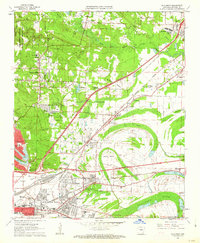 1961 Mc Almont1962 Print · USGSPulaski County undergoes a period of rapid suburban and industrial expansion in the early sixties. Genealogists and local historians can trace the footprint of community landmarks like McAlmont, Clayton Chapel, and the Franklin D Roosevelt Sch.3 unique versions available
 - 1961 Map of Alexander, 1962 Print
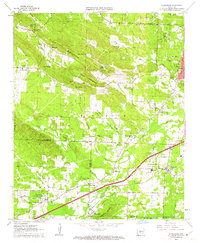 1961 Alexander1962 Print · USGSThe transition from rural Saline and Pulaski counties to suburban reach is evident here in the early 1960s. Genealogists can trace family names at Forest Hills Memorial Park, Mabelvale, and the Ida Mission Cem.4 unique versions available
 - 1961 Map of Pinnacle Mountain, 1962 Print
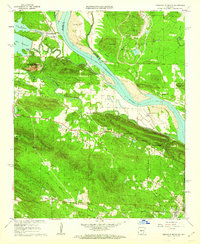 1961 Pinnacle Mountain1962 Print · USGSThe peaks of the Arkansas River Valley stand tall in the early sixties, as suburban growth reaches toward the river's edge. Researchers can trace family history at the Old Soldiers Cem, visit the County Prison Farm, or locate the Pumping Station near Natural Steps.4 unique versions available
 - 1961 Map of Sweet Home, 1962 Print
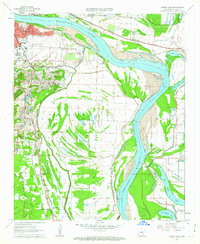 1961 Sweet Home1962 Print · USGSSoutheast of Little Rock in the early sixties, the river valley shows a mix of growing industrial hubs and small residential communities. Genealogists can locate family landmarks like Freeman Cemetery and rural churches such as Pilgrim Rest Church or St Stephens Church.4 unique versions available
 - 1961 Map of Fourche, 1962 Print
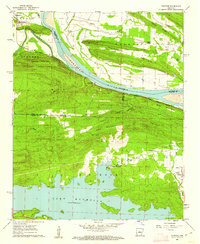 1961 Fourche1962 Print · USGSThe Arkansas River valley meets the Ouachita foothills in the early sixties, showing a landscape of river-bend towns and rising ridgelines. Genealogists can trace family roots through Little Italy and Lundsford Corner, or locate historic sites like Mt Moriah Ch and Rainey Cem.5 unique versions available
 - 1963 Map of Thornburg, 1964 Print
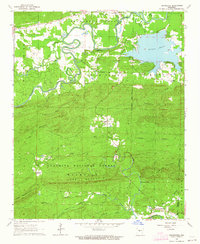 1963 Thornburg1964 Print · USGSCentral Arkansas in the early sixties is defined by the winding Fourche La Fave River and the rural crossroads of Thornburg. Researchers can trace family sites at Tyndall Cem, the community at Antioch, and the Fish Hatchery at Williams Junction.4 unique versions available
 - 1963 Map of Fourche SW, 1964 Print
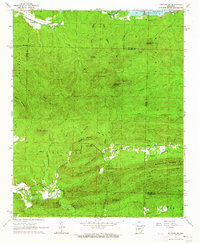 1963 Fourche SW1964 Print · USGSThe Saline and Pulaski County borderlands in the early sixties reveal a landscape of deep valleys and named peaks. Genealogists and hikers can trace landmarks like the Cold Spring Cem, Smyrna Ch, and the old Railroad Grade near Holland.3 unique versions available
 - 1963 Map of Martindale, 1964 Print
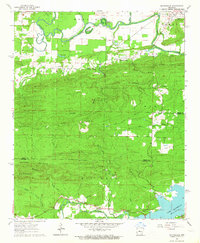 1963 Martindale1964 Print · USGSPerry and Pulaski counties meet in this early 1960s landscape of river bottoms and high ridges before extensive modern development. Researchers can trace rural life through the homes and cemeteries of Wye, the riverfront at Martindale, and old country sanctuaries like Oak Grove Ch.5 unique versions available
 - 1963 Map of Mountain Springs, 1964 Print
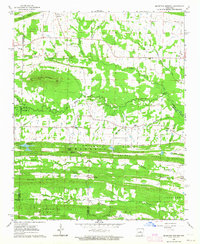 1963 Mountain Springs1964 Print · USGSCentral Arkansas in the early sixties was a landscape of remote ridges and tight-knit rural parishes. Genealogists can trace family names through the Shurley Cem or Barger Cem and locate historic meeting places like Baugh Chapel and Sixteenth Section Ch.3 unique versions available
 - 1963 Map of Paron, 1964 Print
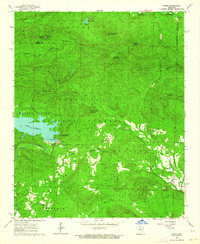 1963 Paron1964 Print · USGSSaline County’s forest landscape in the early sixties is shown here as a network of ridges and river forks within the Ouachita National Forest. Researchers can trace old roads to the Walnut Bottom Cem, the settlement of Reform, or the Fowler Cem near Paron.5 unique versions available
 - 1963 Map of Vilonia, 1964 Print
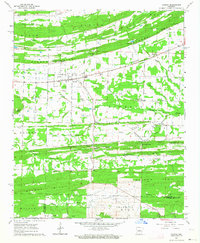 1963 Vilonia1964 Print · USGSFaulkner County in the early sixties reveals a landscape of ridge-top travel and creek-side settlement centered on Vilonia. Genealogists and local historians can trace family locations near landmarks like Cypress Valley Cem, Otto, and Carmichael Gap.3 unique versions available
 - 1963 Map of Ferndale, 1964 Print
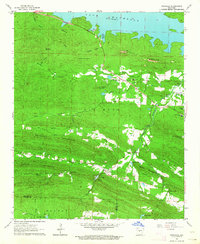 1963 Ferndale1964 Print · USGSPulaski County at the start of the 1960s reveals a landscape of ridge-top settlements and newly managed waterways. Researchers can locate numerous family burial sites and schools, such as Browns Valley of Rest Cem and the Joe T Robinson Sch.4 unique versions available
 - 1964 Map of Russellville
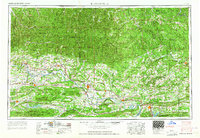 1964 Russellville1964 Print · USGSMid-century Central Arkansas is defined here by the river-valley towns and the surrounding mountain ranges before the full expansion of the interstate system. Genealogists and historians can trace rail-town development along the Missouri Pacific Railroad and locate landmarks like Arkansas Polytechnic College or Petit Jean State Park.
 - 1964 Map of Little Rock
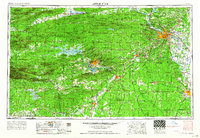 1964 Little Rock1964 Print · USGSCentral Arkansas in the mid-sixties is a landscape of mountain ridges, industrial rail lines, and growing military hubs. Researchers can trace the development of Bauxite and Hot Springs or locate rural landmarks like Sparkman and the Pine Bluff Arsenal.
End of results
Showing maps 1-17 of 17
Top cities of Pulaski County
- Little Rock historical maps
- North Little Rock historical maps
- Jacksonville historical maps
- Sherwood historical maps
- Maumelle historical maps
- Wrightsville historical maps
See more
Frequently asked questions
- What are the different types of historical maps available for Pulaski County?
- What is the oldest map of Pulaski County?
- Where can I purchase historical maps of Pulaski County for my home or office?
- Where can I download high-res historical maps of Pulaski County?
- Are there historical topographic maps available for Pulaski County?
- Is there historical aerial imagery available for Pulaski County?
- Where are historical maps of Pulaski County sourced from?