Old Maps of Parkers, Arkansas for Academic Research
Study the evolution of Parkers with 18 high-resolution historic maps. Whether you're teaching, researching, or modeling changes in land use, these maps provide essential visual documentation of urban, environmental, and geographic change.
- Analyze long-term change: Track patterns in development, transportation, and natural features.
- Ideal for environmental or urban studies: Support academic projects with primary historical map data.
- Use in the classroom or lab: Educators and researchers rely on these maps to bring historical context to life.
These maps are a powerful tool for teaching, research, and visualizing how Parkers has changed over the decades.
Parkers, AR maps
(18)- 1891 Map of Little Rock
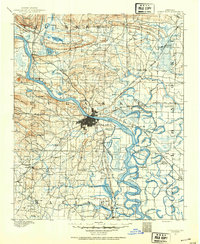 1891 Little Rock1891 Print · USGSLittle Rock and the central Arkansas river valley are shown in detail during the 1890s, when rail travel and river trade dominated the local economy. Genealogists can trace early homesteads and communities near Argenta, the Indian Mounds at Toltec, and Sweet Home.
 - 1893 Map of Little Rock
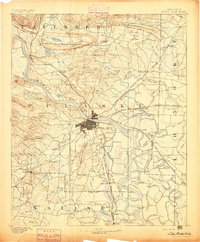 1893 Little Rock1893 Print · USGSLittle Rock and the Arkansas River valley are shown here in the early 1890s, just as the regional rail network was maturing. Genealogists can trace family roots through old settlements like Argenta, Shilcott, and Collegeville, or locate archaeological sites such as the Indian Mounds.5 unique versions available
 - 1935 Map of Alexander
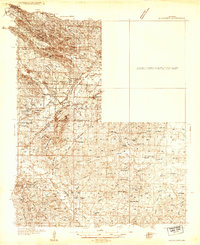 1935 Alexander1935 Print · USGSSaline and Pulaski counties come alive in this mid-1930s survey as the rail-and-creek network shaped local life. Researchers can trace family roots through numerous country landmarks including Sardis Sch, Salem Cem, and the State Girls Indust Home.2 unique versions available
 - 1941 Map of Alexander
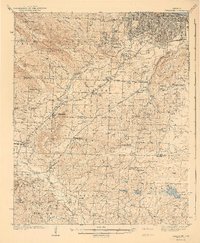 1941 Alexander1941 Print · USGSIn the 1930s, the corridor between Pulaski and Saline County was a bustling landscape of rail lines and rural townships. Genealogists and historians can trace family roots through numerous local landmarks, including the Dawson Sch, Vimy Ridge, and the Industrial Home.2 unique versions available
 - 1944 Map of Spring Lake, 1946 Print
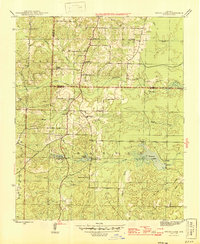 1944 Spring Lake1946 Print · USGSSaline and Pulaski counties meet in this mid-century survey of the Arkansas countryside south of Little Rock. Genealogists and local historians can trace the foundations of these communities through landmarks like Landmark Sch, Ivy Chapel, and Jay Cem.
 - 1954 Map of Spring Lake, 1957 Print
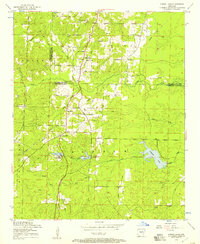 1954 Spring Lake1957 Print · USGSThe Saline and Pulaski County line comes to life in the mid-1950s as rural communities began to expand along the ARCH STREET PIKE. Genealogists and historians can locate old family landmarks like the Salem Cemetery, East Union Church, and the Landmark School.4 unique versions available
 - 1955 Map of Little Rock, 1978 Print
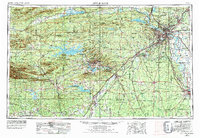 1955 Little Rock1978 Print · USGSCentral Arkansas in the mid-fifties exhibits a landscape of growing cities, massive military installations, and mountain reservoirs. Genealogists and historians can trace the industrial Bauxite Mines, regional rail lines, and local landmarks like Antioch Church.
 - 1956 Map of Little Rock
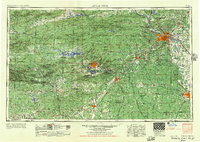 1956 Little Rock1956 Print · USGSCentral Arkansas in the mid-fifties shows a landscape defined by burgeoning military bases and the timber-and-mineral wealth of the Ouachitas. Genealogists and researchers can trace old rail lines like the Missouri Pacific and find established communities such as Bauxite, Sheridan, and Mabelvale.
 - 1960 Map of Little Rock
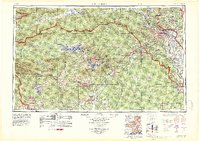 1960 Little Rock1960 Print · USGSCentral Arkansas in the late fifties shows a landscape of growing military bases and massive new reservoirs. Local historians can trace the mid-century expansion of Little Rock and Hot Springs alongside the industrial works at Bauxite and the Pine Bluff Arsenal.
 - 1964 Map of Little Rock
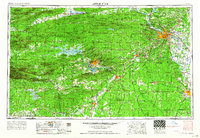 1964 Little Rock1964 Print · USGSCentral Arkansas in the mid-sixties is a landscape of mountain ridges, industrial rail lines, and growing military hubs. Researchers can trace the development of Bauxite and Hot Springs or locate rural landmarks like Sparkman and the Pine Bluff Arsenal.
 - 1985 Map of Little Rock, 1988 Print
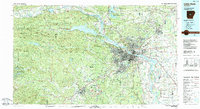 1985 Little Rock1988 Print · USGSLittle Rock and its surrounding river valley are shown in the mid-eighties as the region balanced urban expansion with its industrial and military roots. Genealogists and historians can locate dozens of institutions and family landmarks, including Mount Holly Cem, the Bauxite Mines, and Central High Sch.
 - 1987 Map of Spring Lake
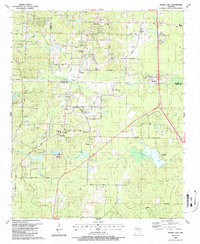 1987 Spring Lake1987 Print · USGSSaline and Pulaski counties meet in this detailed survey from the late eighties, documenting a landscape of small communities and rural churches. Genealogists can trace family roots through Upchurch Cem and Hicks Cem or locate local landmarks like East End School and the Carmelite Novitiate.
 - 1994 Map of Spring Lake, 2000 Print
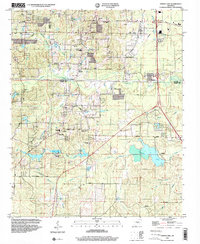 1994 Spring Lake2000 Print · USGSThe border of Saline and Pulaski counties comes into focus in the mid-1990s, capturing a landscape of established neighborhoods and rural crossroads. Local researchers can trace family roots through landmarks like Landmark Sch, Mary Lake Cem, and the Carmelite Novitiate near the shores of Spring Lake.
 - 2011 Map of Spring Lake, 2011 Print
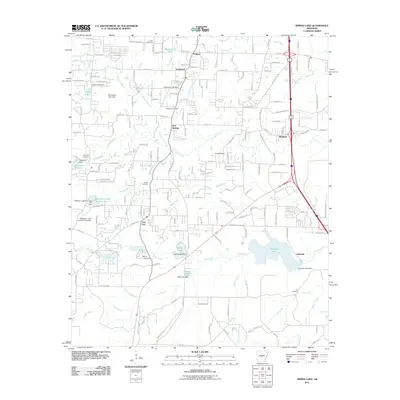 2011 Spring Lake2011 Print · USGSPulaski County at the start of the millennium reveals a landscape of growing residential communities and private reservoirs. Genealogists and local historians can trace family burial grounds at Salem Cemetery and Landmark Cemetery or locate old waterworks like Hester Lake.
 - 2014 Map of Spring Lake, 2014 Print
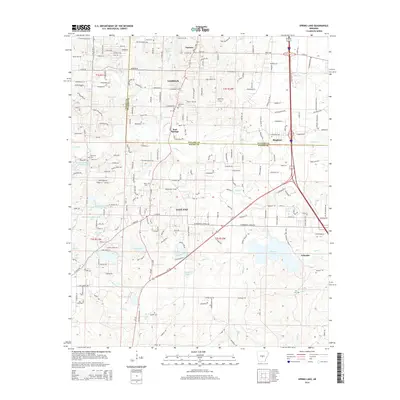 2014 Spring Lake2014 Print · USGSThe borderlands of Saline and Pulaski Counties are shown here during a period of suburban expansion into the creek valleys south of the capital. Researchers can locate several historic burial grounds, including Landmark Cem and Salem Cem, alongside local landmarks like Iron Springs and Ferguson Lake.
 - 2017 Map of Spring Lake, 2017 Print
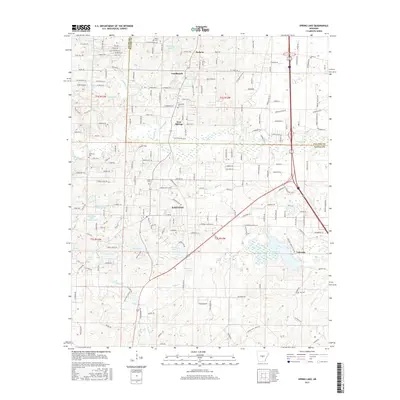 2017 Spring Lake2017 Print · USGSThe Pulaski and Saline County line comes alive in the late 2010s, showing a landscape of established communities and complex water systems. Genealogists can trace family footprints across Landmark Cem, Salem Cem, and Jay Cem, while explorers can map the routes near Iron Springs and Mashburn Lake.
 - 2020 Map of Spring Lake, 2020 Print
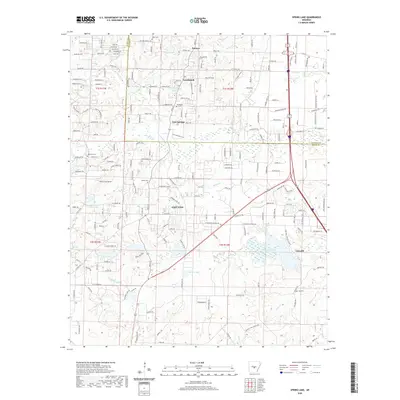 2020 Spring Lake2020 Print · USGSCentral Arkansas at the boundary of Saline and Pulaski Counties shows a landscape of growing settlements and established cemeteries in the modern era. Genealogists and local historians can trace burial sites like Salem Cem and Hicks Cem near the communities of Iron Springs and Landmark.
 - 2024 Map of Spring Lake, 2024 Print
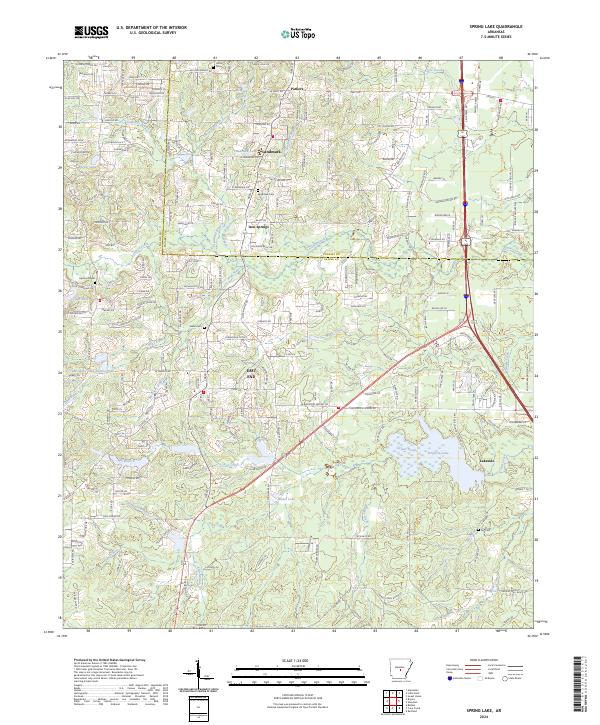 2024 Spring Lake2024 Print · USGSSaline and Pulaski counties meet in this contemporary landscape of developing neighborhoods and expansive wetlands. Researchers can trace local burial grounds like Salem Cem and Jay Cem while exploring the intricate waterways of Ferguson Lake and East End.
End of results
Showing maps 1-18 of 18
Top cities near Parkers
- Little Rock historical maps
- North Little Rock historical maps
- Jacksonville historical maps
- Benton historical maps
- Sherwood historical maps
- Maumelle historical maps
See more
Frequently asked questions
- What are the different types of historical maps available for Parkers?
- What is the oldest map of Parkers?
- Where can I purchase historical maps of Parkers for my home or office?
- Where can I download high-res historical maps of Parkers?
- Are there historical topographic maps available for Parkers?
- Is there historical aerial imagery available for Parkers?
- Where are historical maps of Parkers sourced from?