1900s (20th Century) Maps of Scott County, Arkansas
Explore 70 historic maps of Scott County from the 1900s (20th Century). These maps offer a rare glimpse into what life looked like during the 1900s — showing old roads, neighborhoods, homes, and landmarks that have changed or disappeared over time.
Whether you're researching your family's past, planning a metal detecting trip, or studying how Scott County's landscape evolved across the 1900s, these high-resolution maps are a powerful tool for exploring the history of this region.
- Focus on a specific era: All maps on this page are from the 1900s, giving you a focused view of this time period.
- See what’s changed: Compare century-old streets, trails, and buildings to today's modern landscape using overlays and satellite layers.
- Research with precision: Use these maps for genealogy, historical research, land use analysis, or educational projects.
- View, download, or print: Maps are fully viewable online in high resolution, and can be downloaded or printed for your own records.
Start exploring Scott County's history through authentic maps from the 1900s. This is your window into the past.
Scott County, AR maps
(70)- 1906 Map of Barber
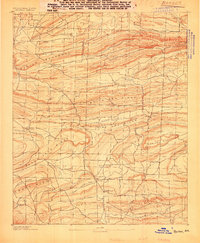 1906 Barber1906 Print · USGSSebastian County’s ridges and valley settlements are shown here at the start of the twentieth century, during a time of rural expansion. Researchers can trace early family sites and commerce through landmarks like the Toll Bridge and settlements such as Burnville and Sulphur Spring.
 - 1934 Map of Booneville
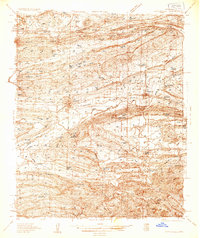 1934 Booneville1934 Print · USGSLogan County during the mid-1930s reveals a network of small Arkansas settlements and mountain ridges connected by the Rock Island line. Researchers can trace family history through sites like the State Sanitarium, Wesley Chapel, and the Rocky Springs Cem.2 unique versions available
 - 1939 Map of Booneville
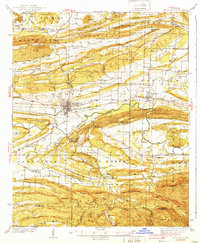 1939 Booneville1939 Print · USGSThe Logan County countryside thrives in the 1930s as a crossroads of the Rock Island railroad and the Petit Jean Creek valley. Genealogists can locate family landmarks like Harvel Cem, the State Sanatorium, and local schools including Shady Grove Sch.3 unique versions available
 - 1939 Map of Waldron, 1954 Print
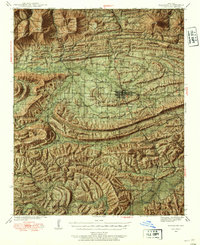 1939 Waldron1954 Print · USGSWaldron and the surrounding Scott County highlands are captured here in the late thirties as the railroad-driven economy shaped these mountain valleys. Genealogists can locate family landmarks like Old Salem Cem, the Jenkins Sch, and rural communities such as Winfield and Boles.8 unique versions available
 - 1940 Map of Waldron
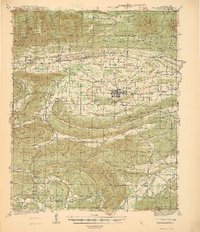 1940 Waldron1940 Print · USGSWaldron and the surrounding Ouachita highlands are shown here in the years leading up to the Second World War. Researchers can trace the heritage of rural Scott County through its many local schools and cemeteries, from Evening Shade Sch to the County Farm and Hon Cem.
 - 1941 Map of Waldron
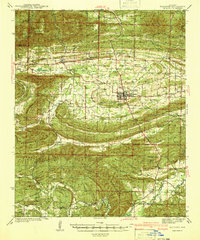 1941 Waldron1941 Print · USGSThe Scott County highlands come alive in the late 1930s, showing the vital rail junction at Waldron. Researchers can locate rural landmarks like Old Salem Ch, Hon Cem, and old mountain schoolhouses like Whisenhunt Sch.
 - 1943 Map of Fort Smith
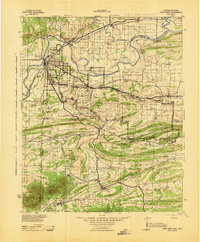 1943 Fort Smith1943 Print · USGSFort Smith and the Arkansas River valley are shown here during the height of the Second World War as the region became a major military hub. Genealogists and researchers can locate several rural schools and churches, such as St Marys School and Pleasant Ridge Church and Cem, alongside industrial sites like the Strip Mine and Smelter.
 - 1946 Map of Fort Smith
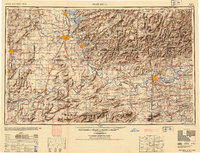 1946 Fort Smith1946 Print · USGSThe Arkansas-Oklahoma borderlands appear here in the mid-forties, as new reservoirs began to transform the river valleys. Genealogists and historians can trace rail-served towns from Muskogee to Fort Smith and locate landmarks like Camp Chaffee.
 - 1947 Map of Greenwood, 1954 Print
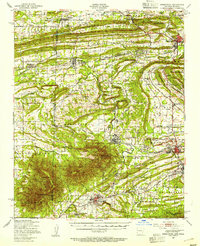 1947 Greenwood1954 Print · USGSThe Arkansas-Oklahoma border region thrived on coal and rail just after the war. Researchers can trace family ties at Old Jenny Lind and locate industrial landmarks like the Frazier Mine or the Midland Valley railroad.
 - 1947 Map of Barber, 1954 Print
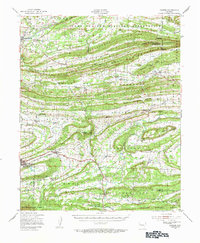 1947 Barber1954 Print · USGSSebastian County and the surrounding ridges are captured in the late 1940s, showing the intersection of military expansion and rural Arkansas life. Genealogists and historians can trace family locations through Union Ridge Cem, Milltown, and Liberty Ch.
 - 1947 Map of Ione, 1976 Print
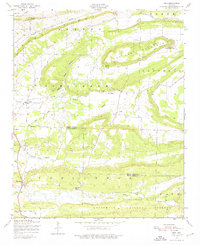 1947 Ione1976 Print · USGSThe Petit Jean River valley at the Logan and Scott county line is shown here just after the war. Researchers can locate family landmarks like Earl Prairie District School No 66, French Prairie Cemetery, and the old gin mill near Lucas.2 unique versions available
 - 1948 Map of Abbott
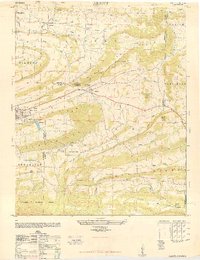 1948 Abbott1948 Print · USGSWestern Arkansas at the end of the 1940s reveals a landscape of ridges and rail-side towns along the Rock Island line. Genealogists and local historians can trace family roots through sites like Pine Grove Valley, Crossroads School, and Cantrell Cemetery.4 unique versions available
 - 1948 Map of Huntington, 1966 Print
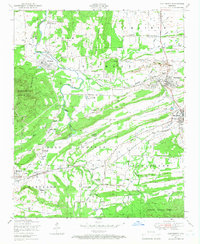 1948 Huntington1966 Print · USGSPost-war Arkansas coal country is vividly documented here just as the mining industry shaped local life. Genealogists and historians can trace family-named sites and vanished industrial hubs like Arkola, Gooberhull School, and the Northwestern Coal Company.3 unique versions available
 - 1949 Map of Waldron
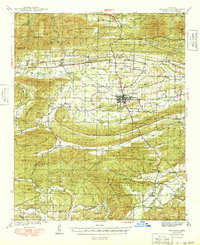 1949 Waldron1949 Print · USGSWaldron and the surrounding Scott County timberlands are captured here in the late 1940s as the railroad and river economy defined local life. Genealogists can trace family landmarks like Hon Cem, Square Rock Ch, and the old County Farm.2 unique versions available
 - 1950 Map of Mcalester
 1950 Mcalester1950 Print · USGSThe Ouachita Mountains and the coal country of Southeast Oklahoma are shown here in the late 1940s. Genealogists and historians can trace the rail-driven growth of McAlester, Wilburton, and Antlers alongside the rugged terrain of Kiamichi Mountain.2 unique versions available
 - 1951 Map of Ione
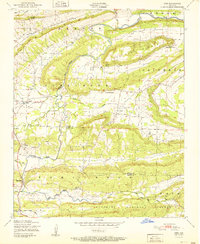 1951 Ione1951 Print · USGSLogan and Scott Counties appear at the start of the 1950s, showing a landscape defined by the winding Petit Jean Creek and the southern Ouachita National Forest. Researchers can locate old community hubs like Ione, Elm Park, and the French Prairie Cemetery.2 unique versions available
 - 1951 Map of Huntington
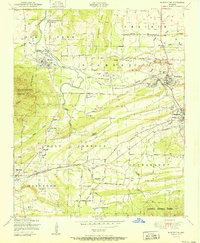 1951 Huntington1951 Print · USGSSebastian County’s coal-mining corridor is captured here at mid-century, showing the rail-linked settlements of Huntington and Hartford. Researchers can trace family history through locations like Gooberhull School, the Coal and Coke Company mines, and Beaulah.2 unique versions available
 - 1955 Map of Little Rock, 1978 Print
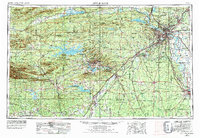 1955 Little Rock1978 Print · USGSCentral Arkansas in the mid-fifties exhibits a landscape of growing cities, massive military installations, and mountain reservoirs. Genealogists and historians can trace the industrial Bauxite Mines, regional rail lines, and local landmarks like Antioch Church.
 - 1956 Map of Little Rock
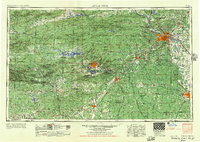 1956 Little Rock1956 Print · USGSCentral Arkansas in the mid-fifties shows a landscape defined by burgeoning military bases and the timber-and-mineral wealth of the Ouachitas. Genealogists and researchers can trace old rail lines like the Missouri Pacific and find established communities such as Bauxite, Sheridan, and Mabelvale.
 - 1956 Map of Russellville
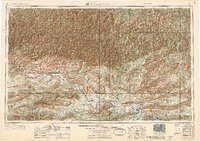 1956 Russellville1956 Print · USGSThe Arkansas River valley and the surrounding Boston Mountains are captured here in the mid-fifties, showing a landscape of small timber towns and new reservoirs. Genealogists can trace family roots through upland settlements like Pelsor and Witts Springs or locate the campus of Arkansas Polytechnic College.2 unique versions available
 - 1958 Map of Loving, 1959 Print
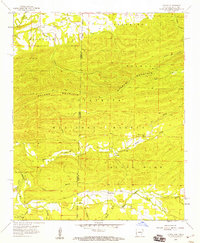 1958 Loving1959 Print · USGSThe Arkansas-Oklahoma borderlands come into focus in the late 1950s as the Ouachita National Forest meets the winding Poteau River. Researchers can trace old family sites and rural landmarks like the Loving Cem, Black Fork Cem, and the Haws Creek Ch.3 unique versions available
 - 1958 Map of Mena, 1959 Print
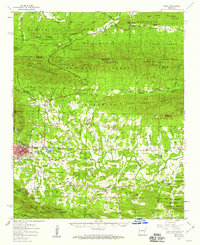 1958 Mena1959 Print · USGSPolk County life in the late fifties centered on the mountain valleys around Mena and the Ouachita National Forest boundary. Researchers can trace rural school locations like Stilwell Sch, the Kansas City Southern Railroad corridor, and many family burial grounds including Yocana Cem.
 - 1958 Map of Bates, 1959 Print
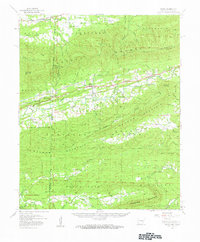 1958 Bates1959 Print · USGSThe Arkansas-Oklahoma borderlands in the late fifties reveal a landscape of ridge-top forests and valley industry. Researchers can trace rural lineages through local landmarks like Hiawatha School, Cauthron, and several family burial grounds including Sligar Cem and Loving Cem.
 - 1958 Map of Potter, 1959 Print
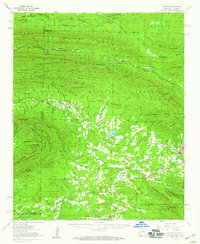 1958 Potter1959 Print · USGSThe Arkansas-Oklahoma borderlands are shown here in the late fifties, dominated by the ridges of the Ouachita National Forest. Researchers can locate old settlements like Zafra and Potter, family cemeteries such as Sexton Cem, and the path of the Kansas City Southern RR.3 unique versions available
 - 1958 Map of Cauthron, 1959 Print
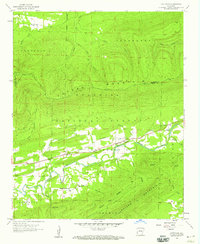 1958 Cauthron1959 Print · USGSThe Poteau River valley in the late fifties was defined by the arrival of the rail line and the thick forest of the Ouachita range. Trace local history at Cauthron, the Morgan Spring Ch, or the Poteau Lookout Tower.3 unique versions available
Showing maps 1-25 of 70
Top cities of Scott County
Frequently asked questions
- What are the different types of historical maps available for Scott County?
- What is the oldest map of Scott County?
- Where can I purchase historical maps of Scott County for my home or office?
- Where can I download high-res historical maps of Scott County?
- Are there historical topographic maps available for Scott County?
- Is there historical aerial imagery available for Scott County?
- Where are historical maps of Scott County sourced from?