1980s Maps of Scott County, Arkansas
Explore 22 historic maps of Scott County from the 1980s. These maps offer a rare glimpse into what life looked like during the 1980s — showing old roads, neighborhoods, homes, and landmarks that have changed or disappeared over time.
Whether you're researching your family's past, planning a metal detecting trip, or studying how Scott County's landscape evolved across the 1980s, these high-resolution maps are a powerful tool for exploring the history of this region.
- Focus on a specific era: All maps on this page are from the 1980s, giving you a focused view of this time period.
- See what’s changed: Compare century-old streets, trails, and buildings to today's modern landscape using overlays and satellite layers.
- Research with precision: Use these maps for genealogy, historical research, land use analysis, or educational projects.
- View, download, or print: Maps are fully viewable online in high resolution, and can be downloaded or printed for your own records.
Start exploring Scott County's history through authentic maps from the 1980s. This is your window into the past.
Scott County, AR maps
(22)- 1982 Map of Lake Ouachita
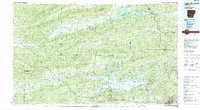 1982 Lake Ouachita1982 Print · USGSThe Ouachita Mountains of West Central Arkansas are shown here during the early eighties, a time of established recreation and protected timberlands. Researchers can locate small communities like Buckville (PO) and Pencil Bluff or trace the drainage of the Fourche La Fave River.
 - 1983 Map of Golden City
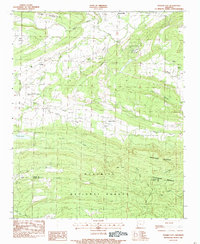 1983 Golden City1983 Print · USGSNear the northern edge of the Ouachita mountains in the early eighties, this survey captures a landscape of river-valley farms and state institutions. Researchers can trace family sites at Carolan Ch or identify ancestors at Golden City Cem and Mixon Cem.
 - 1983 Map of Sugar Grove
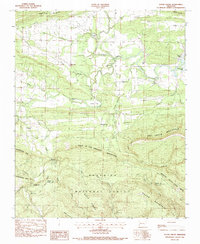 1983 Sugar Grove1983 Print · USGSSugar Grove and the surrounding Ouachita foothills are captured here in the late seventies just before the turn of the decade. Researchers can locate remote family landmarks like the Ethan Davis Cem, Lick Creek Ch, and the crossing at Third Bridge.
 - 1983 Map of Waldron, 1984 Print
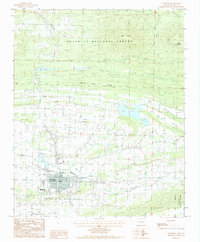 1983 Waldron1984 Print · USGSScott County and the town of Waldron are shown in the early 1980s as a hub of river valleys and timbered ridges. Genealogists and local historians can trace the paths of the KANSAS CITY SOUTHERN railroad or locate features like Lake Waldron and the Waldron City Airport.
 - 1983 Map of Hon, 1984 Print
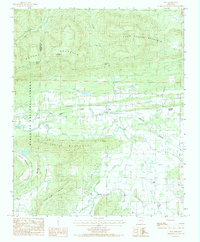 1983 Hon1984 Print · USGSThe Poteau River valley in the early eighties was defined by the ridges of the Ouachita range and the KANSAS CITY SOUTHERN rail line. Genealogists and local historians can trace family-named sites and small settlements like Hon, Winfield, and Evening Shade.
 - 1983 Map of Boles, 1984 Print
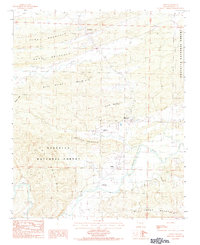 1983 Boles1984 Print · USGSThe Scott County highlands come into focus during the early eighties, where the Fourche La Fave River winds through the Ouachita National Forest. Researchers can trace old homesteads near The Pines and Needmore, or locate specialized landmarks like the Ratliff Landing Strip.
 - 1983 Map of Peanut Mountain, 1984 Print
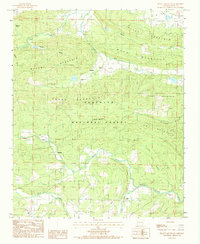 1983 Peanut Mountain1984 Print · USGSScott County, Arkansas, is captured here in the early 1980s as a landscape of isolated mountain communities and national forest land. Researchers can locate remote settlements like Denton and Blansett, or trace the path of the Fourche La Fave River near Nella.
 - 1984 Map of Russellville
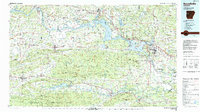 1984 Russellville1984 Print · USGSThe Arkansas River valley in the mid-eighties shows a landscape defined by the rise of Lake Dardanelle and the enduring presence of the Ozark National Forest. Researchers can find historical institutions like Arkansas Tech Univ and Sacred Heart Church or trace the routes of the Missouri Pacific RR.2 unique versions available
 - 1984 Map of Russellville
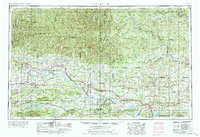 1984 Russellville1984 Print · USGSThe Arkansas River valley was undergoing significant change in the 1950s as transportation and water management reshaped the region from Russellville to Conway. Researchers can trace the era's rail networks like the Missouri Pacific RR and explore landmarks like Magazine Mountain and Petit Jean State Park.
 - 1985 Map of Parks, 1986 Print
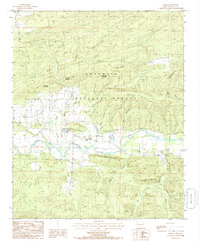 1985 Parks1986 Print · USGSThe Fourche La Fave River valley in the mid-eighties shows the rural character of western Arkansas during a period of forest management and river-bottom farming. Trace family landmarks like Bill Hunt Mountain, Glibreath Mountain, and the settlement at Parks.
 - 1985 Map of Brushy Creek Mountain, 1986 Print
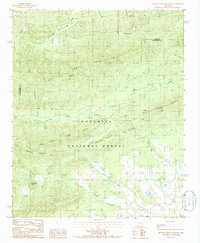 1985 Brushy Creek Mountain1986 Print · USGSMontgomery County was characterized by dense timber and isolated mountain settlements in the mid-eighties. Genealogists and hikers can trace the geography around Oden, find the Cem on Big Brushy Creek, or explore the heights of Mill Creek Mountain.
 - 1985 Map of Buck Knob, 1986 Print
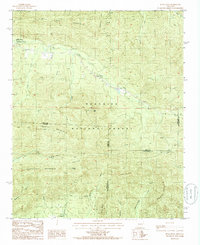 1985 Buck Knob1986 Print · USGSThe rugged Ouachita National Forest and the intersection of three Arkansas counties define this 1980s survey. Researchers can locate the Ouachita Trail, a remote Cem, and recreation sites near Mill Creek Recreation Area.
 - 1985 Map of Freedom Mountain, 1986 Print
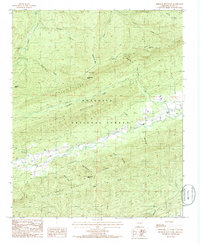 1985 Freedom Mountain1986 Print · USGSThe Ouachita Mountains of Scott County are shown in the mid-1980s as a landscape of timber and isolated valley settlements. Genealogists and researchers can locate Union Hill, the Dutch Creek Ch, and family landmarks like Spanish Oak Ridge.
 - 1985 Map of Gravelly, 1986 Print
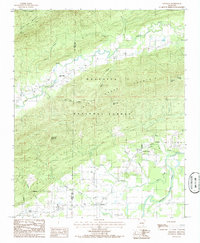 1985 Gravelly1986 Print · USGSThe Fourche La Fave River valley of Yell County comes to life in this mid-1980s survey. Genealogists and local historians can trace small settlements like Gravelly, Blue Ball, and Nola as they existed before modern development altered the rural landscape.
 - 1985 Map of Little Texas, 1986 Print
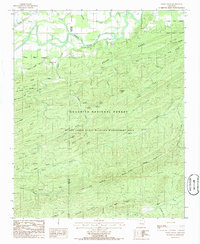 1985 Little Texas1986 Print · USGSThe northern Ouachitas in the mid-eighties show a landscape of dense timber and protected wildlife areas along the Fourche La Fave River. Local historians can trace the small settlement of Little Texas or locate regional landmarks like the Shale Pit and Ganders Peak.
 - 1985 Map of Bee Mountain, 1986 Print
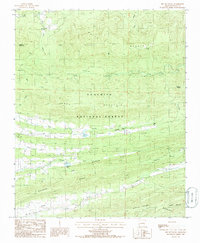 1985 Bee Mountain1986 Print · USGSScott County's ridge-and-valley landscape is captured here in the mid-1980s as the Ouachita National Forest surrounds small upland communities. Genealogists and local historians can locate the Cem at Self, trace the banks of Moore Lake, and follow the winding path of the Poteau River.
 - 1985 Map of Harvey, 1986 Print
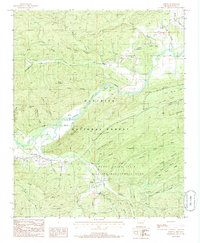 1985 Harvey1986 Print · USGSMid-1980s Scott County shows a landscape of timber and river life where the Fourche La Fave River winds through the hills. Genealogists and historians can trace old homesteads and landmarks like John Sanders Ridge, the Cem near Forester, and the settlement of Harvey.
 - 1986 Map of Sims
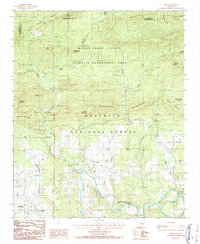 1986 Sims1986 Print · USGSThe Ouachita River valley comes to life in the mid-1980s, showing the intersection of national forest lands and rural Montgomery County settlements. Genealogists and hikers can trace local landmarks like Sims, the Harris Trail, and the Lookout Tower atop Muddy Mountain.
 - 1987 Map of Abbott, 1988 Print
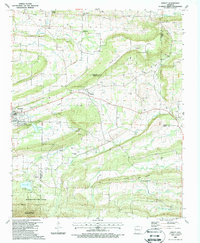 1987 Abbott1988 Print · USGSThe borderlands of Sebastian, Scott, and Logan counties are captured in the late eighties, showing a landscape defined by natural gas extraction and wooded wilderness. Researchers can trace an Old Railroad Grade and locate numerous family burial sites, including Union Ridge Cem and Sorrels Cem.
 - 1987 Map of Huntington, 1988 Print
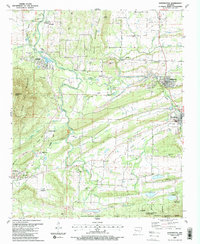 1987 Huntington1988 Print · USGSSebastian County during the late 1980s reveals a transition from the coal-mining corridors of the north to the wilderness of the south. Researchers can trace historic industrial footprints and community roots through Midland, Frog Town, and the Huntington Cem.2 unique versions available
 - 1987 Map of Ione, 1988 Print
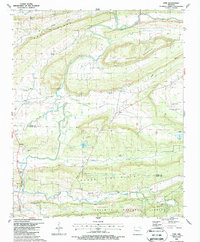 1987 Ione1988 Print · USGSLogan and Scott counties in the late 1980s are defined by the winding Petit Jean River and the rural communities of the Ouachita foothills. Researchers can trace family sites at Doss Cem and Tomlinson Cem or locate the Prison Farm.
 - 1989 Map of Mena, 1991 Print
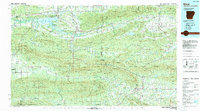 1989 Mena1991 Print · USGSThe Ouachita and Kiamichi mountains define this borderland region in the late 1980s. Local historians can trace the Kansas City Southern RR corridor from Mena through settlements like Heavener and past the waters of Wister Lake.
End of results
Showing maps 1-22 of 22
Top cities of Scott County
Frequently asked questions
- What are the different types of historical maps available for Scott County?
- What is the oldest map of Scott County?
- Where can I purchase historical maps of Scott County for my home or office?
- Where can I download high-res historical maps of Scott County?
- Are there historical topographic maps available for Scott County?
- Is there historical aerial imagery available for Scott County?
- Where are historical maps of Scott County sourced from?