Old Maps of Livermore, California for Hiking & Exploration
Hike through history with 24 historic maps of Livermore. Explore old trails, ghost towns, and forgotten backroads — perfect for outdoor adventurers and local explorers.
- Rediscover forgotten places: Map out old mining camps, roads, and footpaths that no longer exist on modern maps.
- Layer with modern tools: Combine with LiDAR or satellite views to plan hikes through historical terrain.
- Made for exploration: Popular among hikers, overlanders, and local history lovers.
Use these maps to find adventure and explore the hidden past of Livermore.
Livermore, CA maps
(24)- 1906 Map of Pleasanton
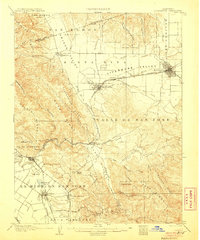 1906 Pleasanton1906 Print · USGSThe Livermore and Amador Valleys are captured here at the turn of the century as they transitioned from ranch lands to thriving rail hubs. Genealogists and historians can trace family locations near Mission San Jose, the old Dougherty Post Office, and the junction at Niles.5 unique versions available
 - 1907 Map of Tesla
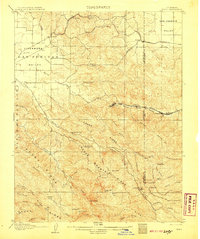 1907 Tesla1907 Print · USGSThe industrial corridor of Corral Hollow comes to life in this early 1900s survey of the Alameda and San Joaquin border. Genealogists and historians can trace now-quiet locations like Tesla, Pottery, and the Sweet Springs Halfway House along the winding mountain passes.5 unique versions available
 - 1941 Map of Pleasanton
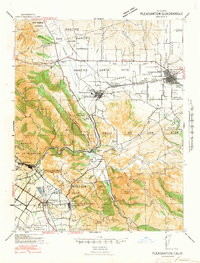 1941 Pleasanton1941 Print · USGSThe Livermore Valley and East Bay hills are captured here in the early 1940s, showing a world of cattle ranchos and railroad towns. You can trace early landmarks like the Mission San Jose de Guadalupe, the Livermore Airport, and several rural one-room schoolhouses like Antone Sch.
 - 1942 Map of Altamont, 1964 Print
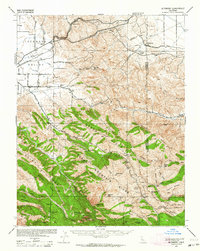 1942 Altamont1964 Print · USGSEastern Alameda County at the start of the war shows a landscape of rail sidings and cattle ranching as the valley meets the ridges. Genealogists and historians can trace family locations like Mendenhall Ranch, rural landmarks like Green School, and the steep rail route through Altamont.
 - 1943 Map of Pleasanton
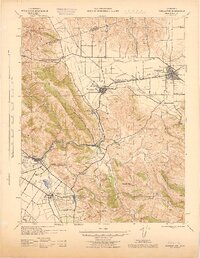 1943 Pleasanton1943 Print · USGSThe Livermore and Amador Valleys are captured during the early 1940s, showing a landscape of ranching, railroads, and early institutional development. Genealogists and historians can locate old schools like Stonybrook Sch and landmarks such as Mission San Jose de Guadalupe.
 - 1943 Map of Tesla
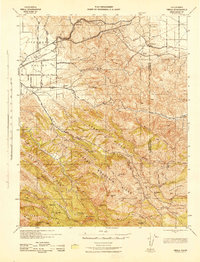 1943 Tesla1943 Print · USGSThe Livermore Valley and the rugged Diablo Range are shown during the early 1940s, featuring the critical rail junction at Altamont. Genealogists and historians can locate rural landmarks like the Green School, the Mendenhall Ranch, and the isolated Pointers Homestead.
 - 1947 Map of San Jose, 1948 Print
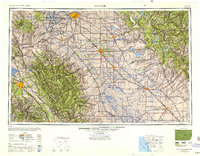 1947 San Jose1948 Print · USGSNorthern California's heartland is captured here just after the war, showing the rapid growth of the Santa Clara and Central Valleys. Researchers can trace the legacy of rail and water at Castle Air Force Base, Stockton, and the Hetch Hetchy Aqueduct.
 - 1953 Map of Livermore, 1954 Print
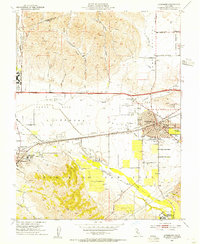 1953 Livermore1954 Print · USGSThe Livermore Valley was a landscape of military bases and rail-hubs in the early fifties. Genealogists and historians can trace the foundations of Livermore and Pleasanton near landmarks like the Livermore Sanitarium, Dow Airport, and St Michaels Cemetery.2 unique versions available
 - 1953 Map of Altamont, 1954 Print
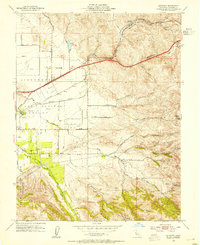 1953 Altamont1954 Print · USGSThe eastern Livermore Valley transitioned into a major transit hub during the early fifties, where massive rail lines met the steep grades of the Diablo Range. Local historians can trace early community sites like Summit Sch and the Abandoned Airfield near the settlement of Altamont.10 unique versions available
 - 1953 Map of Livermore, 1960 Print
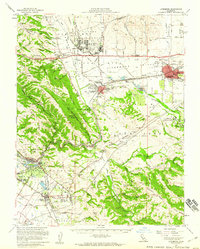 1953 Livermore1960 Print · USGSThe East Bay valleys are shown during a period of significant growth and military activity in the early fifties. Researchers can trace historic family locations at Mission San Jose and local landmarks like the Water Temple or the Old Hearst Ranch.
 - 1956 Map of San Jose
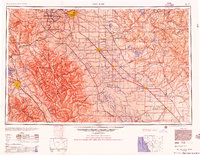 1956 San Jose1956 Print · USGSCentral California in the mid-fifties reveals the transition from sprawling orchards to growing urban hubs like San Jose and Stockton. Genealogists and historians can trace the rail-era landscape of the Mother Lode through Chinese Camp and Tuttletown, or follow the water through the Joaquin River and Calaveras Reservoir.
 - 1961 Map of Livermore
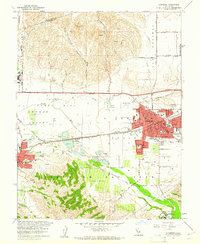 1961 Livermore1961 Print · USGSLivermore and Pleasanton were expanding rapidly in the early sixties as the agricultural Amador Valley began to modernize. Genealogists and local historians can trace the foundations of the community through the Masonic Cem, old school sites like Inman Sch, and the Southern Pacific rail lines.6 unique versions available
 - 1961 Map of Livermore, 1962 Print
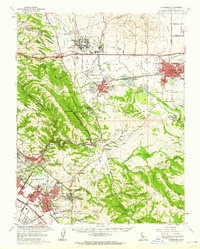 1961 Livermore1962 Print · USGSThe Amador and Livermore Valleys appear here during a period of significant institutional and suburban growth in the early sixties. Genealogists and local historians can trace the districts of Fremont and find landmarks like St Mary of the Palms or Camp Parks.2 unique versions available
 - 1962 Map of San Jose
 1962 San Jose1962 Print · USGSCentral California in the early sixties showcases the expansion of the San Joaquin and Santa Clara valleys. Researchers can trace the rail-to-road transition along the Southern Pacific RR or locate landmarks like Castle USAF Base and Loma Prieta.4 unique versions available
 - 1966 Map of San Jose
 1966 San Jose1966 Print · USGSCentral California in the mid-1960s reveals a landscape of massive irrigation projects and expanding Cold War military footprints. Researchers can trace the rail-and-river network of the San Joaquin Valley or locate specialized sites like Castle Air Force Base and the Sharp General Depot (Military).
 - 1989 Map of Stockton
 1989 Stockton1989 Print · USGSDuring the late 1980s, the California Delta and San Joaquin Valley saw a massive convergence of water infrastructure and military logistics. Researchers can trace the sprawling Lawrence Livermore Laboratory (Univ of Calif) and Sharpe Army Depot alongside the complex waterways of Union Island and Victoria Island.2 unique versions available
 - 2012 Map of Altamont, 2012 Print
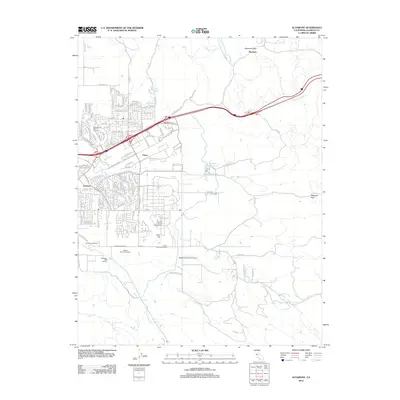 2012 Altamont2012 Print · USGSThe Livermore Valley was entering a new era of scientific and viticultural prominence in the early 2010s. Researchers and local historians can trace the footprint of Sandia National Laboratories and historic vineyards like Wente Brothers Winery and Concannon Winery.
 - 2012 Map of Livermore, 2012 Print
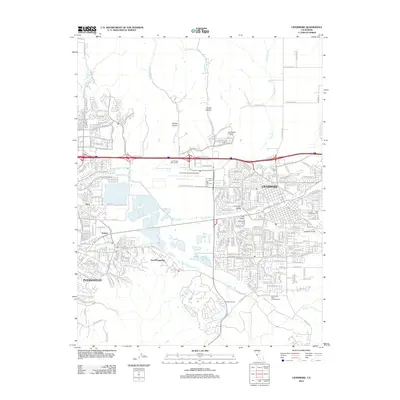 2012 Livermore2012 Print · USGSThe Livermore Valley at the start of the 2010s shows a modern suburban corridor still intertwined with its celebrated winemaking tradition. Researchers can trace local heritage through Roselawn Cem, Saint Michaels Cem, and vineyards like Fenestra Winery.
 - 2015 Map of Altamont, 2015 Print
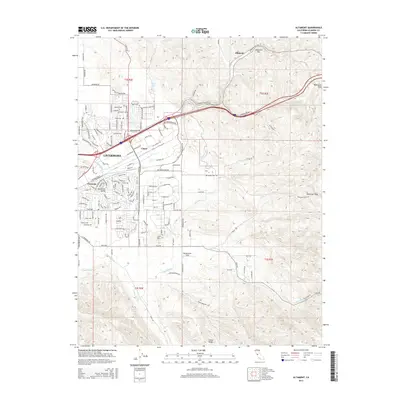 2015 Altamont2015 Print · USGSThe eastern Livermore Valley and the ridges of the Diablo Range are shown in detail during the mid-2010s. Researchers can trace the infrastructure of the S Bay Aqueduct and locate local landmarks like Altamont Pass, Trevarno, and Lone Hill.
 - 2015 Map of Livermore, 2015 Print
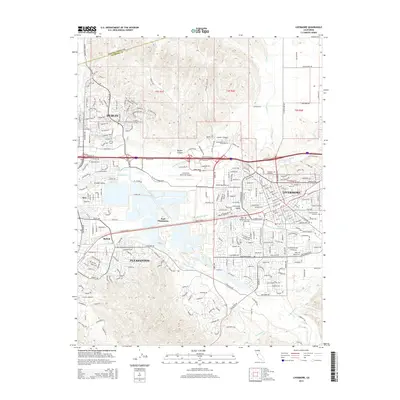 2015 Livermore2015 Print · USGSThe Tri-Valley area of Alameda County is shown in detail during its modern suburban evolution. Researchers can trace the growth of Livermore and Pleasanton, locate family plots at Saint Michaels Cemetery, and see the path of the S Bay Aqueduct.
 - 2018 Map of Altamont, 2018 Print
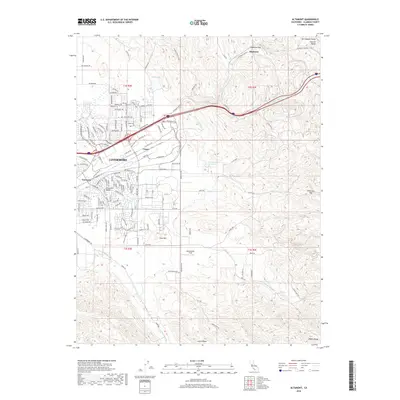 2018 Altamont2018 Print · USGSThe eastern edge of the Livermore Valley meets the Diablo Range in this modern-era study of California's wind-swept corridor. Trace the geography of the Altamont Pass alongside the S Bay Aqueduct and the heights of Crane Ridge.
 - 2018 Map of Livermore, 2018 Print
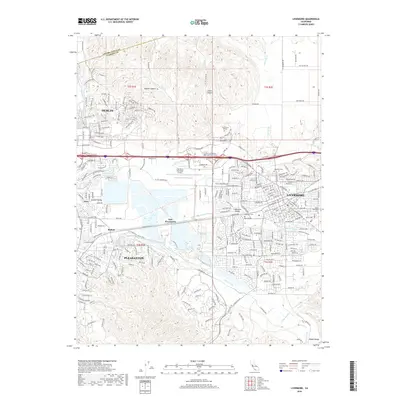 2018 Livermore2018 Print · USGSThe Tri-Valley area during its late-2010s expansion shows a complex network of residential growth and critical infrastructure. Researchers can trace the development of Dublin and Livermore, while locating landmarks like Las Positas College and St Michaels Cem.
 - 2021 Map of Livermore, 2021 Print
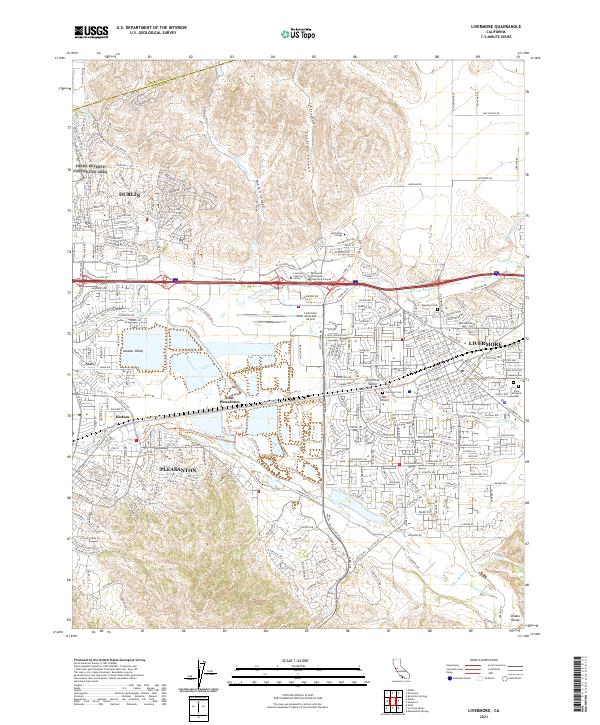 2021 Livermore2021 Print · USGSThe Tri-Valley region is shown in its modern suburban form as the cities of the Amador Valley expanded toward the Diablo Range. Trace local history through family-named sites and landmarks like Radum, Roselawn Cem, and the tracks of the Southern Pacific.
 - 2021 Map of Altamont, 2021 Print
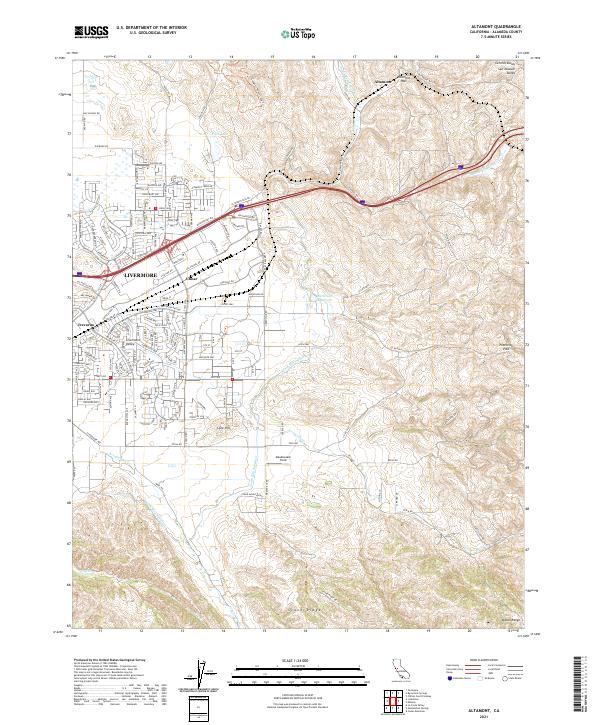 2021 Altamont2021 Print · USGSThe hills of eastern Alameda County are captured here during a period of modern expansion through the gap leading into the San Joaquin Valley. Trace the transition from the streets of Livermore to the open ridges of Crane Ridge and the historic Altamont Pass.
End of results
Showing maps 1-24 of 24
Top cities near Livermore
- San Jose historical maps
- Fremont historical maps
- Hayward historical maps
- Sunnyvale historical maps
- Tracy historical maps
- Milpitas historical maps
See more
Top neighborhoods of Livermore
- Ulmar historical maps
- Arrowhead Estates historical maps
- Altamar Meadows historical maps
- Amber Ridge historical maps
- Autumn Springs historical maps
- The Meadows historical maps
See more
Frequently asked questions
- What are the different types of historical maps available for Livermore?
- What is the oldest map of Livermore?
- Where can I purchase historical maps of Livermore for my home or office?
- Where can I download high-res historical maps of Livermore?
- Are there historical topographic maps available for Livermore?
- Is there historical aerial imagery available for Livermore?
- Where are historical maps of Livermore sourced from?