Old Maps of Hoppaw, California for Academic Research
Study the evolution of Hoppaw with 14 high-resolution historic maps. Whether you're teaching, researching, or modeling changes in land use, these maps provide essential visual documentation of urban, environmental, and geographic change.
- Analyze long-term change: Track patterns in development, transportation, and natural features.
- Ideal for environmental or urban studies: Support academic projects with primary historical map data.
- Use in the classroom or lab: Educators and researchers rely on these maps to bring historical context to life.
These maps are a powerful tool for teaching, research, and visualizing how Hoppaw has changed over the decades.
Hoppaw, CA maps
(14)- 1929 Map of Crescent City
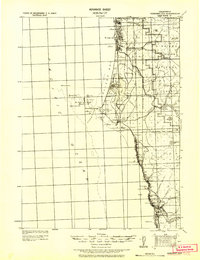 1929 Crescent City1929 Print · USGSCoastal Del Norte County appears here during the late 1920s, showing the early infrastructure of the redwood coast. Genealogists and researchers can trace family-named sites like Bald Hill Ranch, the Tyson Chrome Mines, and the waterfront of Crescent City.
 - 1945 Map of Requa
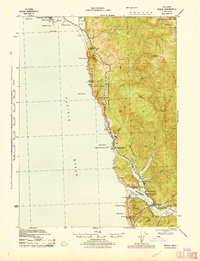 1945 Requa1945 Print · USGSThe Del Norte coast at the end of World War II shows a landscape defined by the redwood timber trade and the mouth of the Klamath River. Researchers can locate the Klamath Cedar Co Sawmill, the Requa School, and the settlement at Waukell Flat.
 - 1949 Map of Eureka
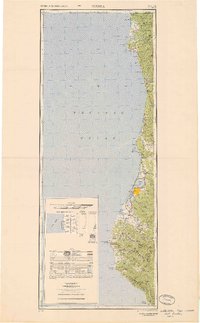 1949 Eureka1949 Print · USGSCoastal Northern California in the late 1940s shows a landscape of timber towns and maritime outposts. You can trace the Northwestern Pacific rail line through Eureka or locate family landmarks like the Tyson Chrome Mine and Crescent City Lighthouse.2 unique versions available
 - 1952 Map of Klamath, 1954 Print
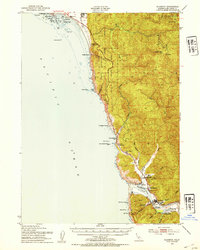 1952 Klamath1954 Print · USGSThe Del Norte coast comes alive in the early fifties, showing the rugged interface between the redwoods and the Pacific. Trace the river economy near the Klamath River through landmarks like the Veneer Mill, Requa Sch, and the Douglas Mem Bridge.3 unique versions available
 - 1958 Map of Eureka, 1967 Print
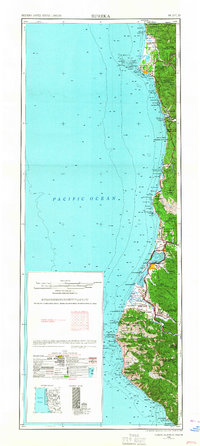 1958 Eureka1967 Print · USGSNorthern California's rugged redwood coast and timber corridors are captured in the late fifties, from the Oregon border down to Shelter Cove. Researchers can trace the path of the Northwestern Pacific railroad and locate rural landmarks like Grizzly Bluff School or the St Josephs Sch.
 - 1958 Map of Crescent City, 1978 Print
 1958 Crescent City1978 Print · USGSThe northwestern California coast and the Oregon borderlands are shown here during a period of expanding redwood conservation and active military presence. Researchers can trace historic sites from the Yontocket Indian Village Site to Fort Dick and the Klamath Air Force Station.
 - 1961 Map of Eureka
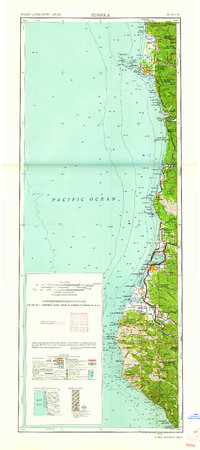 1961 Eureka1961 Print · USGSThe Northern California coast and its deep redwood forests are mapped here at a time when the timber and rail industries defined the region. Researchers can trace historic family ranches and remote sites like Fort Dick, Table Bluff Lighthouse, and the Copper Creek Mine.2 unique versions available
 - 1966 Map of Requa, 1968 Print
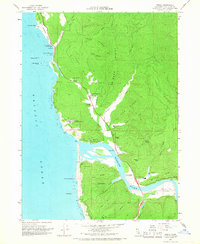 1966 Requa1968 Print · USGSThe Del Norte coast and the mouth of the Klamath River are captured here in the mid-sixties during a period of transition for its coastal communities. Researchers can trace the boundaries of the Waukell Flat Rancheria, locate the Keating Sch, and identify the Klamath Air Force Station.3 unique versions available
 - 1983 Map of Crescent City
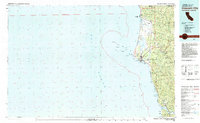 1983 Crescent City1983 Print · USGSThe Del Norte coast in the early eighties shows a transition between industrial mining and the expansion of massive redwood parks. Genealogists and local researchers can locate coastal landmarks from McNamara Field to the Alta Mine and the riverfront settlement of Requa.
 - 1997 Map of Requa, 2001 Print
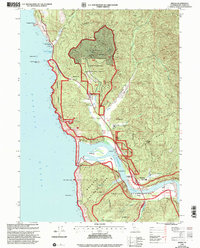 1997 Requa2001 Print · USGSThe Klamath River estuary in the late 1990s reveals a unique landscape where tribal reservations and national parks meet the Pacific. Researchers can trace local history at the Requa Cem, the Keating School, and the Klamath Air Force Station.
 - 2012 Map of Requa, 2012 Print
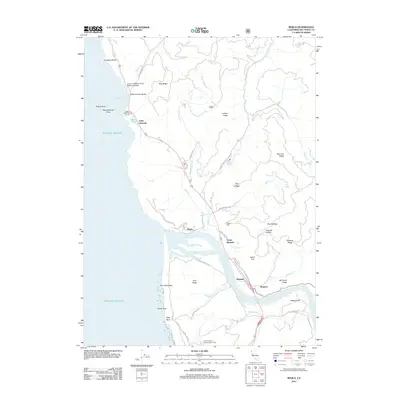 2012 Requa2012 Print · USGSThe Klamath River estuary and the Del Norte coast are shown here in the early twenty-first century. Researchers can trace river settlements like Requa and Camp Klamath or locate coastal landmarks such as High Bluff and Wilson Creek Beach.
 - 2015 Map of Requa, 2015 Print
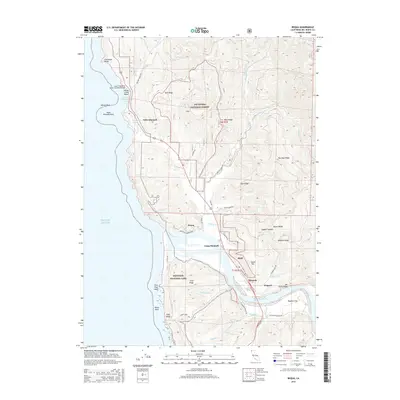 2015 Requa2015 Print · USGSCoastal Del Norte County appears in detail during the mid-2010s as the Klamath River reaches the Pacific. Researchers can trace the riverfront communities of Requa and Klamath, alongside landmarks like the Louis P DeMartin Senior Memorial Bridge and High Bluff.
 - 2018 Map of Requa, 2018 Print
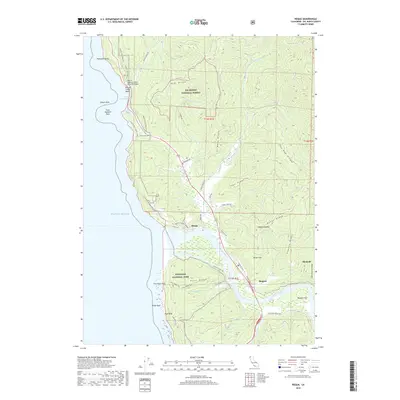 2018 Requa2018 Print · USGSThe Del Norte County coast comes alive in this 2018 survey where the Klamath River reaches the Pacific. Trace the river's path past the settlements of Requa and Hoppaw, or explore the trails of Redwood National Park and Flint Ridge.
 - 2021 Map of Requa, 2021 Print
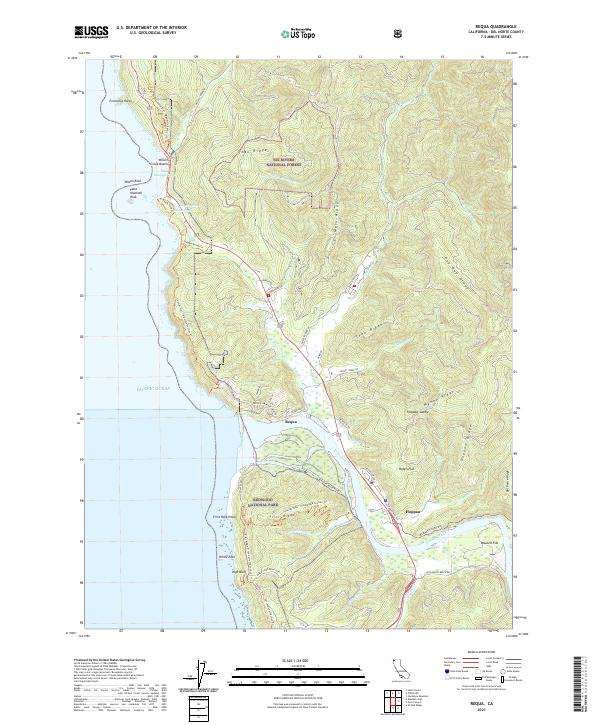 2021 Requa2021 Print · USGSThe Klamath River estuary meets the Pacific in the 2020s, showing a landscape defined by federal forest and park protection. Trace local settlements like Requa and Hoppaw, and follow the Coastal Trail past Flint Rock Head.
End of results
Showing maps 1-14 of 14
Top cities near Hoppaw
Frequently asked questions
- What are the different types of historical maps available for Hoppaw?
- What is the oldest map of Hoppaw?
- Where can I purchase historical maps of Hoppaw for my home or office?
- Where can I download high-res historical maps of Hoppaw?
- Are there historical topographic maps available for Hoppaw?
- Is there historical aerial imagery available for Hoppaw?
- Where are historical maps of Hoppaw sourced from?