1950s Maps of Charleston View, California
Explore 17 historic maps of Charleston View from the 1950s. These maps offer a rare glimpse into what life looked like during the 1950s — showing old roads, neighborhoods, homes, and landmarks that have changed or disappeared over time.
Whether you're researching your family's past, planning a metal detecting trip, or studying how Charleston View's landscape evolved across the 1950s, these high-resolution maps are a powerful tool for exploring the history of this region.
- Focus on a specific era: All maps on this page are from the 1950s, giving you a focused view of this time period.
- See what’s changed: Compare century-old streets, trails, and buildings to today's modern landscape using overlays and satellite layers.
- Research with precision: Use these maps for genealogy, historical research, land use analysis, or educational projects.
- View, download, or print: Maps are fully viewable online in high resolution, and can be downloaded or printed for your own records.
Start exploring Charleston View's history through authentic maps from the 1950s. This is your window into the past.
Charleston View, CA maps
(17)- 1950 Map of Tecopa, 1958 Print
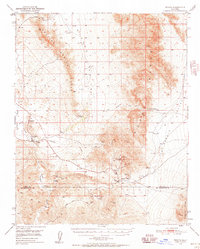 1950 Tecopa1958 Print · USGSThe desert landscape of southeastern California is captured here at mid-century, just as the local mining economy and transportation networks were shifting. Researchers can locate remote industrial sites like the Noonday Mine or trace the historic path of the Old Spanish Trail through the hills.3 unique versions available
 - 1951 Map of Tecopa
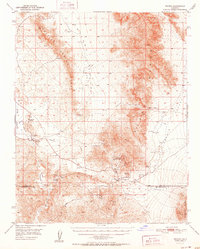 1951 Tecopa1951 Print · USGSThe California desert near the Nevada border in the early fifties reveals a landscape of mining and historic transit routes. Genealogists and historians can trace the Old Spanish Trail and locate remote operations like the Columbia Mine and Mine Camp.
 - 1953 Map of Trona, 1956 Print
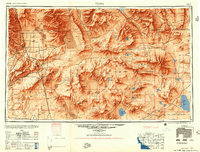 1953 Trona1956 Print · USGSThe high desert of San Bernardino and Inyo counties during the early Cold War reveals a landscape of mineral industry and military expansion. You can trace the Old Spanish Trail, locate the Trona potash works, and find remote outposts like Ashford Mill.
 - 1954 Map of Las Vegas
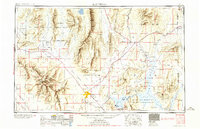 1954 Las Vegas1954 Print · USGSLas Vegas and the Mojave Desert are shown in the early fifties as the region's military and recreational footprint expanded. Genealogists and historians can trace the early layout of North Las Vegas, the sites of Indian Springs Air Force Base, and long-established towns like Bunkerville.5 unique versions available
 - 1954 Map of Kingman, 1964 Print
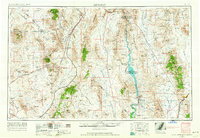 1954 Kingman1964 Print · USGSThe High Desert borderlands come to life in the mid-fifties, showing the intersection of mining legacies and massive river projects. Researchers can trace old rail stops like Roach Station, mining sites such as Chloride, and river landmarks like Searchlight Ferry.4 unique versions available
 - 1954 Map of Death Valley, 1966 Print
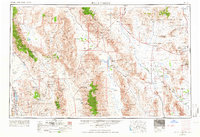 1954 Death Valley1966 Print · USGSInyo County and the Nevada borderlands are shown during the mid-twentieth century as mining history met the atomic age. Researchers can trace the legacy of desert boomtowns and remote camps like Rhyolite, Darwin Mines, and the isolated Clay Camp.3 unique versions available
 - 1955 Map of Kingman
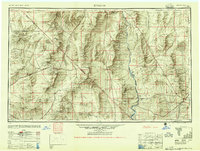 1955 Kingman1955 Print · USGSThe Mojave Desert and Colorado River corridor come alive in the mid-fifties, showing a landscape of mining camps and rail junctions. Trace the river to the Searchlight Ferry or locate old desert mining sites like Goldroad and the Great Monster Mine.
 - 1956 Map of Death Valley
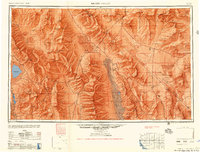 1956 Death Valley1956 Print · USGSInyo County and the Nevada borderlands appear in the mid-fifties as a rugged landscape of mining camps and military reservations. Genealogists and historians can trace the foundations of Furnace Creek Ranch, the desert roads to Ballarat, and active mining sites like the Lila C Mine.
 - 1956 Map of Horse Thief Springs, 1957 Print
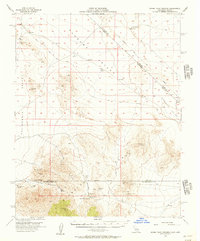 1956 Horse Thief Springs1957 Print · USGSIn the mid-fifties, the rugged desert border between California and Nevada remained a frontier for mineral prospectors and travelers. You can trace the Old Traction Road past numerous mining sites like the Silver Rule Mine and Jupiter Mine.3 unique versions available
 - 1957 Map of Las Vegas
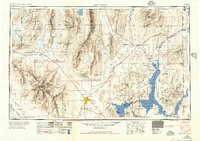 1957 Las Vegas1957 Print · USGSSouthern Nevada in the mid-fifties is a landscape of massive federal ranges and the early growth of Las Vegas. Researchers can trace the development of McCarran Field, the expansive Lake Mead National Recreation Area, and the industrial footprint of Henderson.
 - 1957 Map of Death Valley
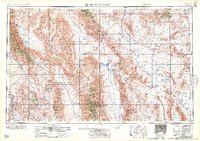 1957 Death Valley1957 Print · USGSThe High Desert in the mid-fifties reveals a landscape of extreme elevations and deep-seated mining history, from the Panamint Range to the Amargosa River. Trace the remnants of the Tonopah & Tidewater RR and remote sites like Ballarat or the Skidoo Mine.
 - 1957 Map of Trona, 1964 Print
 1957 Trona1964 Print · USGSThe High Desert in the mid-fifties is captured here as a landscape of remote mining outposts and growing military installations. Trace the industrial rail lines to Trona, the mining history of Randsburg, or the isolated expanse of the Naval Ordnance Test Station.5 unique versions available
 - 1958 Map of Death Valley
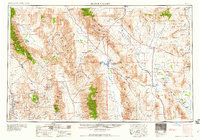 1958 Death Valley1958 Print · USGSThe High Desert and Death Valley during the mid-fifties reveal a stark landscape of mining camps and new military ranges. Historians can trace the lineage of remote outposts like Ballarat, the Skidoo Mine, and the historic Cerro Gordo Mine.
 - 1958 Map of Kingman
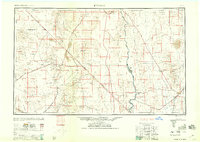 1958 Kingman1958 Print · USGSThe tri-state desert borders of Arizona, Nevada, and California are shown in the late fifties as a network of mining camps and river crossings. Genealogists and historians can trace the legacy of remote outposts like Oatman, Chloride, and the Searchlight Ferry along the Colorado River.2 unique versions available
 - 1958 Map of Stewart Valley, 1959 Print
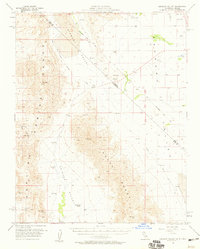 1958 Stewart Valley1959 Print · USGSThe California-Nevada borderlands in the late fifties reveal a landscape shaped by early surveying and mineral exploration. Genealogists and historians can trace the diagonal Von Schmidt Line and locate historic workings like the Baxter Mine and Gerstley Mine.2 unique versions available
 - 1958 Map of Pahrump, 1959 Print
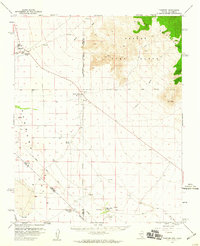 1958 Pahrump1959 Print · USGSPahrump and the surrounding valley ranches are shown here in the late fifties, just as the region was beginning to modernize. Researchers can locate the early Rose Sch, the historic Von Schmidt Line, and water sources like Mound Spring.2 unique versions available
 - 1959 Map of Las Vegas
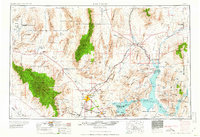 1959 Las Vegas1959 Print · USGSSouthern Nevada in the late fifties was a landscape of rapid suburban growth and massive federal installations. Genealogists and historians can trace early housing at Victory Village, the grounds of Camp Desert Rock, and the remote Tule Springs Ranch.
End of results
Showing maps 1-17 of 17
Top neighborhoods of Charleston View
Frequently asked questions
- What are the different types of historical maps available for Charleston View?
- What is the oldest map of Charleston View?
- Where can I purchase historical maps of Charleston View for my home or office?
- Where can I download high-res historical maps of Charleston View?
- Are there historical topographic maps available for Charleston View?
- Is there historical aerial imagery available for Charleston View?
- Where are historical maps of Charleston View sourced from?