1940s Maps of Rancho Cucamonga, California
Explore 5 historic maps of Rancho Cucamonga from the 1940s. These maps offer a rare glimpse into what life looked like during the 1940s — showing old roads, neighborhoods, homes, and landmarks that have changed or disappeared over time.
Whether you're researching your family's past, planning a metal detecting trip, or studying how Rancho Cucamonga's landscape evolved across the 1940s, these high-resolution maps are a powerful tool for exploring the history of this region.
- Focus on a specific era: All maps on this page are from the 1940s, giving you a focused view of this time period.
- See what’s changed: Compare century-old streets, trails, and buildings to today's modern landscape using overlays and satellite layers.
- Research with precision: Use these maps for genealogy, historical research, land use analysis, or educational projects.
- View, download, or print: Maps are fully viewable online in high resolution, and can be downloaded or printed for your own records.
Start exploring Rancho Cucamonga's history through authentic maps from the 1940s. This is your window into the past.
Rancho Cucamonga, CA maps
(5)- 1940 Map of Evey Canyon
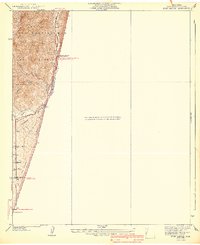 1940 Evey Canyon1940 Print · USGSThe foothills of the San Gabriel Mts meet the growing community of Claremont in this 1940s-era survey. Genealogists and local historians can trace the early road network of the valley and find mountain landmarks like the Norton Sch and Lower San Antonio Guard Station.3 unique versions available
 - 1941 Map of Devore
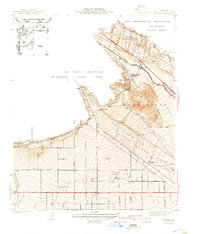 1941 Devore1941 Print · USGSThe Cajon Pass area in the early 1940s reveals a landscape defined by critical rail lines and alluvial washes. Researchers can trace the development of infrastructure around Devore through landmarks like the Cajon Sch, Fontana Airport, and the Glenn Helen Infirmary.2 unique versions available
 - 1942 Map of San Bernardino
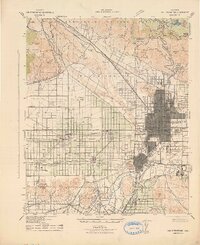 1942 San Bernardino1942 Print · USGSThe San Bernardino Valley flourished as a railroad and citrus hub during the early years of the war. Researchers can trace the extensive tracks of the Atchison Topeka and Santa Fe, the National Orange Show grounds, and local landmarks like the Loma Linda Sanatorium.
 - 1942 Map of Ontario and Vicinity
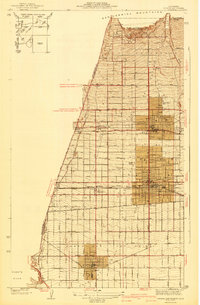 1942 Ontario and Vicinity1942 Print · USGSThe Inland Empire is shown at a pivotal moment in the early 1940s, when orange groves and vineyards still dominated the landscape between the mountains and the valley floor. Researchers can trace the rail corridors of the SOUTHERN PACIFIC and the Pacific Electric while locating old neighborhood markers like Narod, Sunsweet, and the Sierra Vista Sch.2 unique versions available
 - 1944 Map of Cucamonga
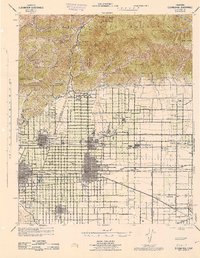 1944 Cucamonga1944 Print · USGSThe San Gabriel Valley and Inland Empire are shown here during the mid-forties, capturing the peak of the region's citrus era and rail-based transit. Researchers can trace early campus layouts at Pomona College or locate vanished landmarks like the Monta Vista Resort and Padua Hills Theater.
End of results
Showing maps 1-5 of 5
Top cities near Rancho Cucamonga
- Riverside historical maps
- Fontana historical maps
- Ontario historical maps
- Pomona historical maps
- Corona historical maps
- Rialto historical maps
See more
Top neighborhoods of Rancho Cucamonga
- Grapeland historical maps
- North Cucamonga historical maps
- Rochester historical maps
- Etiwanda historical maps
- Alta Loma historical maps
- Etiwanda historical maps
See more
Frequently asked questions
- What are the different types of historical maps available for Rancho Cucamonga?
- What is the oldest map of Rancho Cucamonga?
- Where can I purchase historical maps of Rancho Cucamonga for my home or office?
- Where can I download high-res historical maps of Rancho Cucamonga?
- Are there historical topographic maps available for Rancho Cucamonga?
- Is there historical aerial imagery available for Rancho Cucamonga?
- Where are historical maps of Rancho Cucamonga sourced from?