1900s (20th Century) Maps of Coffey Park, Santa Rosa
Explore 11 historic maps of Coffey Park from the 1900s (20th Century). These maps offer a rare glimpse into what life looked like during the 1900s — showing old roads, neighborhoods, homes, and landmarks that have changed or disappeared over time.
Whether you're researching your family's past, planning a metal detecting trip, or studying how Coffey Park's landscape evolved across the 1900s, these high-resolution maps are a powerful tool for exploring the history of this region.
- Focus on a specific era: All maps on this page are from the 1900s, giving you a focused view of this time period.
- See what’s changed: Compare century-old streets, trails, and buildings to today's modern landscape using overlays and satellite layers.
- Research with precision: Use these maps for genealogy, historical research, land use analysis, or educational projects.
- View, download, or print: Maps are fully viewable online in high resolution, and can be downloaded or printed for your own records.
Start exploring Coffey Park's history through authentic maps from the 1900s. This is your window into the past.
Coffey Park, Santa Rosa maps
(11)- 1916 Map of Santa Rosa
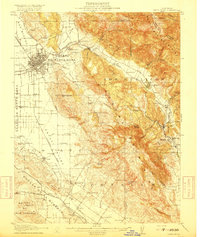 1916 Santa Rosa1916 Print · USGSSonoma County in the mid-1910s is a landscape of established rail towns and historic land grants. Researchers can trace early infrastructure through sites like the Sonoma State Home, Adobe Fort, and rural landmarks such as Grangers Hall or the Winery.3 unique versions available
 - 1944 Map of Santa Rosa
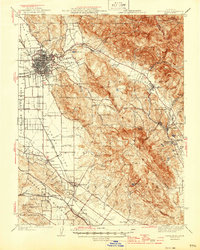 1944 Santa Rosa1944 Print · USGSSonoma County transitions from its early land-grant heritage to a mid-century agricultural hub in the years following the 1942 revision. Genealogists and researchers can locate numerous country schools and family-linked landmarks like Sonoma State Home, Adobe Fort, and Grange Hall.2 unique versions available
 - 1947 Map of Santa Rosa
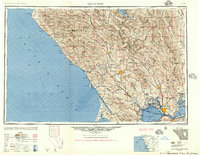 1947 Santa Rosa1947 Print · USGSNorthern California in the late 1940s was a landscape of agricultural valleys and vital rail hubs. Trace the historic routes of the Northwestern Pacific through Healdsburg or explore the mid-century waterfronts of Vallejo and Benicia near Mare Island.
 - 1949 Map of Santa Rosa
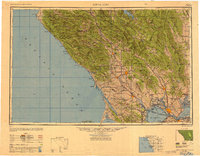 1949 Santa Rosa1949 Print · USGSThe North Bay and Wine Country appear here in the late 1940s, when the Northwestern Pacific RR still dominated regional transit. Genealogists and historians can trace old coastal outposts like Anchor Bay Settlement and the early layout of Santa Rosa.2 unique versions available
 - 1954 Map of Santa Rosa, 1955 Print
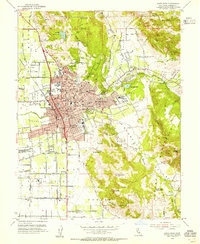 1954 Santa Rosa1955 Print · USGSSanta Rosa in the mid-fifties is a thriving hub of civic life and new suburban development set against the backdrop of Sonoma County’s mountains. Researchers can trace the legacy of local landmarks like the Luther Burbank Gardens, the Rural Cemetery, and the Bennett Valley Grange Hall.6 unique versions available
 - 1954 Map of Santa Rosa, 1959 Print
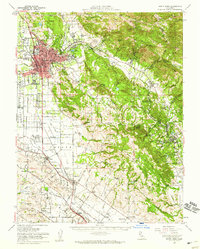 1954 Santa Rosa1959 Print · USGSSonoma County at the mid-century shows a landscape of expanding valley towns and military infrastructure. Researchers can locate the Cotati Naval Auxiliary Air Station or trace the Jack London Ranch and Penngrove rail stops.2 unique versions available
 - 1958 Map of Santa Rosa, 1968 Print
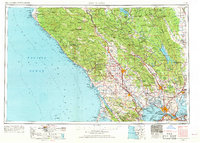 1958 Santa Rosa1968 Print · USGSThe North Bay and Wine Country are captured in the mid-twentieth century as the region balanced its agricultural roots with a growing military and recreational footprint. Researchers can trace the Northwestern Pacific RR through the Russian River valley or locate landmarks like the Petaluma Adobe Historical Monument and The Geysers Resort.3 unique versions available
 - 1962 Map of Santa Rosa
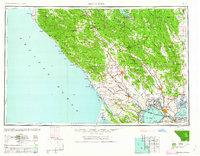 1962 Santa Rosa1962 Print · USGSThe North Bay and Wine Country were entering a period of significant growth in the early sixties, anchored by established rail corridors and coastal maritime commerce. Genealogists and historians can trace the development of Santa Rosa, locate the Mare Island Naval Shipyard, and follow the Northwestern Pacific RR through the Cotati Valley.
 - 1964 Map of Santa Rosa
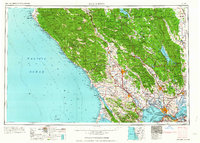 1964 Santa Rosa1964 Print · USGSThe North Bay and Wine Country appear in the mid-fifties during a period of significant military and educational growth. Trace old rail lines like the Northwestern Pacific RR and explore historic sites from Petaluma to the Benicia Arsenal.
 - 1983 Map of Napa
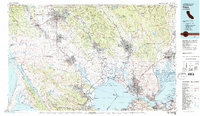 1983 Napa1983 Print · USGSThe North Bay and wine country are captured in the early eighties as suburban growth began to surround traditional agricultural centers. Researchers can trace the rail corridors of the Northwestern Pacific Railroad, the grounds of Mare Island Naval Shipyard, and the reach of the San Andreas Rift Zone.
 - 1994 Map of Santa Rosa, 1999 Print
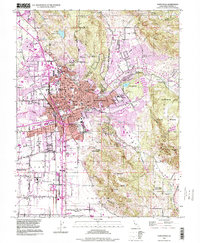 1994 Santa Rosa1999 Print · USGSSanta Rosa and its surrounding valleys are captured in the late nineties during a period of steady growth. Researchers can trace the legacy of regional landmarks like the Rural Cemetery, the Sonoma County Fairgrounds, and the Luther Burbank Gardens.
End of results
Showing maps 1-11 of 11
Frequently asked questions
- What are the different types of historical maps available for Coffey Park?
- What is the oldest map of Coffey Park?
- Where can I purchase historical maps of Coffey Park for my home or office?
- Where can I download high-res historical maps of Coffey Park?
- Are there historical topographic maps available for Coffey Park?
- Is there historical aerial imagery available for Coffey Park?
- Where are historical maps of Coffey Park sourced from?