Old Maps of Canton, Georgia for Academic Research
Study the evolution of Canton with 46 high-resolution historic maps. Whether you're teaching, researching, or modeling changes in land use, these maps provide essential visual documentation of urban, environmental, and geographic change.
- Analyze long-term change: Track patterns in development, transportation, and natural features.
- Ideal for environmental or urban studies: Support academic projects with primary historical map data.
- Use in the classroom or lab: Educators and researchers rely on these maps to bring historical context to life.
These maps are a powerful tool for teaching, research, and visualizing how Canton has changed over the decades.
Canton, GA maps
(46)- 1890 Map of Suwanee
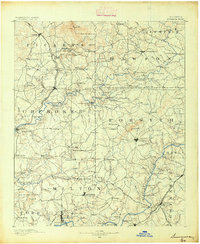 1890 Suwanee1890 Print · USGSNorth Georgia in the 1890s was a landscape of river-powered commerce and gold prospecting. Genealogists and historians can trace family-named river crossings like Jones Ferry and Pirkle's Ferry or locate the historic Kin Mori Gold Mine.
 - 1890 Map of Cartersville
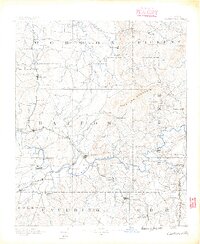 1890 Cartersville1890 Print · USGSNorthwest Georgia in the late nineteenth century was a landscape of burgeoning rail junctions and river-powered industry. Researchers can trace the roots of families and commerce at McDaniel's Station, Warford's Roads, and the many industrial sites along the Etowah River.
 - 1891 Map of Cartersville
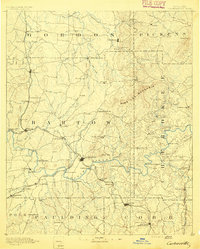 1891 Cartersville1891 Print · USGSNorth Georgia in the late nineteenth century was defined by its winding river crossings and the arrival of the iron horse. Trace the paths of early travel through Wooley's Ferry, identify old family operations like Hall's Mill, and locate rail stops at McDaniel's Station.
 - 1894 Map of Suwanee
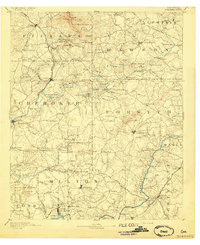 1894 Suwanee1894 Print · USGSNorth Georgia in the late nineteenth century was a landscape of river ferries and rising industry, from marble quarries to gold mines. Genealogists can trace family landmarks like Fields Cross Roads, the Kin Mori Gold Mine, and Fort Buffington.6 unique versions available
 - 1896 Map of Cartersville
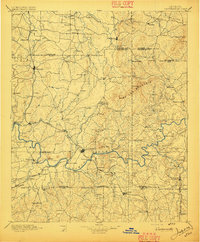 1896 Cartersville1896 Print · USGSNorth Georgia in the late nineteenth century was a rugged landscape of river crossings and mountain ridges. Trace the old ferry routes like Akeman Ferry or locate vanished industrial sites such as Marine Mill and the early works at Cement.4 unique versions available
 - 1907 Map of Acworth, 1954 Print
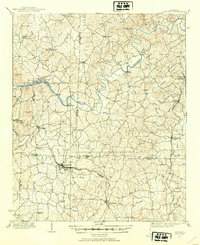 1907 Acworth1954 Print · USGSNorthern Georgia's river-and-rail corridor is captured here at the start of the twentieth century. Genealogists can trace family roots near Acworth and Kennesaw or locate old crossings like Island Mills Ferry and Steels Bridge.
 - 1909 Map of Acworth
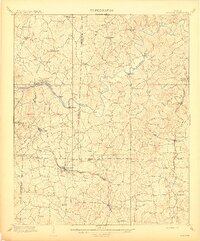 1909 Acworth1909 Print · USGSNorth Georgia at the turn of the century shows a landscape of river ferries and emerging rail towns before the creation of modern reservoirs. Genealogists can trace family footprints near Acworth and Woodstock, or locate historic crossings like Island Mills Ferry and Steels Bridge.
 - 1926 Map of Tate, 1968 Print
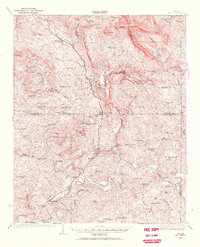 1926 Tate1968 Print · USGSNorthern Georgia's ridge-and-valley corridor is captured here in the mid-twenties, showcasing a landscape of mining and rail commerce. Trace early industrial sites like the Franklin Gold Mine and old crossroads like Ball Ground or Nelson.
 - 1928 Map of Tate
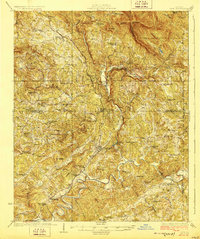 1928 Tate1928 Print · USGSNorth Georgia’s mineral and mountain heritage comes to life in the late 1920s as the rail line connects the marble and gold districts. Researchers can locate family roots at the Franklin Gold Mine, Old Damascus Church, or Burroughs Crossroads.
 - 1947 Map of Waleska, 1964 Print
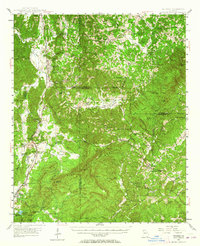 1947 Waleska1964 Print · USGSNorthwestern Georgia’s rural landscape is captured here in the late 1940s as mountain communities and small mill towns were linked by the Louisville and Nashville rail line. Researchers can trace the heritage of Waleska and Fairmount through local landmarks like Erwin Mill, Oak Hill Sch, and the Hutchinson Cem.
 - 1950 Map of Waleska
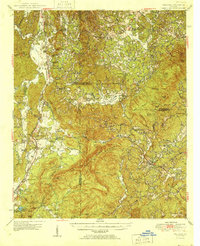 1950 Waleska1950 Print · USGSMid-century Northwest Georgia reveals a network of mountain ridges and creek-bottom farms connected by the Louisville and Nashville rail line. Genealogists can trace early landmarks like the County Home, Richardson Cemetery, and rural schools like Oak Hill School.2 unique versions available
 - 1955 Map of Rome
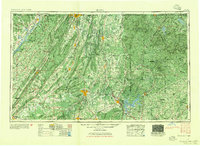 1955 Rome1955 Print · USGSThe tri-state borderlands of Georgia, Alabama, and Tennessee appear in the mid-fifties as a landscape of ridge-and-valley industry and river navigation. Genealogists can trace family footprints near Chattanooga, the iron works of Gadsden, and textile towns like Trion or Summerville.
 - 1958 Map of Rome, 1966 Print
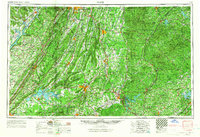 1958 Rome1966 Print · USGSNorthwest Georgia and neighboring Tennessee and Alabama are captured here in the late fifties, showcasing a landscape of high ridges and river valleys. Researchers can trace historic rail lines like the Seaboard Air Line RR and explore the bounds of Cloudland Canyon State Park or Fort Oglethorpe.3 unique versions available
 - 1961 Map of Rome
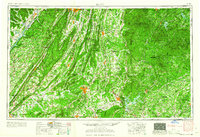 1961 Rome1961 Print · USGSNorthwest Georgia and neighboring Tennessee and Alabama are shown here at a moment of significant mid-century growth. Researchers can trace the rail networks of the Central of Georgia or locate landmarks within Chickamauga and Chattanooga Nat Military Park.
 - 1961 Map of South Canton, 1963 Print
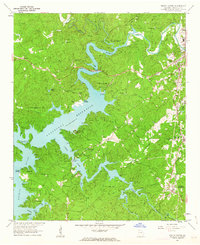 1961 South Canton1963 Print · USGSCherokee County enters a new era of recreation and industry in the early sixties as the reservoir waters reshape the local valleys. Researchers can trace the Louisville and Nashville rail line through Holly Springs or locate rural landmarks like Sutallee and Fields Chapel.4 unique versions available
 - 1961 Map of Canton, 1963 Print
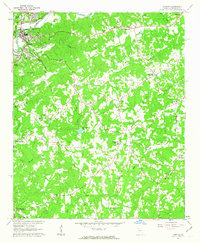 1961 Canton1963 Print · USGSCherokee County in the early sixties centers on the industrial growth of Canton and the winding Etowah River. Local historians can trace family roots through numerous country landmarks like Pugh Cem, Carmichael Crossroads, and Indian Knoll Ch.4 unique versions available
 - 1963 Map of Rome
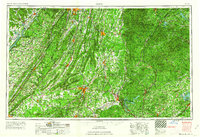 1963 Rome1963 Print · USGSThe tri-state corner of Georgia, Alabama, and Tennessee is captured here during a period of massive reservoir expansion and post-war growth. Genealogists and historians can trace the rail corridors of the Southern Ry or locate landmarks like Fort Oglethorpe and Cloudland Canyon State Park.
 - 1973 Map of Ball Ground West, 1975 Print
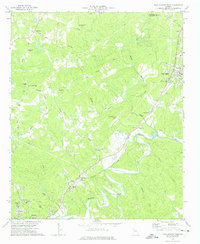 1973 Ball Ground West1975 Print · USGSCherokee County during the mid-seventies shows a landscape of river-valley towns and rural crossroads before the massive suburban expansion of later decades. Genealogists can trace family roots at Old Damascus Ch, Burris Crossroads, and along the Louisville and Nashville rail line.3 unique versions available
 - 1974 Map of Waleska, 1977 Print
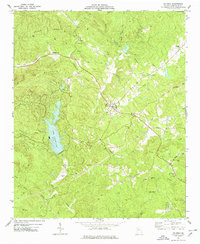 1974 Waleska1977 Print · USGSCherokee County enters a period of modern growth in the 1970s as new reservoirs and collegiate expansion reshape the mountain landscape. Genealogists and historians can trace numerous rural landmarks like Reinhardt College, Mt Zion Ch, and the Strip Mine near Polecat Mtn.2 unique versions available
 - 1981 Map of Cartersville, 1982 Print
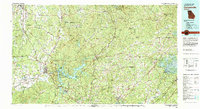 1981 Cartersville1982 Print · USGSNorth Georgia at the start of the eighties shows a landscape defined by massive reservoirs and historic rail corridors. Researchers can trace the heritage of the Etowah Indian Mounds or locate old junctions along the Southern Railway and Seaboard Coast Line.2 unique versions available
 - 1992 Map of Ball Ground West, 1993 Print
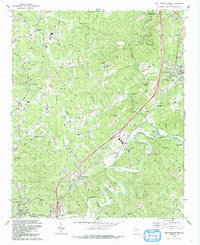 1992 Ball Ground West1993 Print · USGSCherokee County in the early 1990s reflects a landscape of river-valley settlements and growing infrastructure north of Canton. Genealogists and historians can trace several rural congregations and burial grounds, including Old Damascus Ch, McFarland Cem, and Dowda Cem.
 - 1992 Map of Canton, 1993 Print
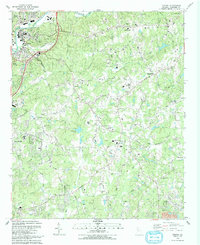 1992 Canton1993 Print · USGSCherokee County enters a period of modern growth in the early nineties, centered on the Etowah River and the expanding town of Canton. Researchers can trace family sites at St Paul Cem, find old rural hubs like Hickory Flat, or locate landmarks such as the Dean Rusk Sch and Askew County Park.
 - 1993 Map of South Canton
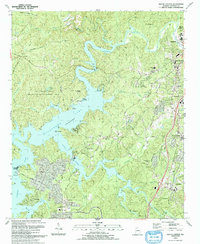 1993 South Canton1993 Print · USGSCherokee County enters a new era of growth in the early nineties as the suburban landscape expands around the shores of Allatoona Lake. Genealogists and historians can trace family ties at Lovingood Cem, old crossroads like Univeter, and the historical path of Bells Ferry.
 - 1997 Map of Waleska, 1998 Print
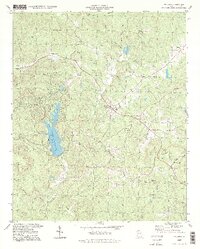 1997 Waleska1998 Print · USGSWaleska and the surrounding Cherokee County highlands are captured here in the late nineties, centered on the campus of Reinhardt College. Genealogists and historians can locate numerous rural landmarks like New Friendship Ch, Sardis Ch, and the Landing Strip near the banks of Lake Arrowhead.
 - 1997 Map of South Canton, 1999 Print
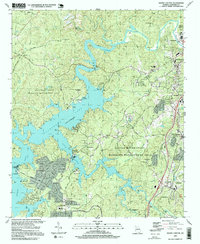 1997 South Canton1999 Print · USGSCherokee County in the late nineties shows the balance between the growing towns of Canton and Holly Springs and the waters of Allatoona Lake. Researchers can trace local heritage through sites like Lovingood Cem, Boston Sch, and the Georgia Northern RR.
Showing maps 1-25 of 46
Top cities near Canton
- Roswell historical maps
- Johns Creek historical maps
- Alpharetta historical maps
- Milton historical maps
- Kennesaw historical maps
- Woodstock historical maps
See more
Top neighborhoods of Canton
Frequently asked questions
- What are the different types of historical maps available for Canton?
- What is the oldest map of Canton?
- Where can I purchase historical maps of Canton for my home or office?
- Where can I download high-res historical maps of Canton?
- Are there historical topographic maps available for Canton?
- Is there historical aerial imagery available for Canton?
- Where are historical maps of Canton sourced from?