Old Maps of Cobb County, Georgia for Academic Research
Study the evolution of Cobb County with 104 high-resolution historic maps. Whether you're teaching, researching, or modeling changes in land use, these maps provide essential visual documentation of urban, environmental, and geographic change.
- Analyze long-term change: Track patterns in development, transportation, and natural features.
- Ideal for environmental or urban studies: Support academic projects with primary historical map data.
- Use in the classroom or lab: Educators and researchers rely on these maps to bring historical context to life.
These maps are a powerful tool for teaching, research, and visualizing how Cobb County has changed over the decades.
Cobb County, GA maps
(104)- 1888 Map of Atlanta, 1955 Print
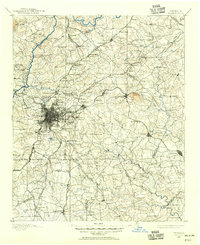 1888 Atlanta1955 Print · USGSAtlanta and its surrounding counties emerge as a booming rail hub in the years following the Civil War. Trace early settlements and infrastructure like Jett Ferry, Oakley Mill, and the massive granite profile of Stone Mountain before the era of modern sprawl.
 - 1890 Map of Suwanee
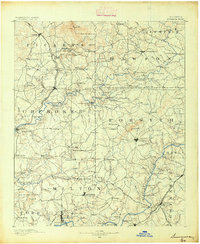 1890 Suwanee1890 Print · USGSNorth Georgia in the 1890s was a landscape of river-powered commerce and gold prospecting. Genealogists and historians can trace family-named river crossings like Jones Ferry and Pirkle's Ferry or locate the historic Kin Mori Gold Mine.
 - 1890 Map of Cartersville
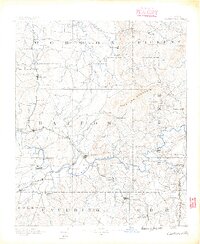 1890 Cartersville1890 Print · USGSNorthwest Georgia in the late nineteenth century was a landscape of burgeoning rail junctions and river-powered industry. Researchers can trace the roots of families and commerce at McDaniel's Station, Warford's Roads, and the many industrial sites along the Etowah River.
 - 1890 Map of Atlanta
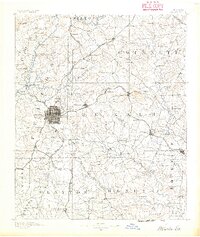 1890 Atlanta1890 Print · USGSGeorgia's rail and river networks converge in the late nineteenth century as the capital city expands. Genealogists can trace family homesteads near Jetts Store, Howells Mills, and the various river crossings like Paces Ferry.
 - 1891 Map of Marietta
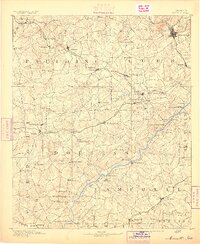 1891 Marietta1891 Print · USGSNorth Georgia at the close of the nineteenth century is captured here as the railroad began to reshape the river-dependent landscape. Genealogists can locate family-named landmarks like Allens Mills or trace historic river crossings at Campbellton Fy and Hutchinsons Ferry.
 - 1891 Map of Cartersville
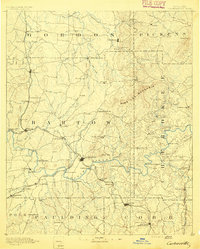 1891 Cartersville1891 Print · USGSNorth Georgia in the late nineteenth century was defined by its winding river crossings and the arrival of the iron horse. Trace the paths of early travel through Wooley's Ferry, identify old family operations like Hall's Mill, and locate rail stops at McDaniel's Station.
 - 1892 Map of Atlanta
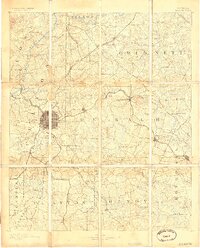 1892 Atlanta1892 Print · USGSAtlanta and its surrounding counties appear at a pivotal moment of post-war growth as the region's rail network reached maturity. Genealogists and historians can trace the foundations of modern DeKalb and Fulton counties through landmarks like Stone Mountain, Roswell Junction, and Paces Ferry.
 - 1894 Map of Suwanee
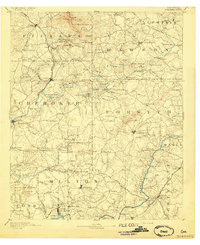 1894 Suwanee1894 Print · USGSNorth Georgia in the late nineteenth century was a landscape of river ferries and rising industry, from marble quarries to gold mines. Genealogists can trace family landmarks like Fields Cross Roads, the Kin Mori Gold Mine, and Fort Buffington.6 unique versions available
 - 1895 Map of Atlanta
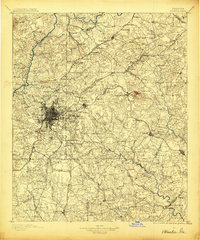 1895 Atlanta1895 Print · USGSThe growing railroad hub of Atlanta is shown here in the late nineteenth century alongside its surrounding river ferries and emerging suburbs. Trace old family names and sites like Howell Mills, Vining Station, and Ft. McPherson.7 unique versions available
 - 1895 Map of Marietta
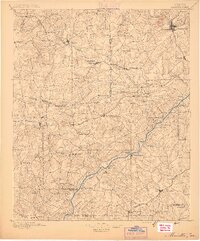 1895 Marietta1895 Print · USGSNorthwest Georgia in the 1890s appears as a landscape defined by the winding Chattahoochee River and the rapid expansion of iron rails. Genealogists can trace early family-named river crossings like Morris Ferry or explore the origins of Old Villarica and Bright Star.
 - 1896 Map of Cartersville
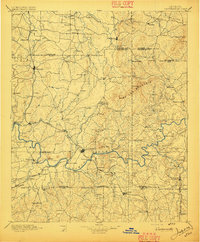 1896 Cartersville1896 Print · USGSNorth Georgia in the late nineteenth century was a rugged landscape of river crossings and mountain ridges. Trace the old ferry routes like Akeman Ferry or locate vanished industrial sites such as Marine Mill and the early works at Cement.4 unique versions available
 - 1897 Map of Marietta
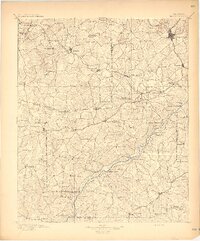 1897 Marietta1897 Print · USGSNorthwest Georgia in the late nineteenth century was a landscape defined by river crossings and expanding rail lines. Genealogists and historians can trace defunct river crossings like Pumpkintown Ferry and old industrial sites like Daniels Mills or Beatty Switch.
 - 1901 Map of Marietta
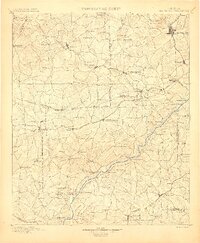 1901 Marietta1901 Print · USGSNorthwest Georgia at the turn of the century is a landscape of growing rail towns and vital river crossings. Researchers can trace early rural life through features like Old Villarica, Pumpkintown Ferry, and the Mount Zion Church.4 unique versions available
 - 1907 Map of Acworth, 1954 Print
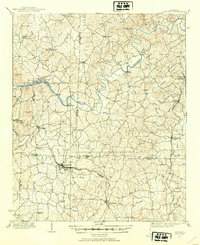 1907 Acworth1954 Print · USGSNorthern Georgia's river-and-rail corridor is captured here at the start of the twentieth century. Genealogists can trace family roots near Acworth and Kennesaw or locate old crossings like Island Mills Ferry and Steels Bridge.
 - 1909 Map of Acworth
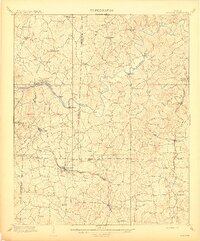 1909 Acworth1909 Print · USGSNorth Georgia at the turn of the century shows a landscape of river ferries and emerging rail towns before the creation of modern reservoirs. Genealogists can trace family footprints near Acworth and Woodstock, or locate historic crossings like Island Mills Ferry and Steels Bridge.
 - 1953 Map of Atlanta, 1965 Print
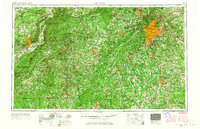 1953 Atlanta1965 Print · USGSThe growing Atlanta metro and the industrial corridors of Eastern Alabama are captured here during the mid-century transition. Researchers can trace the rail-to-road shift through hubs like Anniston and La Grange or locate sites within Fort McClellan.2 unique versions available
 - 1954 Map of Chamblee, 1956 Print
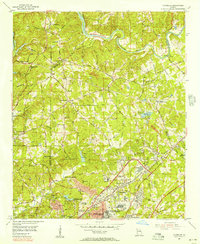 1954 Chamblee1956 Print · USGSDeKalb and Fulton counties are caught in a moment of rapid post-war growth during the mid-fifties, just as the expressway begins to reshape the landscape. Researchers can trace the footprints of the U S Naval Reservation Atlanta Air Station, Oglethorpe Univ, and old family landmarks like Winters Chapel Cem.5 unique versions available
 - 1954 Map of Mableton, 1956 Print
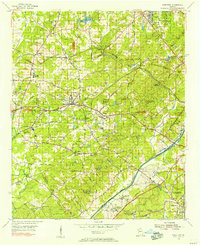 1954 Mableton1956 Print · USGSNorthwest of Atlanta in the mid-fifties, this area shows a landscape transitioning between its rural roots and suburban growth. Researchers can trace family history through sites like Mable Cemetery or locate early industrial landmarks such as Orange Hill Mill and Cobb Airfield.5 unique versions available
 - 1954 Map of Lost Mountain, 1956 Print
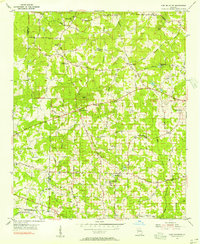 1954 Lost Mountain1956 Print · USGSCobb County's rural landscape is captured in the mid-1950s, showing a network of country churches and family-named roads before suburban expansion. Genealogists can locate family sites near John McEachern Sch, Corner Ch, and Red Rock.4 unique versions available
 - 1954 Map of Austell, 1956 Print
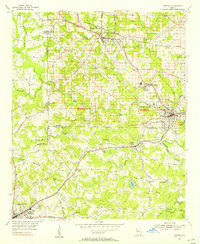 1954 Austell1956 Print · USGSCobb and Douglas Counties are shown here during the mid-fifties, captured just as the industrial rail network and rural school districts were at their peak. Researchers can locate family landmarks like Smith Chapel and Pleasant Hill Ch or trace the early paths of the Seaboard Air Line.5 unique versions available
 - 1954 Map of Ben Hill, 1956 Print
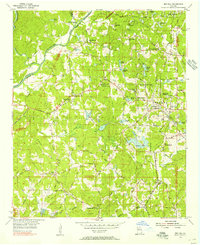 1954 Ben Hill1956 Print · USGSFulton County south of the river is caught in transition during the mid-fifties, balancing historic rural churches with the approaching reach of Atlanta. Researchers can locate family landmarks like the Mt Gilead Campground, Sandtown Sch, and the Atlantic Coast Line railroad.6 unique versions available
 - 1954 Map of Marietta, 1957 Print
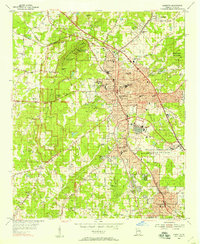 1954 Marietta1957 Print · USGSCobb County's post-war transition is on full display in the mid-fifties as Marietta expands and the military arrives. Trace family roots and local history near Kennesaw Mountain, Dobbins Air Force Base, and Blackwells.6 unique versions available
 - 1954 Map of Bolton, 1957 Print
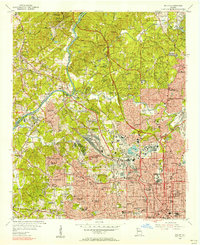 1954 Bolton1957 Print · USGSNorthwest Georgia in the mid-fifties reveals the dense intersection of industrial rail lines and established neighborhoods at the edge of the capital. Researchers can trace historic family plots and campus footprints at Crestlawn Cemetery, Georgia Institute of Technology, and Vinings.7 unique versions available
 - 1955 Map of Rome
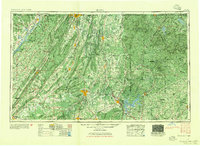 1955 Rome1955 Print · USGSThe tri-state borderlands of Georgia, Alabama, and Tennessee appear in the mid-fifties as a landscape of ridge-and-valley industry and river navigation. Genealogists can trace family footprints near Chattanooga, the iron works of Gadsden, and textile towns like Trion or Summerville.
 - 1955 Map of Sandy Springs, 1957 Print
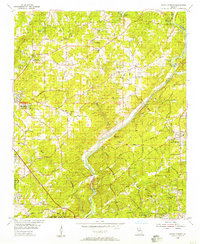 1955 Sandy Springs1957 Print · USGSThe northern edge of Atlanta and the banks of the Chattahoochee meet during a period of suburban transformation in the mid-fifties. Genealogists and local historians can trace family land via Heards Cem or locate community centers like the Powers Ferry Road Sch and Sardis Ch.6 unique versions available
Showing maps 1-25 of 104
Top cities of Cobb County
- Marietta historical maps
- Smyrna historical maps
- Mableton historical maps
- Kennesaw historical maps
- Acworth historical maps
- Powder Springs historical maps
See more
Frequently asked questions
- What are the different types of historical maps available for Cobb County?
- What is the oldest map of Cobb County?
- Where can I purchase historical maps of Cobb County for my home or office?
- Where can I download high-res historical maps of Cobb County?
- Are there historical topographic maps available for Cobb County?
- Is there historical aerial imagery available for Cobb County?
- Where are historical maps of Cobb County sourced from?