Old Maps of Columbia County, Georgia
Explore 98 old maps of Columbia County, spanning from 1892 to today. These high-resolution historic maps reveal how streets, neighborhoods, landmarks, and natural features evolved over time — perfect for genealogy, metal detecting, research, and local history exploration.
What you can do with these maps:
- See how Columbia County changed over time: Compare historical maps to modern-day views to trace roads, homesites, rail lines & more.
- View detailed metadata: Each map includes creators, publishers, year, scale, and archive source.
- Overlay maps with satellite & LiDAR: Visualize the past alongside modern tools to explore terrain & human change.
- Trusted historical sources: Maps sourced from the USGS, Library of Congress, and other archives.
- Access maps your way: View online, download high-res files, or order prints for personal or research use.
Start exploring old maps of Columbia County to uncover forgotten places, hidden landmarks, and the deep history beneath your feet.
Columbia County, GA maps
(98)- 1892 Map of Mc Cormick
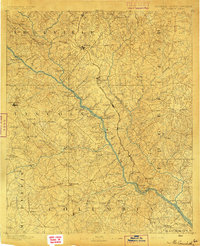 1892 Mc Cormick1892 Print · USGSThe Savannah River borderlands in the 1890s reveal a network of historic ferries and early mills connecting Georgia and South Carolina. Genealogists can trace family roots through landmarks like Dunn Chapel, Searle Mill, and the crossings at Barksdale Ferry.5 unique versions available
 - 1912 Map of Mc Cormick, 1913 Print
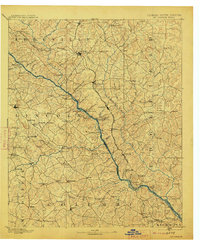 1912 Mc Cormick1913 Print · USGSThe Georgia and South Carolina borderlands come alive in the 1890s, centered on the rail junction at Mc Cormick and the Savannah River. Genealogists can trace family footprints across numerous river crossings like Fury Ferry and through rural centers such as Appling and Sharon Church.
 - 1920 Map of Clarks Hill
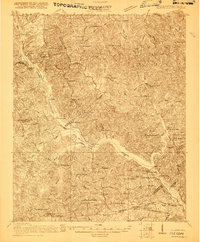 1920 Clarks Hill1920 Print · USGSThe Savannah River border between South Carolina and Georgia comes alive in this survey, showing the region as it was before the creation of the massive Clarks Hill Lake. Genealogists can trace family landmarks like Gilchrist Ferry, Hosannah Church, and Flat Rock School during the heyday of the Charleston and Western Carolina railroad.
 - 1921 Map of Clarks Hill
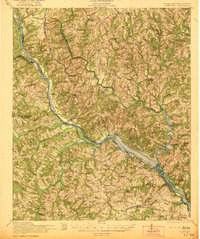 1921 Clarks Hill1921 Print · USGSThe Savannah River valley in the early twenties was a landscape of ferries and railroad sidings before the creation of modern reservoirs. Genealogists can trace family footprints through dozens of rural landmarks like Hosannah Church, Dorn School, and Gilchrist Ferry.3 unique versions available
 - 1921 Map of Appling
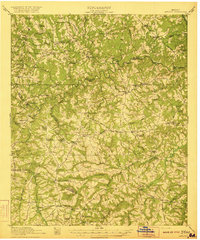 1921 Appling1921 Print · USGSColumbia County in the years following the Great War was a landscape of small agricultural communities and river crossings. Researchers can trace ancestral locations through dozens of named sites like Martins Academy, Lockhart Ferry, and the Whiteoak Camp Ground.3 unique versions available
 - 1922 Map of Harlem
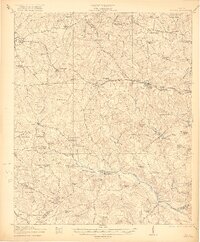 1922 Harlem1922 Print · USGSEastern Georgia's rural landscape is captured here in the years following the Great War, showing a territory tied together by the Georgia Railroad. Genealogists can locate family-named landmarks such as Lundie Grove School, Arrington Mill, and Old Union Church.3 unique versions available
 - 1922 Map of Hephzibah
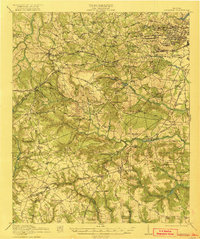 1922 Hephzibah1922 Print · USGSRichmond County at the end of the First World War shows a landscape defined by military mobilization and deep-rooted rural communities. Local historians can trace the sprawling Camp Hancock cantonment or locate family landmarks like Palmer Academy and Hephzibah.3 unique versions available
 - 1941 Map of Clarks Hill, 1957 Print
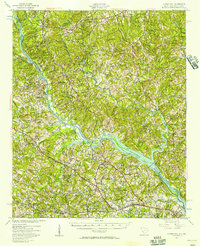 1941 Clarks Hill1957 Print · USGSThe Savannah River valley remained a landscape of ferries and river-to-rail commerce just before the era of major dam construction. Genealogists and historians can trace family roots through numerous rural landmarks like Cary Hill Ch, Modoc, and Gilchrist Ferry.2 unique versions available
 - 1942 Map of Clarks Hill
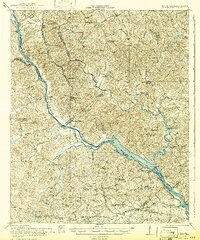 1942 Clarks Hill1942 Print · USGSThe Savannah River valley along the South Carolina and Georgia border comes alive in this survey from the era of river ferries and local rail. Genealogists can trace family landmarks like Hosannah Church, Dents Ferry, and the Flat Rock School.
 - 1943 Map of Appling
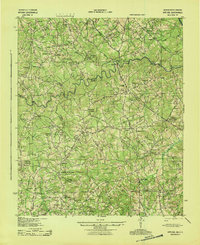 1943 Appling1943 Print · USGSEastern Georgia and the Savannah River watershed are captured here during the early 1940s. Genealogists can trace family roots through numerous schools and churches, from Martins Academy to Hosea Chapel and Lockhart Ferry.
 - 1948 Map of Hephzibah
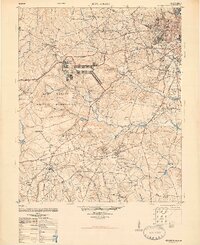 1948 Hephzibah1948 Print · USGSRichmond County and the Augusta suburbs are seen here during the late 1940s as military footprints like Camp Gordon began to reshape the landscape. Genealogists and local historians can locate dozens of country churches and rural cemeteries, from the Albion-Kaolin Chalk Mine to the Georgia Training School Farm.2 unique versions available
 - 1948 Map of Harlem
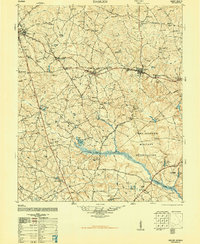 1948 Harlem1948 Print · USGSEastern Georgia in the late forties shows the expansion of the Camp Gordon Military Reservation into a landscape of rural hamlets. Researchers can trace old family sites like Bynum Cemetery and vanished landmarks like Central School (Abandoned).2 unique versions available
 - 1948 Map of Harlem, 1969 Print
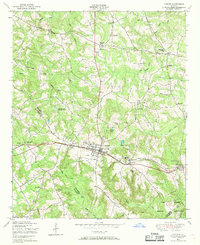 1948 Harlem1969 Print · USGSThe rail-and-road hub of Harlem is documented here just after the war as the region's rural character began to shift. Genealogists and historians can trace family sites like Walker Cemetery, the Central School (Abandoned), and the origins of Pumpkin Center.2 unique versions available
 - 1948 Map of Thomson East, 1981 Print
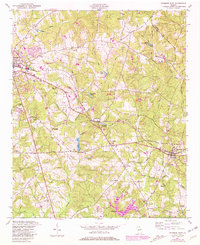 1948 Thomson East1981 Print · USGSEastern McDuffie County was a landscape of rail-connected towns and deeply rooted family homesteads at the mid-century mark. Researchers can trace ancestral sites like the Watson Family Cemetery and community hubs like St Luke Church and School or the stop at Boneville.
 - 1950 Map of Grovetown
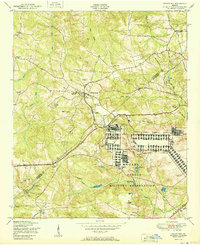 1950 Grovetown1950 Print · USGSGrovetown and the surrounding Georgia countryside are shown in detail at the dawn of the 1950s as the local landscape transitioned. Genealogists and historians can trace family locations through the Beale Family Cemetery, Jerusalem Church and School, and the sprawling Camp Gordon Military Reservation.
 - 1950 Map of Dearing
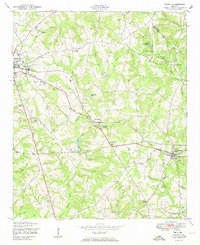 1950 Dearing1950 Print · USGSIn the late 1940s, this area of Georgia was defined by the Georgia railroad corridor connecting small rail towns. Local historians can trace the foundations of these communities through landmarks like the Watson Family Cemetery, Farr School, and Boneville Pond.
 - 1950 Map of Harlem
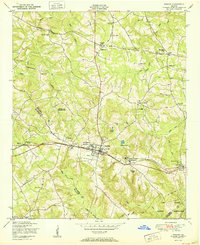 1950 Harlem1950 Print · USGSHarlem and its surrounding rail-side settlements are captured here at mid-century, just as the regional landscape was being reshaped by postwar growth. Genealogists can locate family-named landmarks like Walker Cemetery, Bynum Cemetery, and the Adams Chapel Church.
 - 1950 Map of Avondale
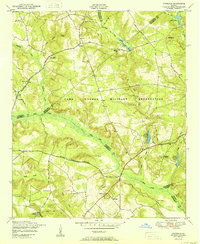 1950 Avondale1950 Print · USGSEastern Georgia's rural and military landscape is captured here in the years following World War II. Genealogists can trace family footprints through numerous local landmarks like Silver Run Church, Reeves School, and the Patterson Cemetery near the banks of Brier Creek.
 - 1950 Map of Augusta West
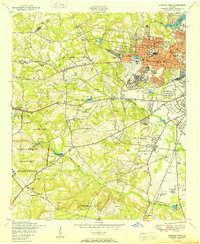 1950 Augusta West1950 Print · USGSMid-century Augusta shows the post-war shift from military hubs to suburban growth west of the city center. Genealogists and historians can trace family-named sites like Chavours Cemetery, Lombards Mill Pond, and the Augusta Arsenal.
 - 1953 Map of Athens, 1966 Print
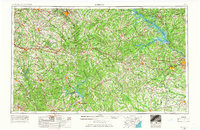 1953 Athens1966 Print · USGSGeorgia's Piedmont and Savannah River borderlands come alive in this mid-century survey of the region surrounding Athens and Augusta. Trace the rail-and-river economy through the Georgia RR and landmarks like the Fort Gordon Military Reservation.3 unique versions available
 - 1957 Map of Avondale, 1960 Print
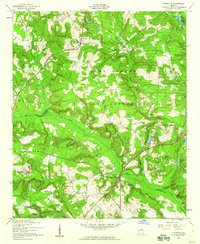 1957 Avondale1960 Print · USGSThe rural borderlands of Richmond and McDuffie counties are documented here in the mid-fifties, dominated by the Fort Gordon Military Reservation. Genealogists can trace numerous family burial sites like Adams Cem and Smith Cem alongside landmarks like Nortons Millrace.3 unique versions available
 - 1957 Map of Augusta West, 1960 Print
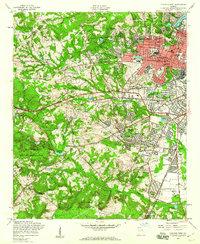 1957 Augusta West1960 Print · USGSAugusta's western expansion and the massive military presence at the edge of the city are captured here in the late fifties. Researchers can trace the development of Daniel Field, identify numerous country churches like Bartons Chapel, and locate family sites such as Walton Cem.4 unique versions available
 - 1957 Map of Hephzibah, 1961 Print
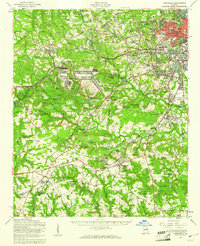 1957 Hephzibah1961 Print · USGSThe outskirts of Augusta and the expanding Fort Gordon military site characterize this mid-century look at Richmond County. Local historians can trace old family sites and rural institutions like Hancock Millpond, Second Ebenezer Ch, and the State Training School.2 unique versions available
 - 1957 Map of Grovetown, 1973 Print
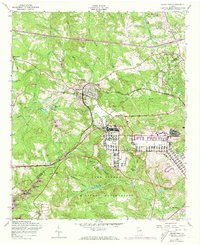 1957 Grovetown1973 Print · USGSColumbia County and the outskirts of the Fort Gordon Military Reservation are captured here in the late fifties. Genealogists and local historians can locate Hill Cem, trace the Georgia Railroad through Grovetown, and find rural landmarks like Steiner Grove Ch.4 unique versions available
 - 1958 Map of Athens
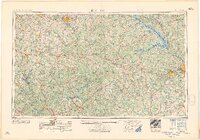 1958 Athens1958 Print · USGSNorth-central Georgia and the Savannah River valley are captured in the late fifties, showing the region as the new reservoirs were filling. Researchers can trace historic rail lines like the Georgia RR and locate rural landmarks such as Social Circle, Graves Mountain, and the Fort Gordon Military Reservation.
Showing maps 1-25 of 98
Top cities of Columbia County
Frequently asked questions
- What are the different types of historical maps available for Columbia County?
- What is the oldest map of Columbia County?
- Where can I purchase historical maps of Columbia County for my home or office?
- Where can I download high-res historical maps of Columbia County?
- Are there historical topographic maps available for Columbia County?
- Is there historical aerial imagery available for Columbia County?
- Where are historical maps of Columbia County sourced from?