Old Maps of Fannin County, Georgia
Explore 137 old maps of Fannin County, spanning from 1886 to today. These high-resolution historic maps reveal how streets, neighborhoods, landmarks, and natural features evolved over time — perfect for genealogy, metal detecting, research, and local history exploration.
What you can do with these maps:
- See how Fannin County changed over time: Compare historical maps to modern-day views to trace roads, homesites, rail lines & more.
- View detailed metadata: Each map includes creators, publishers, year, scale, and archive source.
- Overlay maps with satellite & LiDAR: Visualize the past alongside modern tools to explore terrain & human change.
- Trusted historical sources: Maps sourced from the USGS, Library of Congress, and other archives.
- Access maps your way: View online, download high-res files, or order prints for personal or research use.
Start exploring old maps of Fannin County to uncover forgotten places, hidden landmarks, and the deep history beneath your feet.
Fannin County, GA maps
(137)- 1886 Map of Dalton
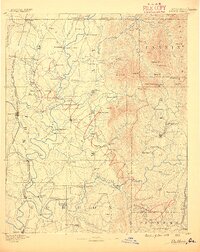 1886 Dalton1886 Print · USGSNorthwest Georgia in the 1880s is a landscape of mountain gaps and vital river ferries. Trace family roots and vanished infrastructure from Dalton to Spring Place, including named landmarks like Shackelfords Ferry and Fort Mountain.
 - 1888 Map of Ellijay
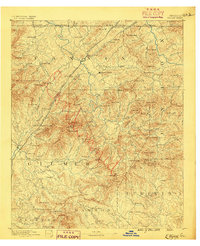 1888 Ellijay1888 Print · USGSNorth Georgia in the late 1880s was a land of high peaks and emerging rail lines as the mountains were first being methodically surveyed. You can trace the Marietta and North Georgia Railroad through Blue Ridge and locate vanished stops like Vanzants Store or the rural community of Cherry Log.
 - 1892 Map of Ellijay
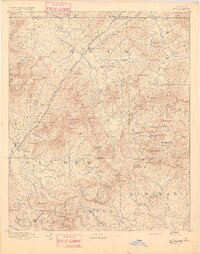 1892 Ellijay1892 Print · USGSNorth Georgia's mountain communities were primarily connected by river valleys and the winding Marietta and North Georgia Railroad in the late nineteenth century. Genealogists can trace early homesteads and centers of trade like Vanzant's Store, Mineral Bluff, and Cherry Log.
 - 1892 Map of Dalton
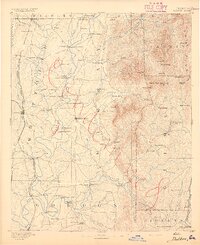 1892 Dalton1892 Print · USGSNorthwest Georgia in the late nineteenth century was defined by its river crossings and the emerging rail lines through Dalton. Researchers can trace the Federal Road and locate family landmarks like Newtown Ferry or Talking Rock Mills.
 - 1897 Map of Dalton
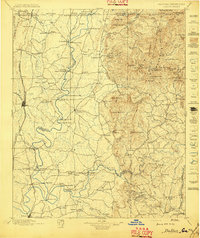 1897 Dalton1897 Print · USGSNorthwest Georgia in the late nineteenth century was a rugged landscape of river crossings and mountain gaps. Genealogists can trace early homesteads and commerce at Praters Mill, Spring Place, and historic river crossings like Montgomery Ferry.4 unique versions available
 - 1898 Map of Ellijay
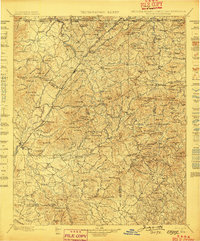 1898 Ellijay1898 Print · USGSNorth Georgia’s mountain country is captured here in the late nineteenth century, showing the early development of Gilmer and Fannin counties. Genealogists can trace family homesteads near old river crossings like Centers Ferry and settlements such as Mineral Bluff and Whitepath.2 unique versions available
 - 1911 Map of Ellijay
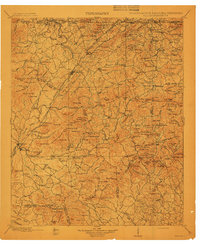 1911 Ellijay1911 Print · USGSNorth Georgia and the Tennessee border are captured here at the turn of the century, showing a mountain landscape of river ferries and early rail. Genealogists can locate family landmarks like Higdons Store, the Pisgah church, or crossings at Bakers Ferry and Shallow Ford.4 unique versions available
 - 1911 Map of Cohutta Mtn
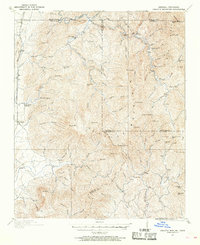 1911 Cohutta Mtn1911 Print · USGSThe Georgia-Tennessee borderlands in the early twentieth century were defined by mountain rail and timber. Genealogists can trace family roots through settlements like Tennga and Crandall or locate historic operations like Hassler Mill along the rail line.2 unique versions available
 - 1913 Map of Cohutta Mtn.
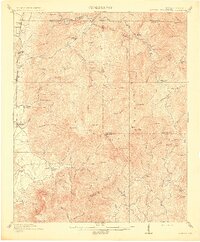 1913 Cohutta Mtn.1913 Print · USGSThe Georgia and Tennessee borderlands appear here in the years before the Great Depression, centered on the high peaks of the Blue Ridge. Researchers can trace early railroad life along the Louisville & Nashville RR or locate old sites like Cohutta Springs and Hassler Mill.3 unique versions available
 - 1935 Map of Epworth
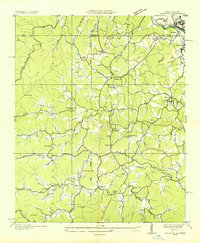 1935 Epworth1935 Print · USGSNorth Georgia and the Tennessee borderlands are captured here in the mid-1930s, showing a landscape defined by copper mining and mountain farming. Researchers can locate vanished landmarks like Higdons Store, trace the Louisville and Nashville rail line, or find family roots at Madola Sch and Hipp Chapel.
 - 1935 Map of Ivylog
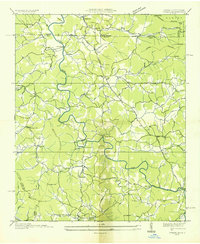 1935 Ivylog1935 Print · USGSUnion County, Georgia, and the North Carolina borderlands are captured here in the mid-1930s before major dam projects reshaped the river valleys. Genealogists and local historians can trace family roots through numerous country landmarks like Ivylog Cem, Mt Zion Sch, and Davenport Mill.
 - 1935 Map of Mulky Gap
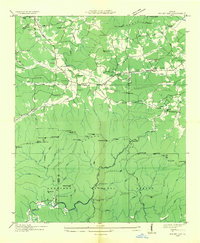 1935 Mulky Gap1935 Print · USGSUnion and Fannin Counties were characterized by small mills and mountain gaps in the mid-1930s. Genealogists can trace family roots at Jones Cem or Harkins Cem, while historians can locate CCC Camp No F-12 and Clements Mills.
 - 1935 Map of Hemp Top
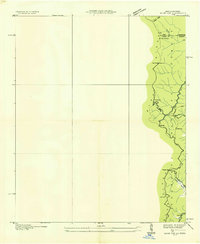 1935 Hemp Top1935 Print · USGSHigh in the mountains along the Georgia-Tennessee border in the mid-1930s, this survey documents the ridge-line terrain of the Blue Ridge. Researchers can locate remote landmarks like the Fire Tower on Hemp Top, Ashe Mill, and Dally Gap.
 - 1935 Map of Noontootla
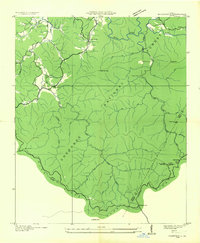 1935 Noontootla1935 Print · USGSNorth Georgia's mountain ridges and valley settlements are captured here in the mid-1930s as the Tennessee Valley Authority and USGS surveyed the region. Researchers can trace the early APPALACHIAN TRAIL past the FIRE TOWER on Hawk Mtn and locate sites like Stock Hill Ch or the Rock Creek Cem.
 - 1935 Map of Mineral Bluff
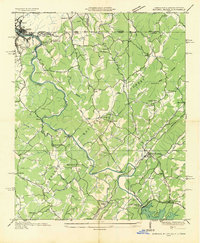 1935 Mineral Bluff1935 Print · USGSThe tri-state border region of Georgia, Tennessee, and North Carolina comes alive in the mid-1930s as industry and infrastructure reshape the mountain landscape. Genealogists can locate family landmarks like Paintertown Sch, Shady Grove Ch, and the homes near Mineral Bluff.
 - 1935 Map of Cashes Valley
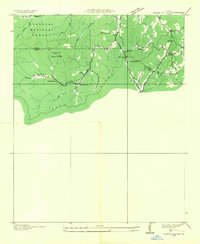 1935 Cashes Valley1935 Print · USGSCashes Valley and the North Georgia mountains come alive in this mid-1930s survey of the Fannin and Gilmer borderlands. Genealogists can trace family footprints near Cashes Valley Ch, Madola Sch, and the isolated homesteads along Fightingtown Creek.
 - 1935 Map of Lake Toccoa
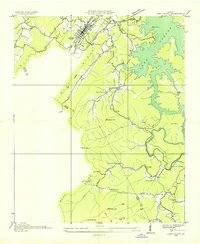 1935 Lake Toccoa1935 Print · USGSNorth Georgia’s mountain and river life is preserved here during the mid-1930s transition into the hydroelectric era. Researchers can trace family roots through the numerous rural schools and churches, such as Stanley Creek Sch, Union Ch, and landmarks like Stanley Mill.
 - 1935 Map of Tickanetley
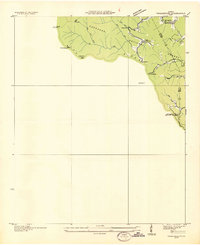 1935 Tickanetley1935 Print · USGSHigh in the Blue Ridge mountains during the mid-1930s, this survey captures the rural crossroads of Gilmer and Fannin counties. Genealogists can trace early landmarks like Big Creek Ch, Stanley Mill, and the combined Mathis Chapel Sch.
 - 1935 Map of Wilscot
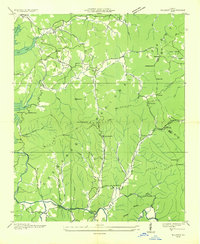 1935 Wilscot1935 Print · USGSNorth Georgia mountain life is caught in a moment of transition in the mid-1930s as the TVA and CCC arrived in the Blue Ridge. Genealogists can trace old homesteads and landmarks like Star Creek Mill, Sugar Hill Ch, and CCC Camp F 8 along the Toccoa River.
 - 1935 Map of Culberson
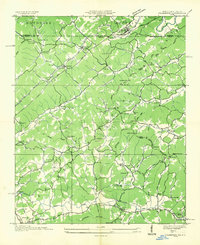 1935 Culberson1935 Print · USGSThe borderlands of North Carolina and Georgia come alive in this mid-1930s study of the mountain gaps and rail corridors. Genealogists and historians can trace family-named sites like Hawkins Mill, Bell Sch, and New Liberty Ch along the winding Hemptown Creek.
 - 1935 Map of Suches
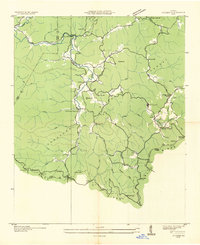 1935 Suches1935 Print · USGSThe North Georgia mountains in the mid-1930s are captured here as federal forestry and New Deal projects began to reshape the Blue Ridge. Genealogists can trace early homesteads near Suches and Gaddistown or locate rural landmarks like Corinth Sch and Gilreath Mill.
 - 1938 Map of Mulky Gap
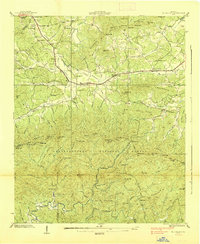 1938 Mulky Gap1938 Print · USGSUnion County and Fannin County meet here in the late 1930s, showing a mountain landscape of rural post offices and federal conservation camps. Genealogists and historians can trace family locations through Jones Cem, Youngcane School, and Dillard Chapel.4 unique versions available
 - 1938 Map of Suches
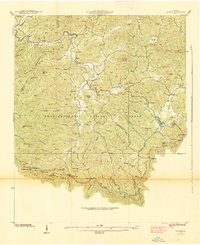 1938 Suches1938 Print · USGSUpper Union County and the Toccoa River valley are captured in the late 1930s, showing a landscape of high mountain gaps and isolated rural communities. Researchers can locate the CCC Camp F1, the Appalachian Trail, and schools like Peggy Hale Sch.
 - 1941 Map of Mineral Bluff, 1956 Print
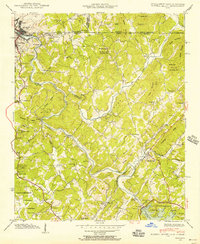 1941 Mineral Bluff1956 Print · USGSThe tri-state borderlands of Georgia, Tennessee, and North Carolina come alive in the early 1940s as the river-and-rail economy hums near Mineral Bluff. Genealogists and researchers can locate the Galloway Cem, trace the Louisville and Nashville Railroad, and find the CCC Camp 3467 TVA 29 site.4 unique versions available
 - 1941 Map of Epworth, 1957 Print
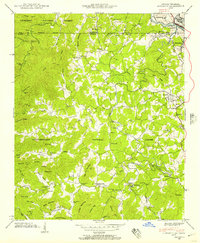 1941 Epworth1957 Print · USGSThe Tennessee-Georgia state line and the industrial copper basin are captured here in the early 1940s. Genealogists and historians can trace family landmarks like Hipp Chapel, Patterson Mill, and the small settlement of Madola along the Fightingtown Creek.3 unique versions available
Showing maps 1-25 of 137
Top cities of Fannin County
Frequently asked questions
- What are the different types of historical maps available for Fannin County?
- What is the oldest map of Fannin County?
- Where can I purchase historical maps of Fannin County for my home or office?
- Where can I download high-res historical maps of Fannin County?
- Are there historical topographic maps available for Fannin County?
- Is there historical aerial imagery available for Fannin County?
- Where are historical maps of Fannin County sourced from?