1940s Maps of Walker County, Georgia
Explore 21 historic maps of Walker County from the 1940s. These maps offer a rare glimpse into what life looked like during the 1940s — showing old roads, neighborhoods, homes, and landmarks that have changed or disappeared over time.
Whether you're researching your family's past, planning a metal detecting trip, or studying how Walker County's landscape evolved across the 1940s, these high-resolution maps are a powerful tool for exploring the history of this region.
- Focus on a specific era: All maps on this page are from the 1940s, giving you a focused view of this time period.
- See what’s changed: Compare century-old streets, trails, and buildings to today's modern landscape using overlays and satellite layers.
- Research with precision: Use these maps for genealogy, historical research, land use analysis, or educational projects.
- View, download, or print: Maps are fully viewable online in high resolution, and can be downloaded or printed for your own records.
Start exploring Walker County's history through authentic maps from the 1940s. This is your window into the past.
Walker County, GA maps
(21)- 1942 Map of Fort Oglethorpe, 1946 Print
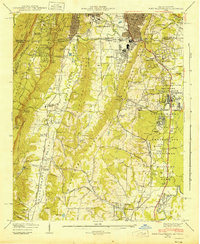 1942 Fort Oglethorpe1946 Print · USGSThe Tennessee-Georgia borderlands are captured here during the early 1940s, highlighting the transition from historic battlefields to growing residential communities. Genealogists and historians can trace family-named sites like Snodgrass House, McCallie Lake, and Lee and Gordon Mill.3 unique versions available
 - 1945 Map of Hooker, 1954 Print
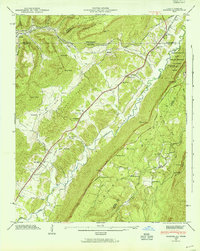 1945 Hooker1954 Print · USGSThe Georgia-Tennessee borderlands appear here in the mid-1940s, showing the intersection of heavy rail and mountain terrain. Genealogists can trace family landmarks like Sarah Chapel, West Brow Sch, and the Dickens Cem along the slopes of Lookout Mountain.2 unique versions available
 - 1946 Map of Kensington, 1947 Print
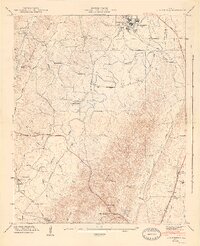 1946 Kensington1947 Print · USGSWalker County during the mid-forties is captured here as a landscape of ridge-top vistas and rail-connected valley towns. Genealogists and researchers can locate family sites like Owings Cem, the Gordon Lee School, and the old works at Hall Mill.6 unique versions available
 - 1946 Map of Hooker, 1947 Print
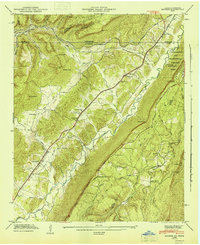 1946 Hooker1947 Print · USGSLookout Valley in the mid-1940s served as a vital rail corridor through the gaps of the Appalachians between Georgia and Tennessee. Genealogists can trace family footprints at Sarah Chapel, North Dade Sch, and Magill Cem along the winding course of Lookout Creek.2 unique versions available
 - 1946 Map of Nickajack Gap, 1947 Print
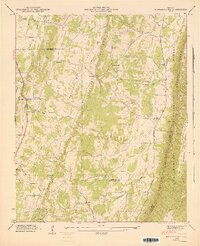 1946 Nickajack Gap1947 Print · USGSNorth Georgia’s ridge-and-valley corridor is captured here in the mid-1940s, showing a landscape of railway junctions and rural farmsteads. Genealogists can trace family connections through sites like Yates Cem, Rock Spring Sch, and the community of Wood Station.5 unique versions available
 - 1946 Map of Sulphur Springs, 1956 Print
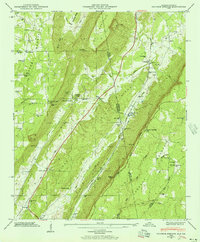 1946 Sulphur Springs1956 Print · USGSThe Alabama and Georgia state line meets along the spine of the mountains in this mid-century survey of the Little River Valley. Researchers can trace the path of the Southern Railroad through old stops like Sulphur Springs Station and find family landmarks like Pannell Cem and Amos Mill.3 unique versions available
 - 1946 Map of Valley Head, 1956 Print
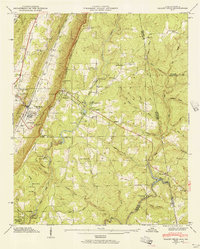 1946 Valley Head1956 Print · USGSThe Alabama-Georgia state line and the slopes of Lookout Mountain are captured here in the mid-1940s. Genealogists and researchers can locate the Southern Railroad corridor, rural schools like Moon Lake Sch, and local landmarks including Mentone and Valley Head.2 unique versions available
 - 1946 Map of Durham, 1959 Print
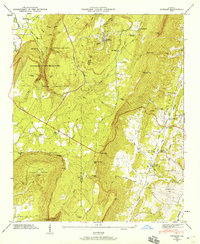 1946 Durham1959 Print · USGSNorthwest Georgia's high plateau and valley floor are captured here in the years following the war. Researchers can locate family landmarks such as Durham, Old Lookout Cem, and the Lookout Mtn Rural Sch.3 unique versions available
 - 1946 Map of Cedar Grove, 1960 Print
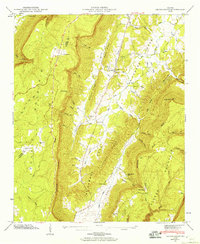 1946 Cedar Grove1960 Print · USGSWalker County at the end of the Second World War reveals a tightly knit landscape of mountain ridges and fertile valley coves. Researchers can locate family roots at Cedar Grove Cem or Thurman Cem, and trace old routes through McLemore Cove and Rape Gap.3 unique versions available
 - 1946 Map of Estelle, 1960 Print
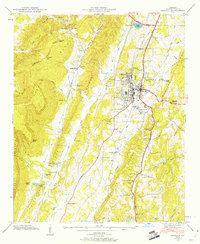 1946 Estelle1960 Print · USGSWalker County during the mid-forties reveals a settled landscape where the industrial corridor of the Central of Georgia meets the base of Pigeon Mountain. Researchers can trace local heritage through landmarks like the County Farm, Blaylock Mill, and the Log Cabin Tabernacle.3 unique versions available
 - 1946 Map of Catlett, 1962 Print
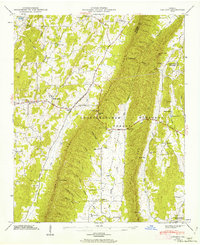 1946 Catlett1962 Print · USGSWalker County, Georgia, at the end of the Second World War was a landscape of remote mountain gaps and tight-knit valley communities. Genealogists and researchers can trace the locations of family landmarks like Whitley Cem, Hickory Hill Sch, and the community at Naomi.2 unique versions available
 - 1946 Map of Villanow, 1964 Print
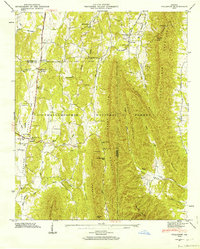 1946 Villanow1964 Print · USGSNorthwestern Georgia’s ridges and hollows appear in detail just after the war, showing the rural communities along the Whitfield and Walker County line. Genealogists and hikers can trace old cemeteries and mountain passes, from Villanow and Snake Creek Gap to Redwine Cove Cem.3 unique versions available
 - 1946 Map of Dougherty Gap, 1964 Print
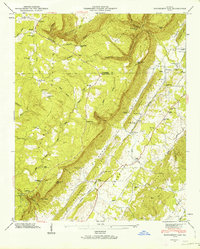 1946 Dougherty Gap1964 Print · USGSNorthwest Georgia in the mid-forties reveals a landscape shaped by the steep walls of Pigeon Mountain and the Tennessee Alabama and Georgia rail line. Genealogists can trace family footprints at Long Cem, Teloga Sch, and rural congregations like New Hope Ch.2 unique versions available
 - 1947 Map of Valley Head
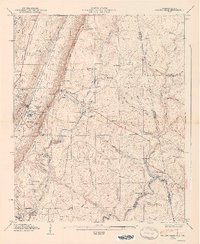 1947 Valley Head1947 Print · USGSDeKalb County and the Alabama-Georgia borderlands are captured here just after the war, showing the mountain communities and valley rail lines of the late 1940s. Genealogists can locate family landmarks like Jones Cem, Johns Chapel, and the Davenport Chapel School.2 unique versions available
 - 1947 Map of Villanow
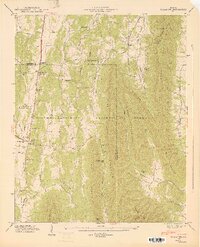 1947 Villanow1947 Print · USGSThe Whitfield and Walker County line comes alive in this late 1940s survey of the Georgia uplands. Genealogists can locate family landmarks like Phillips Cem, Redwine Cove Cem, and the historic settlement at Villanow.2 unique versions available
 - 1947 Map of Cedar Grove
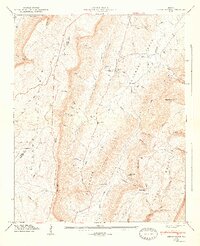 1947 Cedar Grove1947 Print · USGSWalker County, Georgia, is shown here in the late 1940s, documenting a landscape of steep ridges and fertile coves. Genealogists and historians can locate family landmarks like Thurman Cem, the community at Cedar Grove, and the winding path of Trickum Road.2 unique versions available
 - 1947 Map of Dougherty Gap
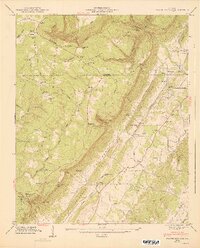 1947 Dougherty Gap1947 Print · USGSNorthwest Georgia in the late 1940s is defined here by the steep summits of Lookout Mountain and the remote communities of Chattooga County. Researchers can trace rural life through landmarks like Camp Juliette Low, the Macedonia Ch, and the route of the Tennessee Alabama and Georgia RR.2 unique versions available
 - 1947 Map of Sulphur Springs
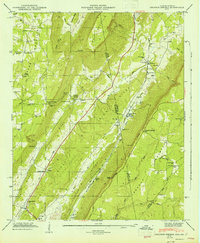 1947 Sulphur Springs1947 Print · USGSThe Alabama and Georgia state line divides this high-plateau landscape just after the war, showing a network of ridge-top settlements and valley rail stops. Researchers can locate family landmarks like Gann Crossroad, Amos Mill, and churches including Harmony Grove Ch and State Line Ch.2 unique versions available
 - 1947 Map of Durham
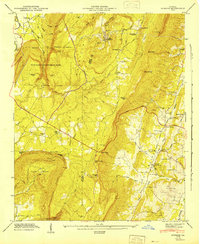 1947 Durham1947 Print · USGSNorthwest Georgia's mountain landscape was defined by coal and canyons in the years following World War II. Researchers can locate family landmarks such as Mc Kaig Cem and New Salem Ch, or trace the rail lines serving Durham.2 unique versions available
 - 1947 Map of Catlett
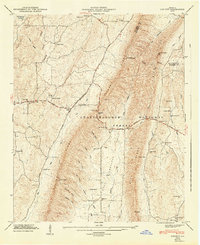 1947 Catlett1947 Print · USGSIn the late 1940s, the rural ridges of Walker County were a world of isolated valleys and steep mountain passes. Genealogists can trace family roots through several churches and schools like Mt Zion Ch, Corinth Sch, and Shiloh Cem.2 unique versions available
 - 1947 Map of Estelle, 1948 Print
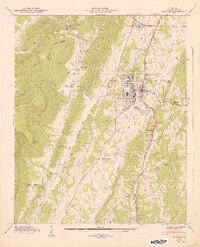 1947 Estelle1948 Print · USGSWalker County, Georgia, is captured here in the late 1940s as the rail-and-road network around La Fayette reached its mid-century peak. Researchers can trace ancestral locations at the County Farm, Blaylock Mill, or rural schools like Fairview Sch.2 unique versions available
End of results
Showing maps 1-21 of 21
Top cities of Walker County
- LaFayette historical maps
- Rossville historical maps
- Chickamauga historical maps
- Lookout Mountain historical maps
Frequently asked questions
- What are the different types of historical maps available for Walker County?
- What is the oldest map of Walker County?
- Where can I purchase historical maps of Walker County for my home or office?
- Where can I download high-res historical maps of Walker County?
- Are there historical topographic maps available for Walker County?
- Is there historical aerial imagery available for Walker County?
- Where are historical maps of Walker County sourced from?