Old Maps of Fort Hall, Idaho for Academic Research
Study the evolution of Fort Hall with 37 high-resolution historic maps. Whether you're teaching, researching, or modeling changes in land use, these maps provide essential visual documentation of urban, environmental, and geographic change.
- Analyze long-term change: Track patterns in development, transportation, and natural features.
- Ideal for environmental or urban studies: Support academic projects with primary historical map data.
- Use in the classroom or lab: Educators and researchers rely on these maps to bring historical context to life.
These maps are a powerful tool for teaching, research, and visualizing how Fort Hall has changed over the decades.
Fort Hall, ID maps
(37)- 1934 Map of Michaud, 1957 Print
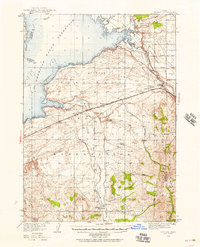 1934 Michaud1957 Print · USGSThe Fort Hall Indian Reservation was undergoing significant changes in the 1930s as the American Falls Reservoir reshaped the valley. Genealogists and historians can trace the paths of the Oregon Trail, locate the Indian Cem, and find old rail stops at Schiller and Michaud.
 - 1937 Map of Pocatello
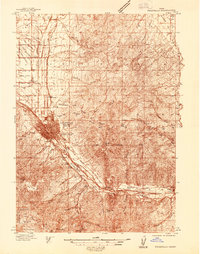 1937 Pocatello1937 Print · USGSBannock County is captured in the late 1930s as a burgeoning rail and highway crossroads along the Portneuf River. Genealogists can locate family landmarks in old Alameda, trace the Fort Hall Mine, or find rural school sites like Blackrock Sch.3 unique versions available
 - 1937 Map of Michaud
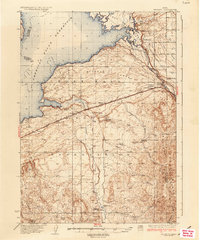 1937 Michaud1937 Print · USGSThe Fort Hall Indian Reservation and its mid-century transportation networks are documented here just as the aviation age was taking flight. Genealogists and historians can trace family-named sites and early infrastructure like the Indian School, Indian Cem, and the path of the Old Oregon Trail.
 - 1940 Map of Blackfoot, 1958 Print
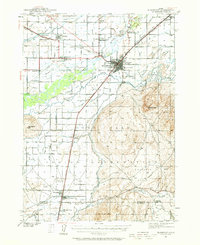 1940 Blackfoot1958 Print · USGSBingham County at the dawn of the 1940s reveals a landscape defined by the Snake River and a vast irrigation network. Genealogists and historians can trace the Fort Hall Indian Reservation boundaries, find School No 12, and locate the Indian Agency and Ross Fork Indian Sch.
 - 1943 Map of Blackfoot
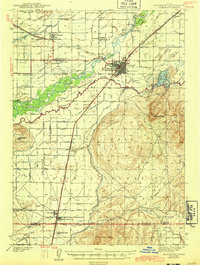 1943 Blackfoot1943 Print · USGSSoutheastern Idaho's river valleys and irrigation networks are on full display in the early 1940s, centered on the confluence of the Snake River and Blackfoot River. Genealogists and historians can trace family-named waterworks like Wearyrick Ditch and explore the historic layout of the Fort Hall Indian Reservation and Blackfoot.2 unique versions available
 - 1944 Map of Pocatello
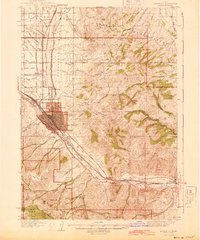 1944 Pocatello1944 Print · USGSBannock County and the Fort Hall Indian Reservation are captured here in the years leading up to the second World War. Researchers can trace the early streets of Pocatello and Alameda, or locate rural landmarks like the Portneuf Sch and the Fort Hall Mine.
 - 1954 Map of Pocatello, 1963 Print
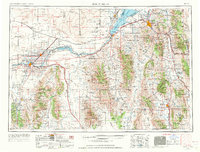 1954 Pocatello1963 Print · USGSSoutheast Idaho in the mid-1950s reveals a landscape shaped by massive water reclamation and mountain forests. Researchers can trace the development of the Fort Hall Indian Reservation or locate specific landmarks like the Arbon P O and Emerson School.4 unique versions available
 - 1955 Map of Pingree, 1957 Print
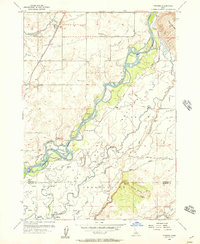 1955 Pingree1957 Print · USGSThe Snake River plain in the mid-fifties shows a landscape of deep historical layers, where the Route of Old Oregon Trail crosses the Fort Hall Indian Reservation. Trace early transit and water rights through the Union Pacific tracks, local cemeteries, and the Aberdeen Springfield Canal.4 unique versions available
 - 1955 Map of Idaho Falls, 1963 Print
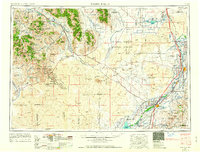 1955 Idaho Falls1963 Print · USGSThe Snake River Plain and its surrounding volcanic peaks are captured in the late fifties, showing the region's unique mix of nuclear research and high-desert ranching. Trace the industrial footprint of the National Reactor Testing Station or find old mining sites like Empire Mine.5 unique versions available
 - 1958 Map of Idaho Falls
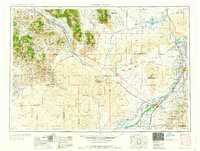 1958 Idaho Falls1958 Print · USGSEastern Idaho in the late fifties showcases the rapid expansion of agricultural and scientific outposts across its volcanic plains. Researchers can locate remote sites like Atomic City, mineral interests at White Knob Mine, and the cultural grounds of St Marys Mission.2 unique versions available
 - 1958 Map of Pocatello
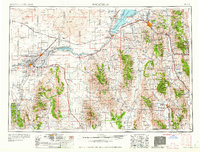 1958 Pocatello1958 Print · USGSSoutheastern Idaho in the late fifties was a landscape of expanding reservoirs and historic trails. Genealogists and historians can trace the Old Oregon Trail, locate the Bannock Creek Indian Day School, and study the many Union Pacific rail sidings.2 unique versions available
 - 1971 Map of Fort Hall, 1974 Print
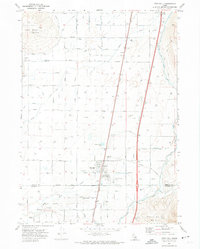 1971 Fort Hall1974 Print · USGSThe Fort Hall Indian Reservation in the early seventies shows a complex landscape of irrigation and rail. Genealogists and historians can trace local landmarks like Fort Hall Indian Agency, Good Shepherd Cem, and the prominent Ferry Butte.
 - 1971 Map of Pocatello North, 1974 Print
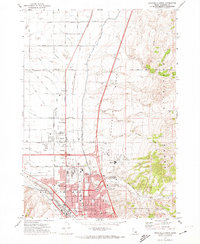 1971 Pocatello North1974 Print · USGSNorth of Pocatello during the early seventies, the landscape shows a transition from the Fort Hall Indian Reservation Boundary to growing suburban tracts. Local historians can trace development through labels for the Drive-in Theater, Chubbuck School, and the Union Pacific line.2 unique versions available
 - 1971 Map of Michaud, 1974 Print
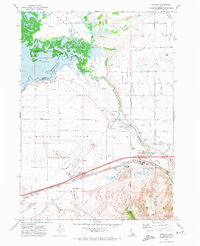 1971 Michaud1974 Print · USGSPower County and the Fort Hall Indian Reservation meet here in the early seventies as the Portneuf River feeds the reservoir. Genealogists and historians can trace family-named roads and sites like Reider Cemetery, Indian Cem, and the settlement of Michaud.4 unique versions available
 - 1974 Map of Pocatello North, 1975 Print
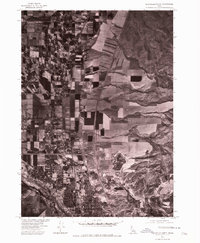 1974 Pocatello North1975 Print · USGSSoutheastern Idaho's urban-rural boundary is captured in the mid-1970s as the northern expansion of Pocatello meets the surrounding farmland. Genealogists and local historians can trace the development of Chubbuck and the rural outpost of Tyhee along the Portneuf River valley.
 - 1978 Map of Blackfoot, 1997 Print
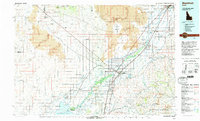 1978 Blackfoot1997 Print · USGSThe Snake River Valley in the late 1970s shows a landscape of volcanic lava flows meeting intensive irrigation. Genealogists and local historians can trace the irrigation canals and rail towns from Atomic City to the Fort Hall Indian Reservation and Gay Mine.
 - 1984 Map of Pocatello
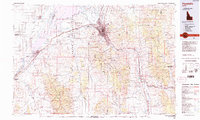 1984 Pocatello1984 Print · USGSSoutheast Idaho in the early eighties centers on the industrial and rail corridor between Pocatello and the Snake River. Genealogists and historians can trace routes through the Fort Hall Indian Reservation or locate family sites near American Falls and Lava Hot Springs.2 unique versions available
 - 2010 Map of Fort Hall, 2010 Print
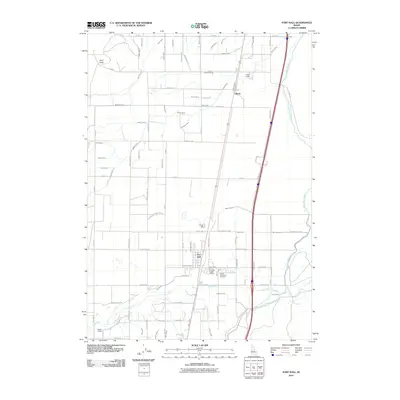 2010 Fort Hall2010 Print · USGSFort Hall and the surrounding agricultural plains are captured in the early 21st century, showing the sophisticated irrigation network of the Snake River Valley. Researchers can trace local landmarks like Good Shepherd Cemetery, the community of Gibson, and the path of the Fort Hall Main Canal.
 - 2010 Map of Pingree, 2010 Print
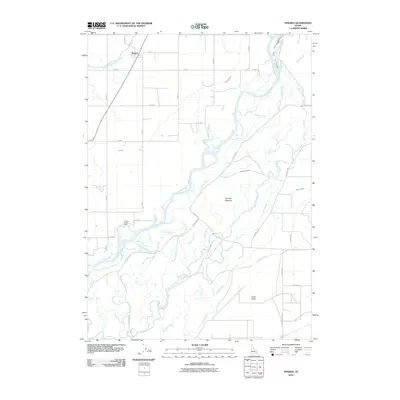 2010 Pingree2010 Print · USGSBingham County in the early 2000s shows a landscape defined by the Snake River and a vast network of irrigation. Researchers can trace local water management through the Aberdeen Springfield Canal and explore family-named landmarks like Jeff Cabin Creek and Cedar Butte.
 - 2010 Map of Pocatello North, 2010 Print
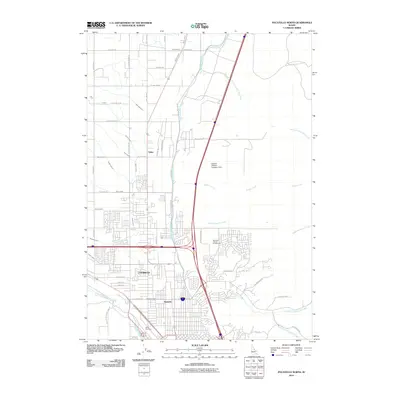 2010 Pocatello North2010 Print · USGSThe northern suburbs of Pocatello come into sharp focus in the early 21st century, showing the rapid growth of Chubbuck and Tyhee. Genealogists and local historians can trace the evolution of the valley through features like Cemetery Rd, the Bannock County Fairgrounds, and the intricate web of irrigation laterals.
 - 2010 Map of Michaud, 2010 Print
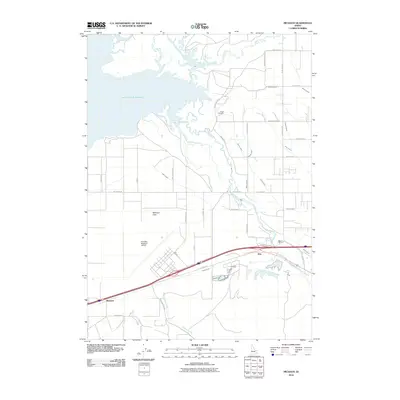 2010 Michaud2010 Print · USGSSoutheast Idaho's agricultural and transit corridors come into focus at the edge of the American Falls Reservoir during the early 2010s. Researchers can trace the legacy of local irrigation through the Taghee Canal and locate historical landmarks like the Indian Cemetery.
 - 2013 Map of Pingree, 2013 Print
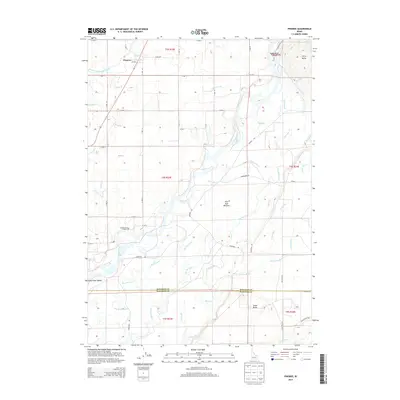 2013 Pingree2013 Print · USGSThe Snake River plains south of Pingree reveal a landscape of intensive irrigation and riverine wetlands in the early twenty-first century. Researchers can trace the path of the Aberdeen Springfield Canal and locate landmarks like Ferry Butte and the Fort Hall Bottoms.
 - 2013 Map of Fort Hall, 2013 Print
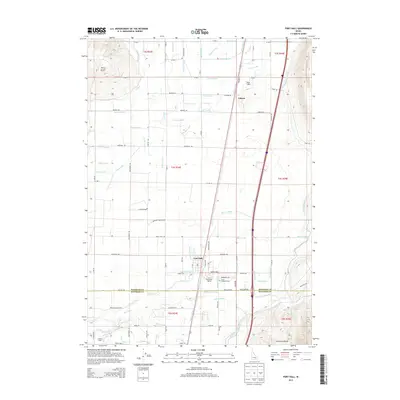 2013 Fort Hall2013 Print · USGSThe high desert plains of Idaho come alive in this survey of the Fort Hall area, showing the irrigation networks that define the landscape. Researchers can trace the layout of the Fort Hall Indian Agency, find the Good Shepherd Cem, and locate landmarks like Ferry Butte.
 - 2013 Map of Pocatello North, 2013 Print
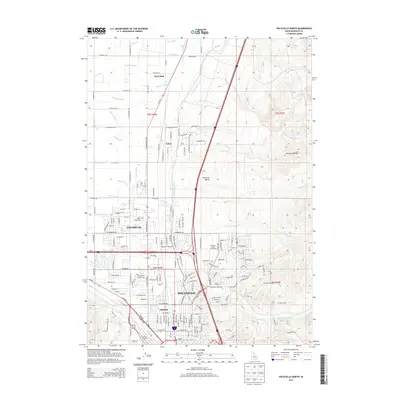 2013 Pocatello North2013 Print · USGSPocatello and Chubbuck are shown here in the early twenty-first century, revealing a landscape defined by industrial rail corridors and complex irrigation. You can trace the Union Pacific line as it cuts through Alameda or explore the many laterals and canals like the Fort Hall Main Canal and Tyhee Wasteway.
 - 2013 Map of Michaud, 2013 Print
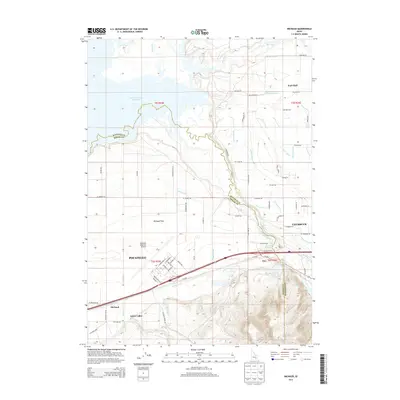 2013 Michaud2013 Print · USGSThe northern edge of Pocatello and the vast American Falls Reservoir area are shown here during a period of modern growth. Researchers can trace the complex irrigation networks of the Taghee Canal or locate local landmarks like the Pocatello Regional Airport and Batiste Springs.
Showing maps 1-25 of 37
Top cities near Fort Hall
Frequently asked questions
- What are the different types of historical maps available for Fort Hall?
- What is the oldest map of Fort Hall?
- Where can I purchase historical maps of Fort Hall for my home or office?
- Where can I download high-res historical maps of Fort Hall?
- Are there historical topographic maps available for Fort Hall?
- Is there historical aerial imagery available for Fort Hall?
- Where are historical maps of Fort Hall sourced from?