Old Maps of Gooding County, Idaho
Explore 158 old maps of Gooding County, spanning from 1892 to today. These high-resolution historic maps reveal how streets, neighborhoods, landmarks, and natural features evolved over time — perfect for genealogy, metal detecting, research, and local history exploration.
What you can do with these maps:
- See how Gooding County changed over time: Compare historical maps to modern-day views to trace roads, homesites, rail lines & more.
- View detailed metadata: Each map includes creators, publishers, year, scale, and archive source.
- Overlay maps with satellite & LiDAR: Visualize the past alongside modern tools to explore terrain & human change.
- Trusted historical sources: Maps sourced from the USGS, Library of Congress, and other archives.
- Access maps your way: View online, download high-res files, or order prints for personal or research use.
Start exploring old maps of Gooding County to uncover forgotten places, hidden landmarks, and the deep history beneath your feet.
Gooding County, ID maps
(158)- 1892 Map of Camas Prairie
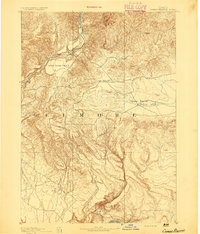 1892 Camas Prairie1892 Print · USGSElmore County during the territorial era is documented here through its high plateaus and river systems just before the turn of the century. Genealogists and historians can trace early settlements like Pine Grove and the natural landmarks of Camas Prairie and the Snake River.
 - 1893 Map of Camas Prairie
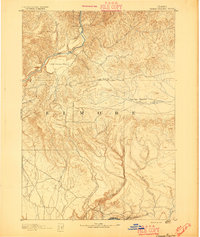 1893 Camas Prairie1893 Print · USGSElmore County was a land of high plateaus and river canyons in the years before major irrigation projects. Genealogists and researchers can trace the early layout of Little Camas Prairie and High Prairie, or locate the 1890s settlement at Pine Grove.4 unique versions available
 - 1948 Map of Ticeska, 1973 Print
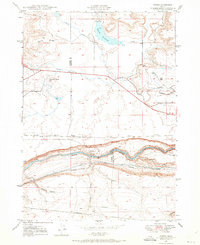 1948 Ticeska1973 Print · USGSThe Snake River canyon and the Union Pacific rail line define this Idaho landscape just after the war. Researchers can trace the steep King Hill Grade, find the Bliss Dam site, and locate the small station of Ticeska along the river tracks.3 unique versions available
 - 1949 Map of Ticeska
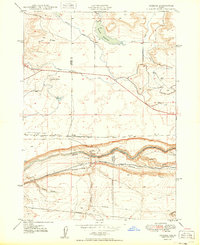 1949 Ticeska1949 Print · USGSThe Snake River canyon serves as a mid-century lifeline for transportation and agriculture where Elmore and Gooding counties meet. Trace the historic Union Pacific tracks past Ticeska or locate the site of Bliss Dam.
 - 1949 Map of Pasadena Valley, 1952 Print
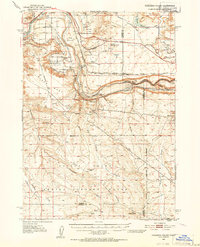 1949 Pasadena Valley1952 Print · USGSThe Snake River canyon and the high desert plateaus of Elmore County meet here during the post-war expansion of local irrigation. Researchers can trace the Oregon Trail corridor, locate the Pasadena Valley School, and find the historic Pilgrim Stage Station.
 - 1949 Map of Bliss, 1958 Print
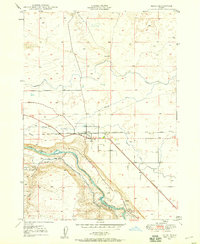 1949 Bliss1958 Print · USGSThe community of Bliss at the edge of the Snake River canyon is shown here in the late 1940s. Genealogists and historians can trace local landmarks like the Pioneer Cem, the Union Pacific rail corridor, and Bliss Point.4 unique versions available
 - 1949 Map of Thousand Springs, 1960 Print
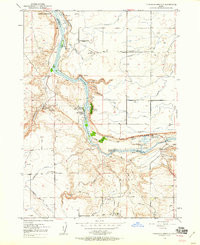 1949 Thousand Springs1960 Print · USGSThe Snake River canyon at the close of the 1940s reveals a unique blend of spring-fed recreation and early irrigation. Researchers can locate several rural schoolhouses, including the Sand Springs School and Lucerne School, alongside landmarks like Devils Washbowl Falls.7 unique versions available
 - 1949 Map of Gooding Butte, 1962 Print
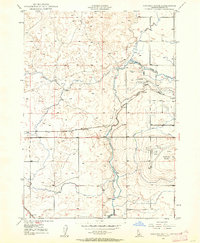 1949 Gooding Butte1962 Print · USGSSouthern Idaho in the late 1940s reveals a landscape being transformed by complex irrigation and rail networks. Genealogists and local historians can trace the Union Pacific through the settlement at Fuller or locate landmarks like Gooding Butte and the Gooding Municipal Airport.
 - 1949 Map of Tuttle, 1968 Print
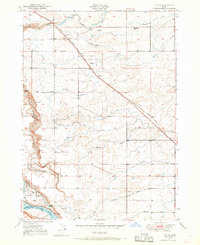 1949 Tuttle1968 Print · USGSGooding County and the northern banks of the Snake River are mapped here in the late 1940s as the region's irrigation and hatchery infrastructure expanded. Trace historical sites like the Shoestring School, the Tuttle settlement, and the State Fish Hatchery.3 unique versions available
 - 1949 Map of Hagerman, 1968 Print
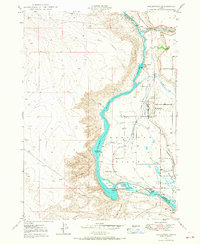 1949 Hagerman1968 Print · USGSThe Snake River canyon in Idaho was being actively transformed for power and irrigation during the late 1940s. Genealogists and historians can trace local landmarks like the Idaho State Fish Hatchery and Game Reserve, the Lower Salmon Falls Power Plant, and the Buckeye Ranch.4 unique versions available
 - 1950 Map of Gooding Butte
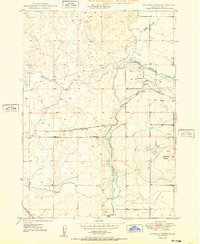 1950 Gooding Butte1950 Print · USGSThe high-desert terrain of Gooding County is revealed in this mid-century survey as the region developed its irrigation and rail networks. Genealogists and researchers can trace the course of the Union Pacific through Fuller or locate landmarks like Gooding Butte.2 unique versions available
 - 1950 Map of Hagerman
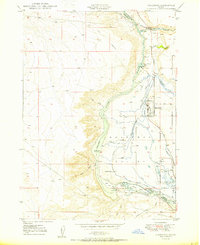 1950 Hagerman1950 Print · USGSThe Hagerman Valley at mid-century is a landscape defined by the Snake River's power and a complex network of irrigation. Researchers can trace early water rights through the Big Bend Ditch, locate the Buckeye Ranch, or study the Idaho State Fish Hatchery.
 - 1950 Map of Bliss
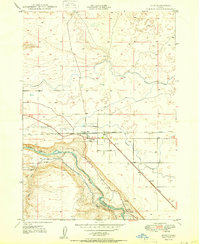 1950 Bliss1950 Print · USGSThe rail-and-river landscape of southern Idaho is captured here at mid-century, centered on the town of Bliss. Genealogists and historians can trace the Union Pacific (Oregon Short Line) and local landmarks like the Cem and Bliss Reservoir.
 - 1950 Map of Niagara Springs, 1952 Print
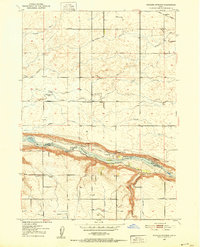 1950 Niagara Springs1952 Print · USGSThe Snake River canyon near the Gooding and Twin Falls county line is shown here in the early 1950s during a period of agricultural expansion. Genealogists and researchers can trace local landmarks like Appleton, the Orchard Valley School, and the Crystal Springs Grade.2 unique versions available
 - 1950 Map of Jerome, 1959 Print
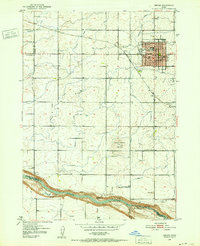 1950 Jerome1959 Print · USGSJerome and the surrounding Magic Valley countryside are shown here at mid-century, defined by a complex network of irrigation ditches and the deep canyon of the Snake River. Genealogists and local historians can locate early landmarks like Appleton School, Sonnickson Butte, and the Jerome town center.2 unique versions available
 - 1950 Map of Jerome, 1959 Print
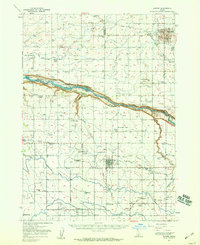 1950 Jerome1959 Print · USGSThe Magic Valley agricultural landscape is captured here in the 1950s, showing the early growth of Jerome and Filer along the Union Pacific rail lines. Genealogists and local historians can trace rural schools like Cedar Draw School and landmarks including the IOOF Cem and Northview Grange.2 unique versions available
 - 1951 Map of Thousand Springs
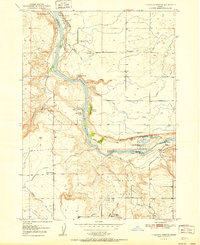 1951 Thousand Springs1951 Print · USGSTwin Falls and Gooding counties at mid-century reveal a landscape defined by the canyon rim and river-fed industry. Genealogists and historians can trace local rural life through the Lucerne School and early river sites like the Thousand Springs Resort and Banbury Natatorium.
 - 1951 Map of Tuttle
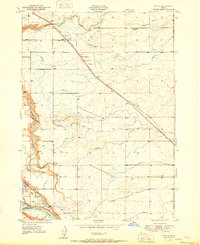 1951 Tuttle1951 Print · USGSNear the midpoint of the twentieth century, this Idaho landscape reveals an intricate web of irrigation and canyon-rim engineering. Researchers can trace the Union Pacific line through Tuttle or locate early facilities like the Shoestring School and the State Fish Hatchery and Game Reserve.
 - 1954 Map of Thousand Springs
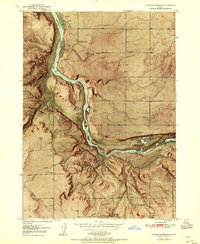 1954 Thousand Springs1954 Print · USGSThe Snake River canyon and its spring-fed plateaus are captured here in the mid-fifties as irrigation transformed the high desert. Researchers can trace the rural school system and early riverside recreation at Banbury Natatorium, Lucerne School, and Devils Washbowl Falls.
 - 1955 Map of Twin Falls, 1963 Print
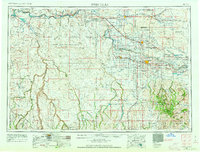 1955 Twin Falls1963 Print · USGSThe Magic Valley flourished in the mid-1950s as a sophisticated network of irrigation and rail lines connected high-desert outposts. Researchers can trace the engineering of the Milner-Gooding Canal, the remote Murphy Hot Springs, and the Union Pacific rail network.3 unique versions available
 - 1955 Map of Hailey, 1968 Print
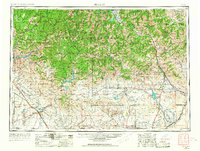 1955 Hailey1968 Print · USGSCentral Idaho in the mid-fifties reveals a landscape transitioning from deep-rooted silver mining to a burgeoning outdoor economy. Researchers can trace the legacy of the Union Pacific line, the remote Triumph Mine, and original airfield layouts at Mountain Home Air Force Base.4 unique versions available
 - 1957 Map of Thorn Creek SE, 1958 Print
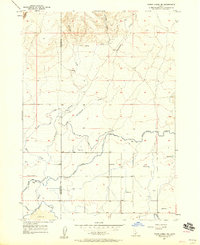 1957 Thorn Creek SE1958 Print · USGSThe Big Wood River valley at the Gooding and Lincoln county line shows a landscape of intensive irrigation in the late fifties. Genealogists and researchers can trace water rights and local landmarks like the Thorn Creek Sch, the Diversion Dam, and the High Line Canal.3 unique versions available
 - 1957 Map of Thorn Creek SW, 1959 Print
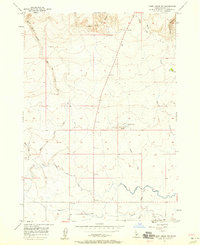 1957 Thorn Creek SW1959 Print · USGSGooding County in the late fifties showcases the vital water-management systems that transformed this high desert landscape. Local historians can trace early irrigation routes like the North Gooding Main Canal and landmarks like the Little City of Rocks.3 unique versions available
 - 1957 Map of Thorn Creek, 1959 Print
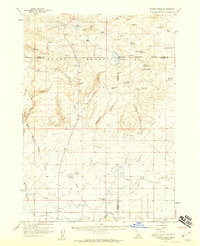 1957 Thorn Creek1959 Print · USGSThe Bennett Hills of southern Idaho are captured here in the late fifties, showcasing a landscape of high-desert ranching and complex irrigation. Genealogists and local historians can locate the Thorn Creek School, trace the Milner Gooding Canal, and explore the geologically unique Little City of Rocks.2 unique versions available
 - 1957 Map of Davis Mountain, 1959 Print
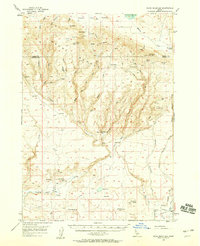 1957 Davis Mountain1959 Print · USGSCamas and Gooding counties were defined by isolated ranching outposts and rugged volcanic topography during the late fifties. Genealogists and historians can trace pioneer footprints at Emigrant Cemetery or locate remote sites like Dean Camp and the Chalk Mine.2 unique versions available
Showing maps 1-25 of 158
Top cities of Gooding County
Frequently asked questions
- What are the different types of historical maps available for Gooding County?
- What is the oldest map of Gooding County?
- Where can I purchase historical maps of Gooding County for my home or office?
- Where can I download high-res historical maps of Gooding County?
- Are there historical topographic maps available for Gooding County?
- Is there historical aerial imagery available for Gooding County?
- Where are historical maps of Gooding County sourced from?