1900s (20th Century) Maps of Louisville Township, Illinois
Explore 12 historic maps of Louisville Township from the 1900s (20th Century). These maps offer a rare glimpse into what life looked like during the 1900s — showing old roads, neighborhoods, homes, and landmarks that have changed or disappeared over time.
Whether you're researching your family's past, planning a metal detecting trip, or studying how Louisville Township's landscape evolved across the 1900s, these high-resolution maps are a powerful tool for exploring the history of this region.
- Focus on a specific era: All maps on this page are from the 1900s, giving you a focused view of this time period.
- See what’s changed: Compare century-old streets, trails, and buildings to today's modern landscape using overlays and satellite layers.
- Research with precision: Use these maps for genealogy, historical research, land use analysis, or educational projects.
- View, download, or print: Maps are fully viewable online in high resolution, and can be downloaded or printed for your own records.
Start exploring Louisville Township's history through authentic maps from the 1900s. This is your window into the past.
Louisville Township, IL maps
(12)- 1948 Map of Flora, 1963 Print
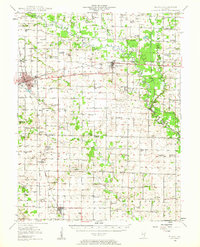 1948 Flora1963 Print · USGSClay and Wayne counties are shown at their mid-century peak of rural development, centered on the BALTIMORE AND OHIO RR corridor. Local historians can trace dozens of vanished schoolhouses and country churches, from West Seminary Sch to the South Freedom Ch.
 - 1949 Map of Flora
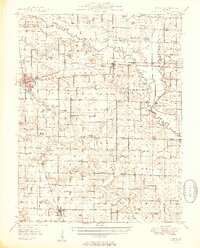 1949 Flora1949 Print · USGSSouthern Illinois during the late 1940s was a landscape defined by the winding Little Wabash River and the busy Baltimore and Ohio RR. Researchers can trace the cultural roots of the region through dozens of local landmarks like Lathrop Chapel, Long Prairie Sch, and Oil Wells near Cisne.2 unique versions available
 - 1952 Map of Xenia, 1954 Print
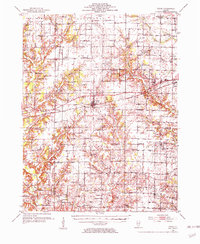 1952 Xenia1954 Print · USGSSouthern Illinois prairie and farmland are captured here in the early fifties, showing the rural crossroads of Clay and Wayne Counties. Researchers can trace dozens of country schools and family landmarks like Henson Cem, Vickrey Sch, and the Baltimore and Ohio rail line.2 unique versions available
 - 1953 Map of Sailor Springs, 1955 Print
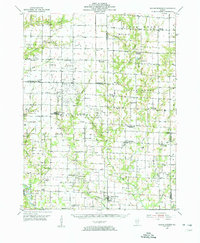 1953 Sailor Springs1955 Print · USGSSoutheast Illinois farmland at the start of the fifties reveals a landscape of tight-knit rural precincts and family homesteads. Genealogists can trace family names through dozens of landmarks like Shouse Chapel, Bethsaida Cem, and the Little Grove Sch.2 unique versions available
 - 1956 Map of Edgewood, 1957 Print
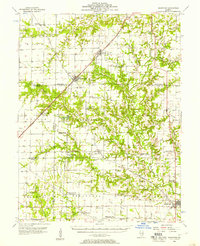 1956 Edgewood1957 Print · USGSRailroad junctions and rising oil fields define this mid-century look at the Clay and Effingham county lines. Genealogists can trace family names at St Ann Cem, Keen Chapel, and the settlement of La Clede along the ILLINOIS CENTRAL tracks.2 unique versions available
 - 1958 Map of Belleville, 1973 Print
 1958 Belleville1973 Print · USGSSouthern Illinois during the mid-twentieth century reveals a landscape of industrial growth and massive new reservoirs. Genealogists and historians can trace the paths of the Illinois Central RR through towns like Centralia or locate landmarks such as Emerald Mound and the Looking Glass Prairie.3 unique versions available
 - 1962 Map of Belleville
 1962 Belleville1962 Print · USGSSouthern Illinois in the late fifties reveals a landscape of industrial growth and ancient landmarks before the full expansion of the interstate system. Genealogists can trace family names and rural post offices near Centralia, Salem, and the historic Monks Mound.
 - 1968 Map of Xenia NE, 1970 Print
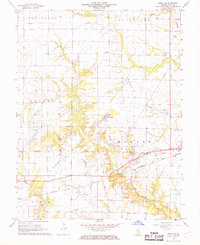 1968 Xenia NE1970 Print · USGSClay County's rural landscape is captured here in the late sixties, just as the local petroleum industry and rail network shaped the countryside. Researchers can trace family sites at Oak Mound Cem, visit McCabe Chapel, or locate the old Lincoln Sch along the Baltimore and Ohio line.2 unique versions available
 - 1970 Map of Flora, 1971 Print
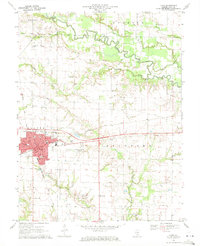 1970 Flora1971 Print · USGSClay County at the start of the 1970s reveals a landscape of railroad hubs and active oil fields. Researchers can trace the Baltimore and Ohio line through Flora or locate rural landmarks like Beulah Church and the Clay City Oil Field.
 - 1985 Map of Louisville West
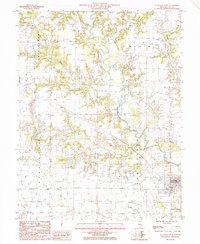 1985 Louisville West1985 Print · USGSClay County in the mid-1980s reveals a prairie landscape structured by the Little Wabash River and its many creek systems. Genealogists and historians can trace the bounds of Louisville and Riffle alongside local landmarks like a Quarry and numerous rural Cemeteries.
 - 1985 Map of Louisville East
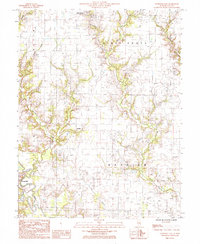 1985 Louisville East1985 Print · USGSClay County at the dawn of the eighties shows a landscape of river-bottom farms and emerging energy infrastructure. Researchers can trace the banks of the Wabash River and locate rural sites like Bible Grove, the Hoosier locality, and a hilltop Cem.
 - 1986 Map of Olney
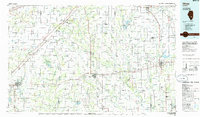 1986 Olney1986 Print · USGSSouth-central Illinois in the mid-eighties shows a landscape of small agricultural towns linked by historic rail lines and prairie preserves. Trace family roots and vanished rail stops near Kinmundy, the Prairie Chicken Sanctuary, and Salem.2 unique versions available
End of results
Showing maps 1-12 of 12
Top cities near Louisville Township
- Flora historical maps
- Louisville historical maps
- Clay City historical maps
- La Clede historical maps
- Edgewood historical maps
- Mason historical maps
See more
Top neighborhoods of Louisville Township
Frequently asked questions
- What are the different types of historical maps available for Louisville Township?
- What is the oldest map of Louisville Township?
- Where can I purchase historical maps of Louisville Township for my home or office?
- Where can I download high-res historical maps of Louisville Township?
- Are there historical topographic maps available for Louisville Township?
- Is there historical aerial imagery available for Louisville Township?
- Where are historical maps of Louisville Township sourced from?