Old Maps of Franklin County, Illinois
Explore 145 old maps of Franklin County, spanning from 1908 to today. These high-resolution historic maps reveal how streets, neighborhoods, landmarks, and natural features evolved over time — perfect for genealogy, metal detecting, research, and local history exploration.
What you can do with these maps:
- See how Franklin County changed over time: Compare historical maps to modern-day views to trace roads, homesites, rail lines & more.
- View detailed metadata: Each map includes creators, publishers, year, scale, and archive source.
- Overlay maps with satellite & LiDAR: Visualize the past alongside modern tools to explore terrain & human change.
- Trusted historical sources: Maps sourced from the USGS, Library of Congress, and other archives.
- Access maps your way: View online, download high-res files, or order prints for personal or research use.
Start exploring old maps of Franklin County to uncover forgotten places, hidden landmarks, and the deep history beneath your feet.
Franklin County, IL maps
(145)- 1908 Map of Galatia
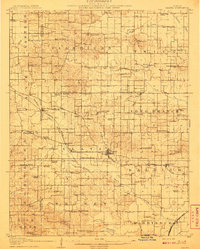 1908 Galatia1908 Print · USGSSouthern Illinois at the dawn of the twentieth century was a landscape of thriving rural communities and rail-side towns. Genealogists can trace family roots through numerous local landmarks like Possum Flat School, Tate Township Hall, and Mount Pleasant Church.2 unique versions available
 - 1909 Map of West Frankfort
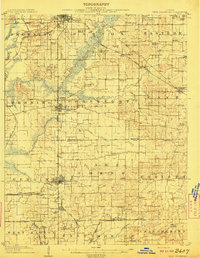 1909 West Frankfort1909 Print · USGSSouthern Illinois at the peak of the coal and rail boom is captured here across Franklin and Williamson counties. Genealogists can locate family landmarks like Coon Ridge School, Mormon Church, and small settlements such as Smothersville or Deering City.2 unique versions available
 - 1910 Map of Herrin
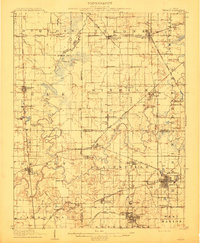 1910 Herrin1910 Print · USGSSouthern Illinois thrived at the height of its rail-and-coal era, with this 1910 survey capturing a landscape of growing towns and industrial spurs. Genealogists and historians can trace family roots through localized sites like Dewmaine, Old Duquoin, and the Oak Grove School.2 unique versions available
 - 1926 Map of Duquoin
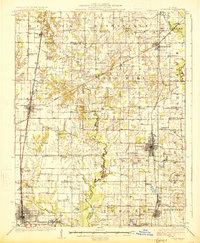 1926 Duquoin1926 Print · USGSSouthern Illinois coal country is at its industrial peak in the mid-twenties, with thriving rail towns and active collieries. You can trace early 20th-century family roots at Young's Chapel or locate old operations like the Big Ben Mine and Old Keller Mine.3 unique versions available
 - 1936 Map of Herrin
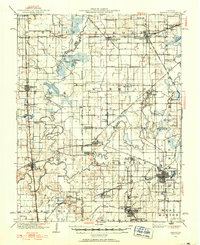 1936 Herrin1936 Print · USGSSouthern Illinois was defined by its coal-and-rail economy in the 1930s as industrial lines reached deep into the countryside. Trace the family landmarks of this era at Old Duquoin, Buckner Pond, and the Union Hill Church.2 unique versions available
 - 1938 Map of Galatia, 1959 Print
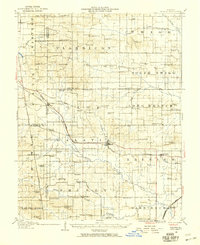 1938 Galatia1959 Print · USGSThe Southern Illinois interior near the Saline River comes to life in this survey from the late thirties. Genealogists and historians can trace family roots through numerous local landmarks like Thistle Ridge School, Tate Chapel, and Akin.
 - 1939 Map of Ina, 1958 Print
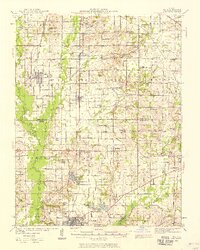 1939 Ina1958 Print · USGSJefferson and Franklin Counties appear here as they were in the late 1930s, showing a landscape of fertile prairies and growing rail towns. Researchers can trace dozens of family-named schools and landmarks like King College, the STATE GAME FARM, and the Antioch Ch cemetery.2 unique versions available
 - 1941 Map of West Frankfort, 1959 Print
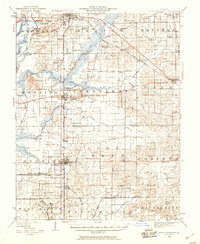 1941 West Frankfort1959 Print · USGSSouthern Illinois coal country is shown here just before the mid-century, where a dense rail network connects thriving mining towns. Genealogists can trace family roots through numerous country landmarks like Coon Ridge School, Williams Prairie Church, and Brush Prairie School.
 - 1942 Map of McLeansboro, 1961 Print
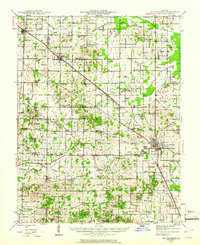 1942 McLeansboro1961 Print · USGSHamilton County in the early 1940s was a landscape of tightly-knit farming communities and small rail stops. Genealogists can trace family roots through a remarkable number of local landmarks like Piopolis, Seminary Sch, and Union Hill Cem.2 unique versions available
 - 1943 Map of Ina
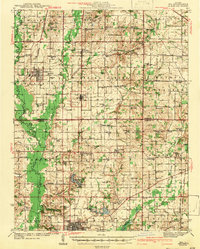 1943 Ina1943 Print · USGSSouthern Illinois during the mid-forties reveals a complex grid of rural schools, coal-town rail spurs, and early collegiate outposts. Genealogists can trace family roots through dozens of local landmarks like Williams Chapel, Mason Cem, and the vanished desks of Hungry Hill Sch.2 unique versions available
 - 1945 Map of McLeansboro
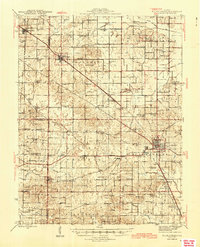 1945 McLeansboro1945 Print · USGSIn the mid-1940s, this portion of Southern Illinois was a landscape of steam-era rail junctions and tight-knit rural school districts. Genealogists can trace family roots through scores of rural landmarks, from Knight Prairie and Piopolis to the Sulphur Springs Sch.2 unique versions available
 - 1949 Map of Paducah
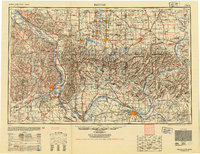 1949 Paducah1949 Print · USGSThe confluence of the Ohio, Mississippi, Tennessee, and Cumberland rivers at the close of the 1940s reveals a region bound by water and rail. Researchers can trace historic river landings, timberlands in the Shawnee National Forest, and the coal-mining infrastructure around West Frankfort and Herrin.2 unique versions available
 - 1950 Map of Paducah
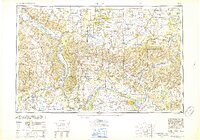 1950 Paducah1950 Print · USGSThe confluence of the great midwestern rivers defines this mid-century landscape at the intersection of Illinois, Kentucky, and Missouri. Genealogists and historians can trace the rail-and-river economy through the hubs of Paducah, Cairo, and Metropolis or locate family roots near the Wildcat Hills.
 - 1954 Map of Paducah
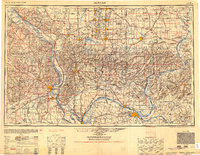 1954 Paducah1954 Print · USGSSouthern Illinois and Western Kentucky intersect at the great river confluences during this mid-century era of rail and river industry. Genealogists and historians can trace family roots and commerce through river towns like Cairo, Metropolis, and Golconda, or along the tracks of the Illinois Central Railroad.2 unique versions available
 - 1958 Map of Belleville, 1973 Print
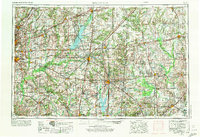 1958 Belleville1973 Print · USGSSouthern Illinois during the mid-twentieth century reveals a landscape of industrial growth and massive new reservoirs. Genealogists and historians can trace the paths of the Illinois Central RR through towns like Centralia or locate landmarks such as Emerald Mound and the Looking Glass Prairie.3 unique versions available
 - 1961 Map of Paducah
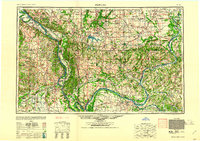 1961 Paducah1961 Print · USGSThe Lower Ohio Valley at mid-century is a landscape defined by its great rivers and newly formed reservoirs. Researchers can trace the riverfronts of Paducah and Metropolis, or locate smaller settlements like Old Shawneetown and Cave in Rock along the banks.2 unique versions available
 - 1962 Map of Belleville
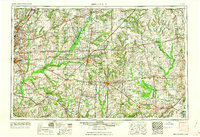 1962 Belleville1962 Print · USGSSouthern Illinois in the late fifties reveals a landscape of industrial growth and ancient landmarks before the full expansion of the interstate system. Genealogists can trace family names and rural post offices near Centralia, Salem, and the historic Monks Mound.
 - 1963 Map of Pittsburg, 1964 Print
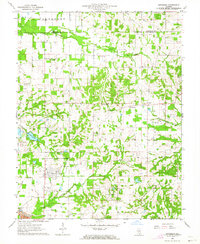 1963 Pittsburg1964 Print · USGSSouthern Illinois at the dawn of the sixties shows a landscape of coal mining and scattered farming communities. Researchers can trace family sites at Williams Prairie Ch, locate the Freeman No 4 Mine, or follow the Missouri Pacific rail line.
 - 1963 Map of West Frankfort, 1964 Print
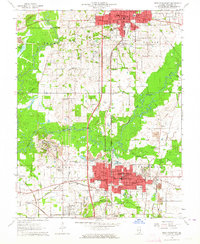 1963 West Frankfort1964 Print · USGSThe Southern Illinois coal belt comes to life in the early sixties as industrial rail lines crisscross the Franklin County landscape. Trace local family history at St Joseph Cem or explore vanished coal-town patterns at Pershing and Deering City.2 unique versions available
 - 1963 Map of Johnston City, 1964 Print
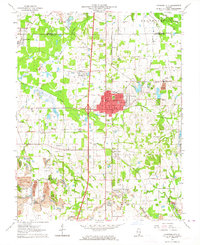 1963 Johnston City1964 Print · USGSSouthern Illinois coal country is in full operation during the early 1960s, showing a landscape shaped by rail and extraction. Researchers can trace the heritage of Johnston City and smaller hamlets like Dog Walk or locate family plots at Moake Cem and Fergus Cem.2 unique versions available
 - 1963 Map of Akin, 1964 Print
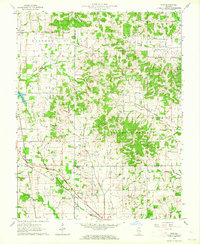 1963 Akin1964 Print · USGSHamilton County is captured in the early sixties as a rural landscape of church-centered hamlets and coal-belt rail lines. Genealogists can locate Akin, West Rural Hill, and numerous family burial grounds like Brady Cem and Good Hope Cem.
 - 1963 Map of Thompsonville, 1964 Print
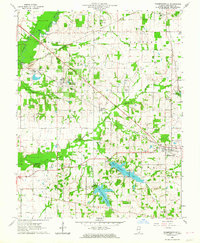 1963 Thompsonville1964 Print · USGSFranklin County's coal and rail corridor comes to life in this early 1960s survey of southern Illinois. Genealogists and historians can trace the foundations of local life at the Orient No 5 Mine, the village of Thompsonville, and old sites like Swofford Cem.2 unique versions available
 - 1963 Map of Harco, 1964 Print
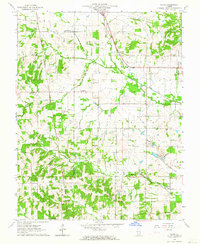 1963 Harco1964 Print · USGSIn the early 1960s, the Illinois interior was a landscape of coal fields, oil wells, and tight-knit rural parishes. Genealogists and historians can trace family ties through numerous landmarks like Abney Cem, Allena Chapel, and the settlement at Harco.
 - 1963 Map of West Frankfort, 1966 Print
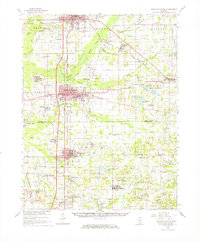 1963 West Frankfort1966 Print · USGSSouthern Illinois coal country is caught at a mid-century peak in this survey of Franklin and Williamson counties. Researchers can trace vanished rail spurs, family-named plots like Rea Cem, and mining sites from the Orient No 5 Mine to White Ash.
 - 1963 Map of Galatia, 1966 Print
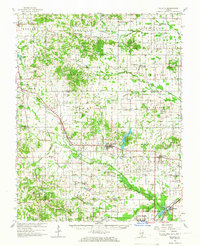 1963 Galatia1966 Print · USGSSouthern Illinois in the early sixties was a landscape defined by coal, oil, and the rails of the Illinois Central. Genealogists can trace family roots through numerous remote burial grounds like Old Ruff Cem and Masonic Cem, or locate landmarks such as Tate Chapel and Harco.2 unique versions available
Showing maps 1-25 of 145
Top cities of Franklin County
- West Frankfort historical maps
- Benton historical maps
- Christopher historical maps
- Sesser historical maps
- Zeigler historical maps
- Royalton historical maps
See more
Frequently asked questions
- What are the different types of historical maps available for Franklin County?
- What is the oldest map of Franklin County?
- Where can I purchase historical maps of Franklin County for my home or office?
- Where can I download high-res historical maps of Franklin County?
- Are there historical topographic maps available for Franklin County?
- Is there historical aerial imagery available for Franklin County?
- Where are historical maps of Franklin County sourced from?