1960s Maps of Jo Daviess County, Illinois
Explore 15 historic maps of Jo Daviess County from the 1960s. These maps offer a rare glimpse into what life looked like during the 1960s — showing old roads, neighborhoods, homes, and landmarks that have changed or disappeared over time.
Whether you're researching your family's past, planning a metal detecting trip, or studying how Jo Daviess County's landscape evolved across the 1960s, these high-resolution maps are a powerful tool for exploring the history of this region.
- Focus on a specific era: All maps on this page are from the 1960s, giving you a focused view of this time period.
- See what’s changed: Compare century-old streets, trails, and buildings to today's modern landscape using overlays and satellite layers.
- Research with precision: Use these maps for genealogy, historical research, land use analysis, or educational projects.
- View, download, or print: Maps are fully viewable online in high resolution, and can be downloaded or printed for your own records.
Start exploring Jo Daviess County's history through authentic maps from the 1960s. This is your window into the past.
Jo Daviess County, IL maps
(15)- 1961 Map of Dubuque
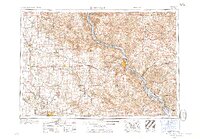 1961 Dubuque1961 Print · USGSThe Tri-State region's river-and-rail landscape is captured here during the early sixties, showing the convergence of Iowa, Illinois, and Wisconsin. Trace mid-century rail lines like the Chicago Great Western Ry and explore sites like the Savanna Ordnance Depot and Backbone State Park.
 - 1961 Map of Kieler, 1962 Print
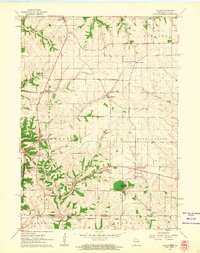 1961 Kieler1962 Print · USGSGrant County is captured in the early sixties as a region of upland farming and quiet river hollows along the state line. Researchers can trace rural landmarks from Sinsinawa Mound to the crossroads at Fair Play, Happy Corners, and the Jamestown Cem.3 unique versions available
 - 1962 Map of Dubuque
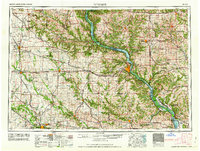 1962 Dubuque1962 Print · USGSThe Tri-State region's river-and-rail economy is captured here in the early sixties, centered on the Mississippi River bluffs. Genealogists and historians can locate Numerous lead and zinc mines, the New Melleray Abbey Monastery, and rural hubs like Saint Olaf.2 unique versions available
 - 1962 Map of South Wayne, 1964 Print
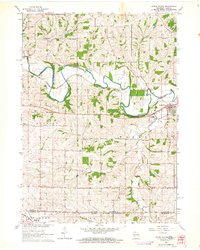 1962 South Wayne1964 Print · USGSLafayette County dairy and river country is captured here in the early sixties, centered on the junction of the Pecatonica River and the railroad. Genealogists and local historians can trace rural schoolhouse locations like Mud Hollow Sch and family burial sites such as Hoffman Cem.
 - 1962 Map of Apple River, 1964 Print
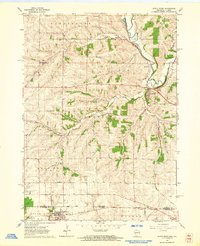 1962 Apple River1964 Print · USGSThe Illinois-Wisconsin borderlands appear in the early sixties as a network of rail-reliant villages and country school districts. Genealogists and local historians can trace family ties at Highland Cem, locate the Salty Hollow Sch, or follow the Pecatonica River past Gratiot.
 - 1962 Map of South Wayne, 1964 Print
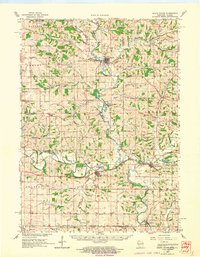 1962 South Wayne1964 Print · USGSCrossing the Illinois border in the 1960s, this area of Lafayette and Green Counties features a landscape shaped by the Pecatonica River and its many tributaries. Researchers can locate numerous rural schoolhouses and family cemeteries like Porter Sch and the Sauterman Cem.
 - 1963 Map of Rockford
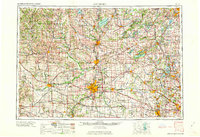 1963 Rockford1963 Print · USGSThe mid-century industrial corridor along the Rock River is shown here during a period of rapid post-war growth. Researchers can trace the extensive rail lines of the Chicago and North Western or locate local landmarks like the Rockford Ordnance Depot and Holy Hill.
 - 1968 Map of Galena, 1970 Print
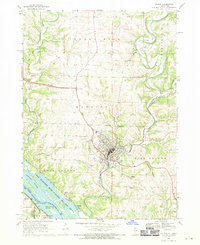 1968 Galena1970 Print · USGSThe Galena area is shown here in the late sixties, where the industrial legacy of mining meets the complex backwaters of the Mississippi. Researchers can trace historic cemeteries like Grant Hill Cem, early crossings at Gears Ferry, and the paths of the Central Illinois Railroad.4 unique versions available
 - 1968 Map of Scales Mound West, 1970 Print
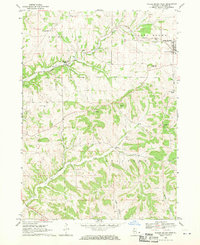 1968 Scales Mound West1970 Print · USGSThe upland ridges and deep hollows of northern Illinois are captured here in the late sixties, where the Illinois Central rail line winds through the valleys. Trace local history through the many rural landmarks like Miners Chapel Cem, Council Hill Station, and Guilford.
 - 1968 Map of Elizabeth NE, 1970 Print
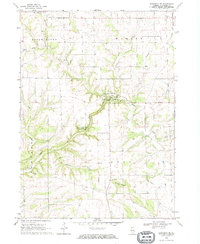 1968 Elizabeth NE1970 Print · USGSUpper Illinois in the late sixties reveals a landscape of limestone bluffs and quiet rural townships. Researchers can trace the history of family plots and vanished hamlets through sites like Millville, Thompson Cem, and the high peak of Benton Mound.
 - 1968 Map of Hanover, 1970 Print
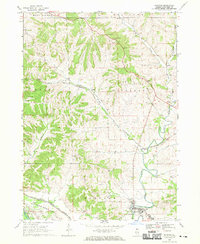 1968 Hanover1970 Print · USGSJo Daviess County in the late sixties shows a transition from rural farmland to significant military and industrial land use. Researchers can trace family history at Log Church Cem or study the extensive rail infrastructure of the Chicago and North Western and the Savanna Army Depot.3 unique versions available
 - 1968 Map of Bellevue, 1970 Print
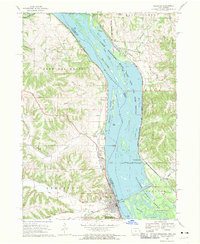 1968 Bellevue1970 Print · USGSThe Mississippi River border between Iowa and Illinois was a center of rail and river industry in the late sixties. Genealogists and historians can trace the foundations of Bellevue, the Savanna Army Depot, and old cemeteries like St Joseph Cem.3 unique versions available
 - 1968 Map of Stockton, 1970 Print
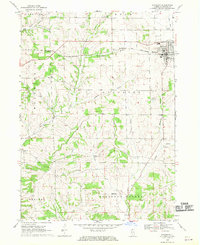 1968 Stockton1970 Print · USGSJo Daviess County at the end of the sixties shows a landscape defined by the Chicago and North Western rail line and the Plum River valley. Researchers can trace rural lineages through the Townsend Cem, St John Ch, and the settlement at Elmoville.
 - 1968 Map of Elizabeth, 1970 Print
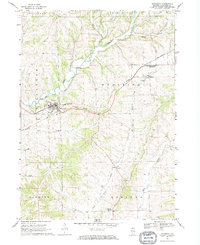 1968 Elizabeth1970 Print · USGSThe rolling hills of Jo Daviess County come into focus during the late sixties as the rail lines shaped local trade. Researchers can trace family sites near Elizabeth, Woodbine, and Derinda Center, alongside landmarks like St Marys Cem and the Bible Ch.
 - 1968 Map of Scales Mound East, 1971 Print
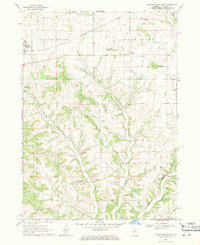 1968 Scales Mound East1971 Print · USGSJo Daviess County in the late sixties shows a landscape of high ridges and driftless valleys defined by the Illinois Central railroad. Genealogists can trace the rural community of Schapville and several unnamed cemeteries near Hells Branch.2 unique versions available
End of results
Showing maps 1-15 of 15
Top cities of Jo Daviess County
Frequently asked questions
- What are the different types of historical maps available for Jo Daviess County?
- What is the oldest map of Jo Daviess County?
- Where can I purchase historical maps of Jo Daviess County for my home or office?
- Where can I download high-res historical maps of Jo Daviess County?
- Are there historical topographic maps available for Jo Daviess County?
- Is there historical aerial imagery available for Jo Daviess County?
- Where are historical maps of Jo Daviess County sourced from?