1900s (20th Century) Maps of Cimic, Divernon
Explore 6 historic maps of Cimic from the 1900s (20th Century). These maps offer a rare glimpse into what life looked like during the 1900s — showing old roads, neighborhoods, homes, and landmarks that have changed or disappeared over time.
Whether you're researching your family's past, planning a metal detecting trip, or studying how Cimic's landscape evolved across the 1900s, these high-resolution maps are a powerful tool for exploring the history of this region.
- Focus on a specific era: All maps on this page are from the 1900s, giving you a focused view of this time period.
- See what’s changed: Compare century-old streets, trails, and buildings to today's modern landscape using overlays and satellite layers.
- Research with precision: Use these maps for genealogy, historical research, land use analysis, or educational projects.
- View, download, or print: Maps are fully viewable online in high resolution, and can be downloaded or printed for your own records.
Start exploring Cimic's history through authentic maps from the 1900s. This is your window into the past.
Cimic, Divernon maps
(6)- 1922 Map of Divernon, 1957 Print
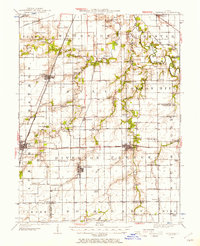 1922 Divernon1957 Print · USGSThe Sangamon County prairie in the early twenties was a landscape of bustling rail towns and one-room schoolhouses. Genealogists can trace family roots through dozens of local landmarks like Cotton Hill Academy, Stout Church, and the Illinois Traction System.
 - 1924 Map of Divernon
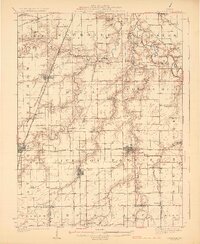 1924 Divernon1924 Print · USGSSangamon County at the height of its rail-and-river era shows a landscape where agriculture and industry met along the South Fork Sangamon River. Researchers can trace the roots of vanished rural life through dozens of local landmarks like the Cotton Hill Academy, Zenobia, and Irwins Park.2 unique versions available
 - 1958 Map of Decatur, 1971 Print
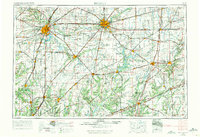 1958 Decatur1971 Print · USGSCentral Illinois in the mid-twentieth century shows a landscape defined by industrial rail hubs and the creation of large reservoirs. Researchers can trace historic corridors like the Penn Central or locate landmarks such as Lincoln Log Cabin State Park and Lake Springfield.3 unique versions available
 - 1961 Map of Decatur
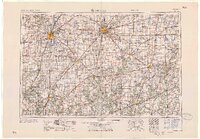 1961 Decatur1961 Print · USGSCentral Illinois in the late fifties was a bustling corridor of rail lines and prairie commerce centered on the state capital. Genealogists and historians can trace the intricate connections between Springfield, Decatur, and dozens of smaller settlements like Nokomis and Arcola.2 unique versions available
 - 1965 Map of Divernon, 1966 Print
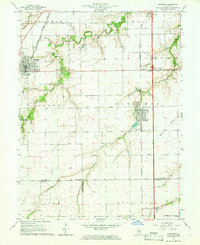 1965 Divernon1966 Print · USGSCentral Illinois prairie life and rail transport thrive in this mid-sixties survey of Sangamon County. Genealogists and historians can trace family ties at Wimmer Cem or locate the rural junctions of Cimic and Pawnee Junction along the rail lines.3 unique versions available
 - 1985 Map of Springfield
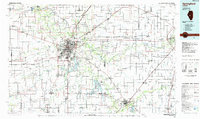 1985 Springfield1985 Print · USGSCentral Illinois during the mid-eighties shows a landscape of growing state capital influence and deep historical roots. Genealogists and historians can trace family sites near Oak Ridge Cem or follow the path of the Sangamon River past Williamsville and Riverton.2 unique versions available
End of results
Showing maps 1-6 of 6
Top cities near Cimic
- Springfield historical maps
- Woodside historical maps
- Chatham historical maps
- Auburn historical maps
- Virden historical maps
- Rochester historical maps
See more
Frequently asked questions
- What are the different types of historical maps available for Cimic?
- What is the oldest map of Cimic?
- Where can I purchase historical maps of Cimic for my home or office?
- Where can I download high-res historical maps of Cimic?
- Are there historical topographic maps available for Cimic?
- Is there historical aerial imagery available for Cimic?
- Where are historical maps of Cimic sourced from?