1900s (20th Century) Maps of Mount Carmel, Illinois
Explore 12 historic maps of Mount Carmel from the 1900s (20th Century). These maps offer a rare glimpse into what life looked like during the 1900s — showing old roads, neighborhoods, homes, and landmarks that have changed or disappeared over time.
Whether you're researching your family's past, planning a metal detecting trip, or studying how Mount Carmel's landscape evolved across the 1900s, these high-resolution maps are a powerful tool for exploring the history of this region.
- Focus on a specific era: All maps on this page are from the 1900s, giving you a focused view of this time period.
- See what’s changed: Compare century-old streets, trails, and buildings to today's modern landscape using overlays and satellite layers.
- Research with precision: Use these maps for genealogy, historical research, land use analysis, or educational projects.
- View, download, or print: Maps are fully viewable online in high resolution, and can be downloaded or printed for your own records.
Start exploring Mount Carmel's history through authentic maps from the 1900s. This is your window into the past.
Mount Carmel, IL maps
(12)- 1901 Map of Princeton, 1954 Print
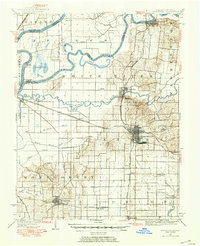 1901 Princeton1954 Print · USGSGIBSON COUNTY at the turn of the century shows a landscape transitioning from river-and-canal transit to a bustling railroad hub. Trace early settlements and infrastructure like the Mt Carmel Ferry, the Wabash and Erie Canal (Abandoned), and the historic community of Lyles.
 - 1903 Map of Princeton
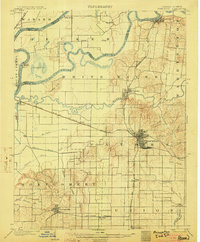 1903 Princeton1903 Print · USGSIndiana's southwestern river country is shown at the height of its railroad era, centered on the junction at Princeton. Genealogists and historians can trace old property lines near the County Farm or locate vanished sites along the Wabash and Erie Canal and the settlement of Lyles.6 unique versions available
 - 1903 Map of Patoka
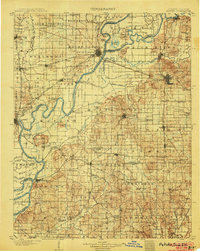 1903 Patoka1903 Print · USGSThe lower Wabash Valley at the start of the twentieth century was a vital crossroads of river trade and rail expansion. Genealogists can trace family roots through settlements like New Harmony and Parker's Settlement or locate the County Farm and Grand Rapids.2 unique versions available
 - 1904 Map of Mount Carmel
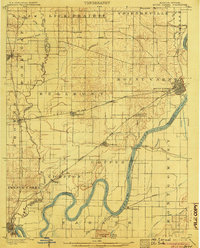 1904 Mount Carmel1904 Print · USGSMount Carmel and the Wabash River valley are captured here at the height of the steam era. Genealogists and historians can trace defunct rail stops and riverside settlements like Schrodts Sta., Jimtown, and Rochester.3 unique versions available
 - 1956 Map of Vincennes, 1967 Print
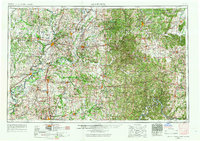 1956 Vincennes1967 Print · USGSSouthern Indiana and the Illinois borderlands are captured here in the mid-fifties, showing the region's dense network of river towns and rail lines. Researchers can trace historic river crossings along the Wabash River or locate landmarks like Wyandotte Cave and Lincoln State Park.4 unique versions available
 - 1957 Map of Vincennes
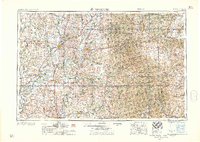 1957 Vincennes1957 Print · USGSSouthwest Indiana and the Illinois borderlands come alive in the late 1950s, a period of heavy rail traffic and expanding state forests. Genealogists and historians can trace the riverfronts and rail lines of Vincennes, New Harmony, and the vast Crane Naval Ammunition Depot.
 - 1958 Map of Vincennes
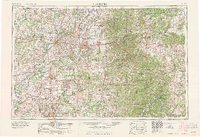 1958 Vincennes1958 Print · USGSSouthern Indiana and the Illinois borderlands are captured during a mid-century period of heavy rail traffic and military activity. Researchers can trace the sprawling bounds of the Crane Naval Ammunition Depot or locate historic settlements like New Harmony and French Lick.2 unique versions available
 - 1959 Map of Mount Carmel, 1961 Print
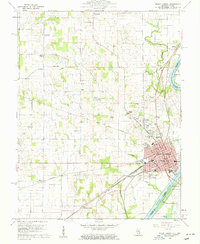 1959 Mount Carmel1961 Print · USGSMount Carmel sits at the confluence of the Wabash and White Rivers during the mid-century era, serving as a busy hub for both rail and river traffic. Genealogists and local historians can trace family roots through numerous sites like Nye Chapel, Schrodts Station, and the Sand Hill Cem.4 unique versions available
 - 1959 Map of East Mount Carmel, 1961 Print
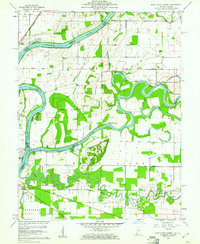 1959 East Mount Carmel1961 Print · USGSThe Illinois-Indiana borderlands meet at the confluence of the Wabash and White Rivers during the late fifties. Genealogists and historians can trace the Indian Treaty Boundary, locate Scott Chapel Cem, and see the Mount Carmel Ferry crossing.4 unique versions available
 - 1959 Map of Mount Carmel, 1963 Print
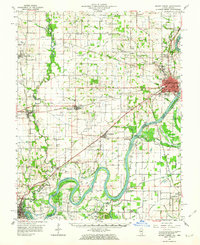 1959 Mount Carmel1963 Print · USGSMount Carmel and the Wabash River valley are shown here in the late fifties, during a period of active drainage and industrial growth. Genealogists can trace family landmarks like Keens Cem and Nisbet Chapel or explore the Old Indian Treaty Boundary and the paths of the Illinois Central railroad.2 unique versions available
 - 1959 Map of Princeton, 1964 Print
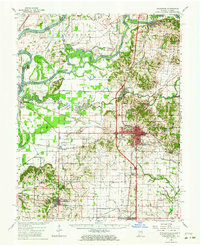 1959 Princeton1964 Print · USGSIndiana's river-rich southwestern corner comes alive in the late fifties as a network of levees and railroads defines the landscape. Genealogists and historians can trace family roots through Lyles Sch, Decker Chapel, and the riverside settlements of Hazleton and Patoka.2 unique versions available
 - 1986 Map of Princeton
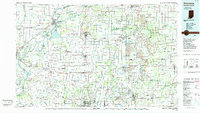 1986 Princeton1986 Print · USGSSouthwestern Indiana is defined by the confluence of the Wabash and White Rivers during the mid-eighties, a period of established rail lines and expanding interstates. Genealogists and historians can trace property locations across numerous townships or locate family sites in Mount Carmel, Poseyville, and Boonville.2 unique versions available
End of results
Showing maps 1-12 of 12
Top cities near Mount Carmel
- Vincennes historical maps
- Princeton historical maps
- Johnson historical maps
- Fort Branch historical maps
- White River historical maps
- Grayville historical maps
See more
Top neighborhoods of Mount Carmel
Frequently asked questions
- What are the different types of historical maps available for Mount Carmel?
- What is the oldest map of Mount Carmel?
- Where can I purchase historical maps of Mount Carmel for my home or office?
- Where can I download high-res historical maps of Mount Carmel?
- Are there historical topographic maps available for Mount Carmel?
- Is there historical aerial imagery available for Mount Carmel?
- Where are historical maps of Mount Carmel sourced from?