Old Maps of Benton County, Indiana for Genealogy
Trace your family roots with 105 historic maps of Benton County. These high-res maps reveal old neighborhoods, homesites, landmarks, and streets — helping you uncover where your ancestors lived and how the area evolved over time.
- Explore historic neighborhoods: Identify where your relatives may have lived in the 1800s or 1900s.
- Compare maps over time: Trace the changes in streets, buildings, and landmarks for multi-generational research.
- Perfect for genealogy & ancestry research: Used by family historians and researchers to map out lineage and migration.
These maps are an incredible resource for exploring your personal connection to Benton County's past.
Benton County, IN maps
(105)- 1933 Map of Hoopeston
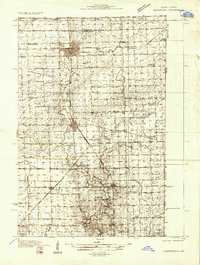 1933 Hoopeston1933 Print · USGSVermilion County and the Illinois-Indiana borderlands are captured here in the early 1930s as a thriving rail and agricultural corridor. Genealogists can locate dozens of rural schools like White Sch and family-linked landmarks such as Ross Cem or Manns Chapel.
 - 1938 Map of Milford
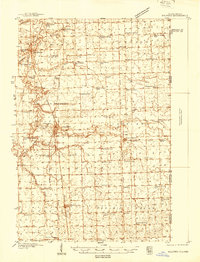 1938 Milford1938 Print · USGSIroquois County at the end of the Depression era is a landscape of thriving rail towns and numerous one-room schoolhouses. Researchers can locate nearly thirty distinct rural schools like White College Sch and Fidelity Sch, along with family burial grounds such as Belmont Cem.
 - 1938 Map of Hoopeston
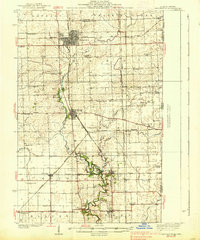 1938 Hoopeston1938 Print · USGSEastern Illinois at the height of the rail era shows a landscape defined by busy junctions and tightly knit rural communities. Genealogists and historians can trace family roots through dozens of local landmarks like Squankum Sch, Rose Cem, and Pleasant View Ch.3 unique versions available
 - 1942 Map of Otterbein
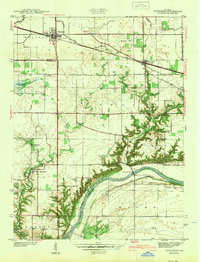 1942 Otterbein1942 Print · USGSIndiana's prairie meets the Wabash River valley at the start of the 1940s, showing a landscape defined by rail lines and early canal history. Genealogists and historians can trace family roots through rural landmarks like Asbury Cem, the Armstrong Chapel, and the community of Green Hill.
 - 1944 Map of Milford
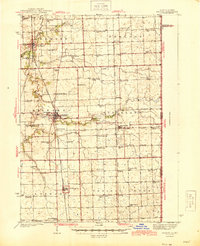 1944 Milford1944 Print · USGSIroquois County at the close of the second World War is a landscape defined by rail junctions and rural schoolhouses. Genealogists can trace family roots through numerous sites like Sugar Creek Chapel, Belmont Cem, and early schools including White College Sch.2 unique versions available
 - 1951 Map of Otterbein
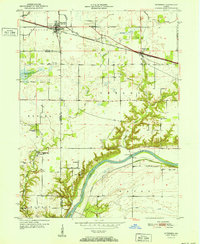 1951 Otterbein1951 Print · USGSTippecanoe and Warren Counties were defined by the convergence of major railroads and river commerce in the early 1950s. Genealogists and historians can trace the Abandoned Canal near the Wabash River or locate family sites like Spencer Cem and Ross Camp.2 unique versions available
 - 1953 Map of Danville, 1965 Print
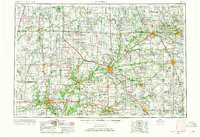 1953 Danville1965 Print · USGSIndiana and Illinois crossroads come to life in this mid-century survey as the interstate era begins to reshape the river-and-rail landscape. Genealogists and collectors can trace the historic paths of the Nickel Plate railroad or locate smaller communities like Veedersburg, Goodland, and Bismarck.3 unique versions available
 - 1955 Map of Danville
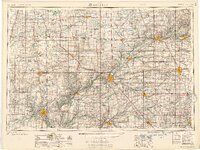 1955 Danville1955 Print · USGSThe Indiana-Illinois borderlands during the mid-fifties reveal a landscape of thriving rail hubs and university towns. Researchers can trace the legacy of Purdue University, the Tippecanoe Battlefield, and the path of the Pennsylvania RR.
 - 1956 Map of Danville
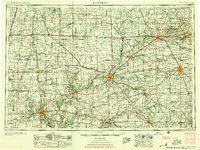 1956 Danville1956 Print · USGSMid-century Indiana and Illinois are captured here as the river-and-rail economy evolved into the modern highway era. Researchers can trace ancestral roots and old transport lines through Logansport, Battle Ground, and the dams at Lake Shafer.
 - 1961 Map of Chatterton, 1962 Print
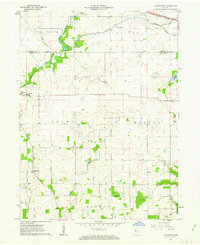 1961 Chatterton1962 Print · USGSWestern Indiana farming life is captured here in the early sixties as the landscape transitions between Warren and Benton Counties. Genealogists and historians can trace old homesteads and landmarks like Quaker Cem, Chatterton, and the Pine Village Sch.
 - 1961 Map of Tab, 1962 Print
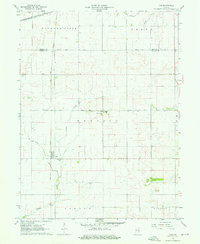 1961 Tab1962 Print · USGSAgricultural life in Warren County is captured in the early sixties as railroads and drainage ditches defined the rural landscape. Trace the history of Tab through its elevators, Locust Grove Cem, and Township Sch.4 unique versions available
 - 1961 Map of Pine Village, 1962 Print
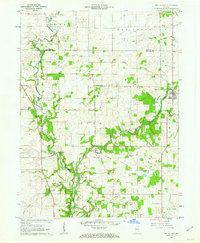 1961 Pine Village1962 Print · USGSWarren County at the dawn of the sixties shows a landscape of creek-side settlements and family farmsteads. Genealogists and local historians can trace legacy burial sites like Smith Cem and Van Reed Cem or explore the layouts of Pine Village and Rainsville.2 unique versions available
 - 1961 Map of Otterbein, 1963 Print
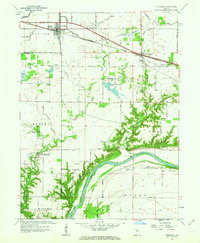 1961 Otterbein1963 Print · USGSThe Wabash River valley and the fertile plains of Western Indiana meet in this early 1960s survey. Genealogists and local historians can trace rural family sites like Pond Grove Cem, Armstrong Chapel, and the riverside settlement of Green Hill.3 unique versions available
 - 1962 Map of Mount Gilboa, 1963 Print
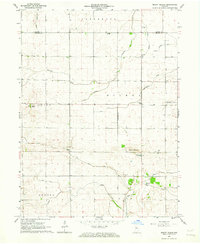 1962 Mount Gilboa1963 Print · USGSBenton and Jasper counties in the early sixties are captured here as a landscape of productive prairie and engineered drainage. Genealogists can locate family landmarks such as Bethany Chapel, Mount Gilboa Church, and the rural community of Wadena.
 - 1962 Map of Round Grove, 1963 Print
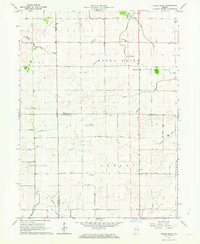 1962 Round Grove1963 Print · USGSNorthwest Indiana's prairie lands appear here in the early sixties, where the corners of three counties meet. Genealogists and local historians can trace the rural layout of Round Grove, find the old Township Sch, and locate family land near Barrydale.
 - 1962 Map of Wadena, 1963 Print
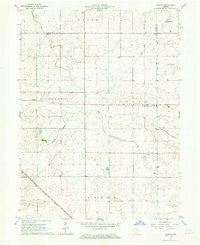 1962 Wadena1963 Print · USGSBenton County agriculture and rail transit are captured here in the early sixties as the landscape supported a thriving grain-shipping economy. Researchers can locate the Township Sch in Wadena, the Dehner Cem, and traces of an Old Railroad Grade.2 unique versions available
 - 1962 Map of Templeton NE, 1963 Print
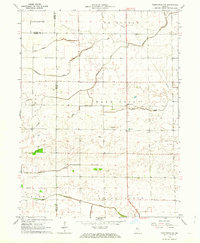 1962 Templeton NE1963 Print · USGSThe rural borders of White and Benton Counties are captured in the early sixties, showing a landscape shaped by drainage and family farming. Genealogists and local historians can trace legacy landmarks like Meadow Lake Ch, the Cem, and numerous named waterways including Sweeney Ditch.3 unique versions available
 - 1962 Map of Templeton, 1964 Print
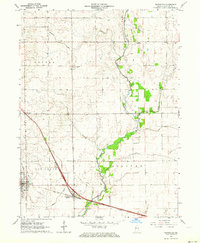 1962 Templeton1964 Print · USGSBenton County was a vital rail hub in the early 1960s, dominated by the intersection of major freight lines and sprawling farmland. Genealogists and rail historians can trace the paths of the New York Central Railroad, locate the Justus Cem, or explore the village of Templeton.2 unique versions available
 - 1962 Map of Boswell, 1964 Print
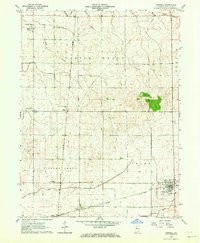 1962 Boswell1964 Print · USGSBenton County agriculture and rail transport intersect in this early 1960s survey of western Indiana. Genealogists and local historians can trace family-named routes like Leuck Road and locate rural landmarks such as St Marys School or the tracks of the New York Chicago and St Louis railroad.2 unique versions available
 - 1962 Map of Earl Park, 1964 Print
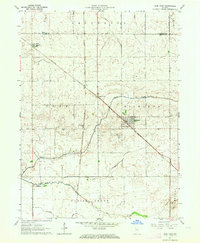 1962 Earl Park1964 Print · USGSBenton County agriculture and rail transport intersect in the early sixties, centered on the hub of Earl Park. Researchers can trace old family sites and rural infrastructure at Raub, Yeagers Curve, and the St John Cem.2 unique versions available
 - 1962 Map of Fowler, 1964 Print
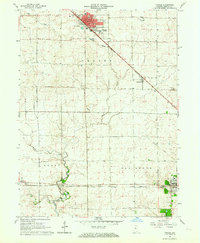 1962 Fowler1964 Print · USGSMid-century Benton County is a landscape of thriving rail towns and quiet prairie drainages. Researchers can trace family ties at Perigo Cem or follow the path of the New York Central Railroad through Fowler and Swanington.2 unique versions available
 - 1964 Map of Darrow, 1965 Print
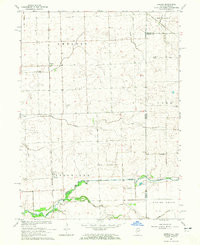 1964 Darrow1965 Print · USGSThe Illinois-Indiana borderlands are captured here in the mid-1960s, showing the quiet rail-and-river geography of Iroquois County. Researchers can trace the Milwaukee Road through Darrow or locate the Blue Ridge Cem near the state line.2 unique versions available
 - 1964 Map of Stockland, 1965 Print
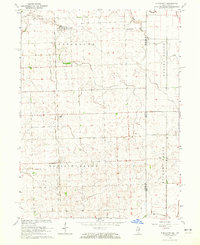 1964 Stockland1965 Print · USGSIroquois County farm country meets the Indiana border in the early sixties, centered on the railroad corridor and drainage networks. Researchers can locate the Totheroh Cem, the Prairie Green Sch, and small centers like Stockland and Hallock.
 - 1964 Map of Ambia, 1965 Print
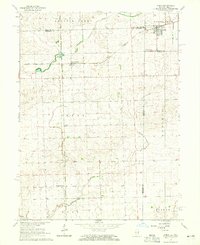 1964 Ambia1965 Print · USGSThe Illinois-Indiana borderlands of the mid-1960s are captured here during a period of active rail transit and rural agriculture. Genealogists and local historians can trace family roots through settlements like Cheneyville, Powley Corners, and the rural Antioch Ch.
 - 1984 Map of Danville, 1985 Print
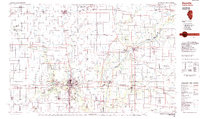 1984 Danville1985 Print · USGSEastern Illinois and western Indiana meet here in the mid-1980s, centered on the river forks and rail lines surrounding the industrial hub of Danville. Researchers can trace old transport routes and rural landmarks like Rossville Junction, Hope Ch, and the Univ of Ill Radio Telescope.
Showing maps 1-25 of 105
Top cities of Benton County
- Fowler historical maps
- Oxford historical maps
- Boswell historical maps
- Earl Park historical maps
- Ambia historical maps
Frequently asked questions
- What are the different types of historical maps available for Benton County?
- What is the oldest map of Benton County?
- Where can I purchase historical maps of Benton County for my home or office?
- Where can I download high-res historical maps of Benton County?
- Are there historical topographic maps available for Benton County?
- Is there historical aerial imagery available for Benton County?
- Where are historical maps of Benton County sourced from?