Old Maps of Advance, Indiana for Metal Detecting
Plan your next treasure hunt with 34 historic maps of Advance. Find old homesites, ghost towns, trails, and gathering spots that may be lost to time — perfect for identifying promising metal detecting locations.
- Locate forgotten sites: Uncover places like long-lost settlements, abandoned rail lines, or gathering spots.
- Plan better hunts: Use map overlays combined with LiDAR or satellite views to narrow in on historically rich areas.
- Made for detectorists: Thousands of hobbyists use these maps to discover relics, coins, and hidden history.
Use these historic maps to boost your research and find new opportunities beneath the surface of Advance.
Advance, IN maps
(34)- 1953 Map of Lizton, 1954 Print
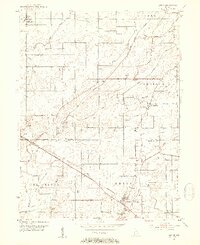 1953 Lizton1954 Print · USGSMid-century Hendricks and Boone counties are captured here during a period of steady agricultural and rail activity. Genealogists can trace family roots through numerous local sites like the Cundiff Cemetery, Old Union Ch, and the New York Central corridor.2 unique versions available
 - 1953 Map of Danville, 1965 Print
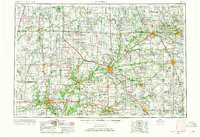 1953 Danville1965 Print · USGSIndiana and Illinois crossroads come to life in this mid-century survey as the interstate era begins to reshape the river-and-rail landscape. Genealogists and collectors can trace the historic paths of the Nickel Plate railroad or locate smaller communities like Veedersburg, Goodland, and Bismarck.3 unique versions available
 - 1953 Map of Indianapolis, 1965 Print
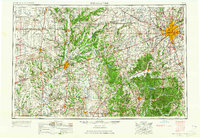 1953 Indianapolis1965 Print · USGSCentral Indiana and the Illinois borderlands are captured in the mid-sixties, showing the growth of Indianapolis and its industrial rail corridors. Genealogists and historians can trace the development of outlying towns like Zionsville or Beech Grove and find landmarks such as Atterbury AAF and Turkey Run State Park.4 unique versions available
 - 1955 Map of Danville
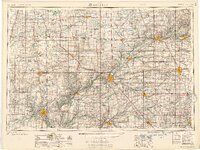 1955 Danville1955 Print · USGSThe Indiana-Illinois borderlands during the mid-fifties reveal a landscape of thriving rail hubs and university towns. Researchers can trace the legacy of Purdue University, the Tippecanoe Battlefield, and the path of the Pennsylvania RR.
 - 1956 Map of Danville
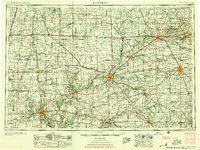 1956 Danville1956 Print · USGSMid-century Indiana and Illinois are captured here as the river-and-rail economy evolved into the modern highway era. Researchers can trace ancestral roots and old transport lines through Logansport, Battle Ground, and the dams at Lake Shafer.
 - 1956 Map of Indianapolis
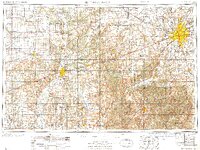 1956 Indianapolis1956 Print · USGSCentral Indiana in the mid-fifties is captured during a period of industrial growth and military presence. Genealogists and historians can trace the rail networks of the New York Central or locate regional landmarks like Fort Benjamin Harrison and Camp Atterbury.
 - 1957 Map of Indianapolis
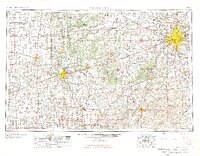 1957 Indianapolis1957 Print · USGSCentral Indiana in the mid-fifties is captured here as a crossroads of major rail lines and nascent federal highways. Genealogists and historians can trace family-named ridges like Poplar Ridge or locate strategic sites like Camp Atterbury and Speedway.2 unique versions available
 - 1957 Map of New Ross, 1959 Print
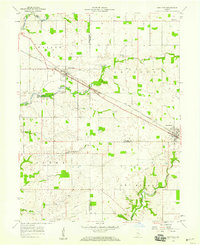 1957 New Ross1959 Print · USGSThe rail-and-river corridor of central Indiana comes to life in the late fifties, showing the agricultural networks between New Ross and Jamestown. Trace family history through landmarks like Mt Zion Ch and rural burial grounds including New Ross Cem.3 unique versions available
 - 1961 Map of Hazelrigg, 1963 Print
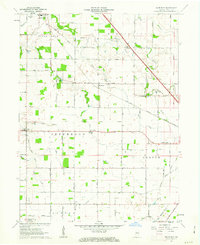 1961 Hazelrigg1963 Print · USGSBoone County's agricultural and rail-oriented landscape is captured here in the early sixties, showing the vital connection between small towns and the New York Central Railroad. Genealogists and historians can locate family sites near Thorntown, Hazelrigg, and Dover, or trace landmarks like the Township Sch and Pleasant View Cem.2 unique versions available
 - 1961 Map of Shannondale, 1963 Print
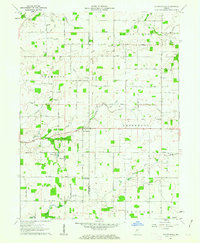 1961 Shannondale1963 Print · USGSCentral Indiana farm country comes into focus in the early sixties, showing the rural landscape before modern expansion. Genealogists can trace family roots through sites like Shannondale, Log Cabin Crossroads, and the Pisgah Cem.2 unique versions available
 - 1962 Map of Indianapolis
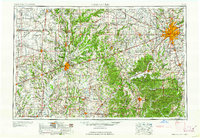 1962 Indianapolis1962 Print · USGSCentral Indiana and the Illinois borderlands are captured here in the early sixties, showing the region's dense rail networks and growing urban centers. Genealogists and historians can locate family-named landmarks and institutions like Crown Hill Cem, Indiana University, and the Indianapolis Motor Speedway.
 - 1970 Map of Lizton, 1972 Print
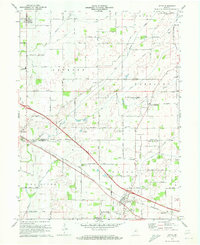 1970 Lizton1972 Print · USGSThe rural border of Boone and Hendricks counties comes to life in the early seventies, centered on the railroad town of Lizton. Genealogists and local historians can trace family ties at the Poplar Grove Cemetery or locate the Pinnell School and Old Union Church.
 - 1984 Map of Lafayette, 1985 Print
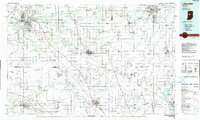 1984 Lafayette1985 Print · USGSNorth-central Indiana thrives in the 1980s as a hub of higher education, industry, and agriculture centered on the Wabash River. Genealogists and historians can locate family sites near Darrough Chapel, Oak Hill Cem, or the small crossroads of Thorntown and Colfax.2 unique versions available
 - 1986 Map of Indianapolis
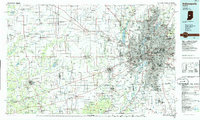 1986 Indianapolis1986 Print · USGSThe Indiana capital and its surrounding counties are captured here in the mid-1980s, showcasing the height of its orbital highway development and suburban growth. Researchers can trace the legacy of the Fort Benjamin Harrison Military Reservation, follow the Conrail lines, or locate family roots in Beech Grove, Greencastle, and Zionsville.2 unique versions available
 - 2010 Map of New Ross, 2010 Print
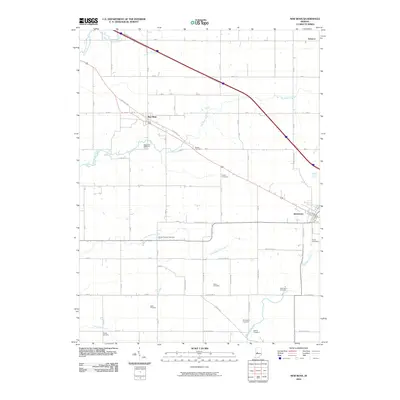 2010 New Ross2010 Print · USGSJamestown and New Ross are captured in the early twenty-first century, showing a landscape defined by traditional farm grids and local creek systems. Genealogists can locate several family-named burial sites including Kidd Farm Cemetery, Hypes Cemetery, and Fullen Cemetery.
 - 2010 Map of Lizton, 2010 Print
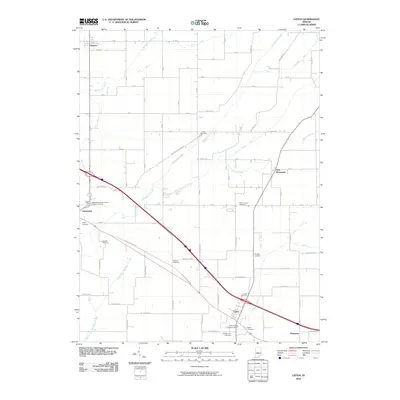 2010 Lizton2010 Print · USGSBoone County at the turn of the decade is shown here as a grid of productive farmland and small rail-side towns. Genealogists can locate over a dozen burial sites, from the Union Cemetery to the Lizton Knights of Pythias Cemetery and Lowry Cemetery.
 - 2010 Map of Shannondale, 2010 Print
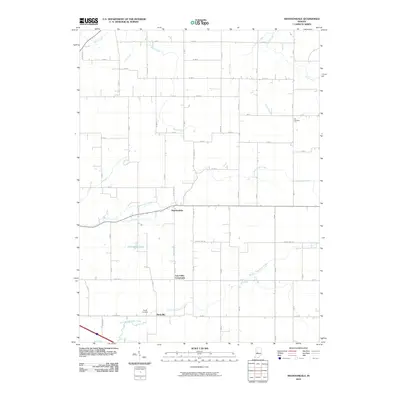 2010 Shannondale2010 Print · USGSThe Indiana countryside near Shannondale is shown at the start of the 2010s, revealing a landscape of meticulously managed drainage and rural crossroads. Genealogists can locate family sites at Pisgah Cemetery and Cox Cemetery, or trace old property boundaries near Log Cabin Crossroads.
 - 2010 Map of Hazelrigg, 2010 Print
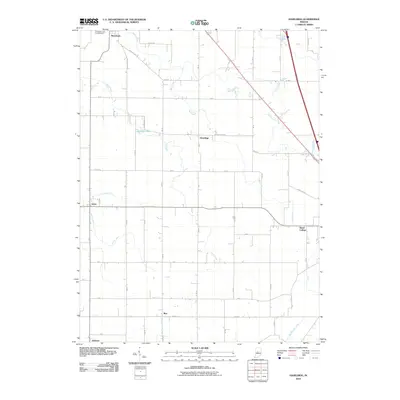 2010 Hazelrigg2010 Print · USGSBoone County at the turn of the decade is shown here as a landscape of established small towns and intricate agricultural drainages. Researchers can locate family roots in Thorntown and Advance, or trace the grounds of Hazel College and Maple Lawn Cemetery.
 - 2013 Map of Shannondale, 2013 Print
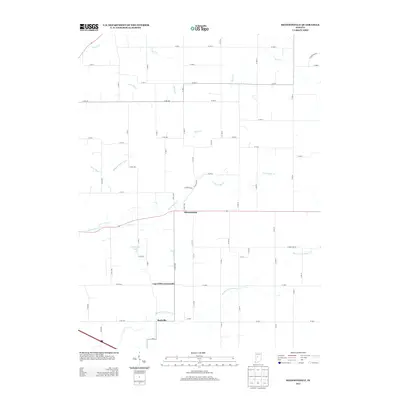 2013 Shannondale2013 Print · USGSThe rural landscape near the Boone and Montgomery county line comes into focus in this recent survey of central Indiana. Genealogists and local historians can trace the farm-to-market roads connecting Shannondale, Log Cabin Crossroads, and the small settlement of Beckville.
 - 2013 Map of Hazelrigg, 2013 Print
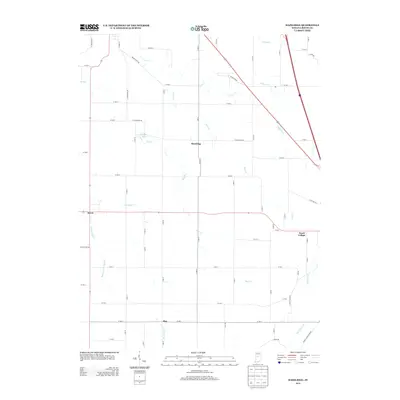 2013 Hazelrigg2013 Print · USGSBoone County, Indiana, is captured here in the early twenty-first century as a landscape of productive farm fields and small rural settlements. Researchers can trace the local drainage system from Higgins Ditch to Wolf Cr and locate historical community hubs like Hazelrigg, Max, and Hazel College.
 - 2013 Map of New Ross, 2013 Print
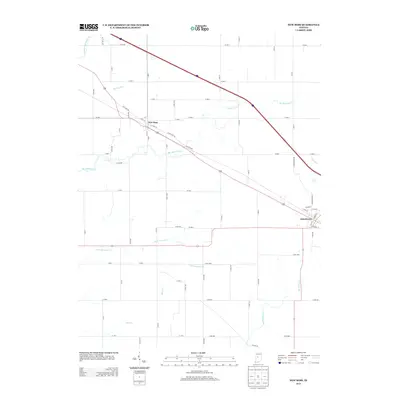 2013 New Ross2013 Print · USGSThe crossroads towns of New Ross and Jamestown appear at the start of the 2010s amidst a web of central Indiana waterways. Researchers can trace the winding paths of Big Raccoon Cr, Cornstalk Cr, and Little Raccoon Cr across this rural landscape.
 - 2013 Map of Lizton, 2013 Print
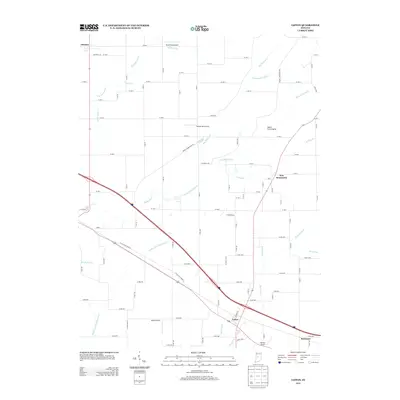 2013 Lizton2013 Print · USGSLizton and Boone County are captured here in the early twenty-first century, showcasing a landscape defined by agricultural drainage and small-town junctions. Genealogists and local historians can trace family locations near New Brunswick and Raintown or locate rural landmarks like Haffner Airport and South Fork Prairie.
 - 2016 Map of New Ross, 2016 Print
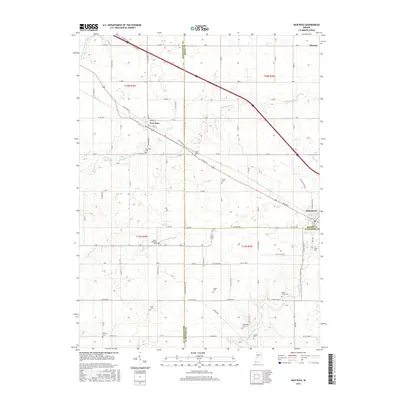 2016 New Ross2016 Print · USGSThe borderlands of Montgomery and Boone counties come into focus in the mid-2010s, showing a landscape defined by traditional agriculture and creek-side settlements. Genealogists can trace family roots at numerous rural burial sites including Hypes Cem, Wesley Cem, and Kidd Farm Cem.
 - 2016 Map of Lizton, 2016 Print
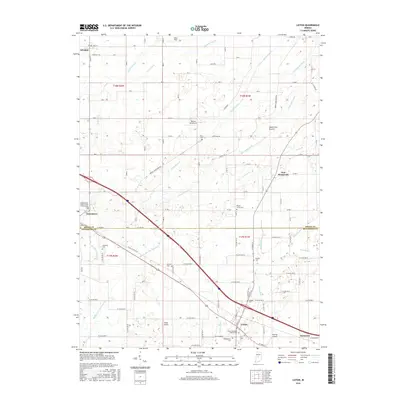 2016 Lizton2016 Print · USGSThe borderlands of Boone and Hendricks counties are revealed here in the modern era, showing a landscape shaped by drainage engineering and fraternal history. Researchers can locate several lineage-rich sites including the Lizton Knights of Pythias Cem, Union Cem, and Bergs Airport.
 - 2016 Map of Hazelrigg, 2016 Print
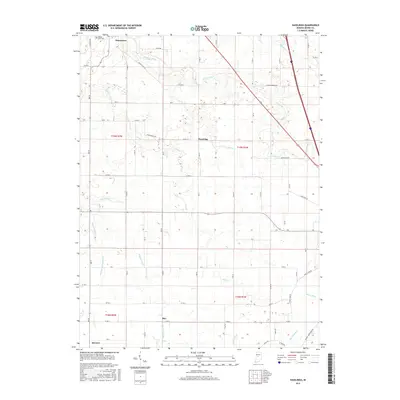 2016 Hazelrigg2016 Print · USGSBoone County farm country is mapped here in the mid-2010s, showing a landscape defined by its vital water systems and rural villages. Genealogists and local historians can trace family road names and find the location of Maple Law Cemetery near Thorntown or follow the banks of Little Sugar Creek.
Showing maps 1-25 of 34
Top cities near Advance
- Brownsburg historical maps
- Lebanon historical maps
- Avon historical maps
- Danville historical maps
- Pittsboro historical maps
- Thorntown historical maps
See more
Frequently asked questions
- What are the different types of historical maps available for Advance?
- What is the oldest map of Advance?
- Where can I purchase historical maps of Advance for my home or office?
- Where can I download high-res historical maps of Advance?
- Are there historical topographic maps available for Advance?
- Is there historical aerial imagery available for Advance?
- Where are historical maps of Advance sourced from?