1950s Maps of Daviess County, Indiana
Explore 18 historic maps of Daviess County from the 1950s. These maps offer a rare glimpse into what life looked like during the 1950s — showing old roads, neighborhoods, homes, and landmarks that have changed or disappeared over time.
Whether you're researching your family's past, planning a metal detecting trip, or studying how Daviess County's landscape evolved across the 1950s, these high-resolution maps are a powerful tool for exploring the history of this region.
- Focus on a specific era: All maps on this page are from the 1950s, giving you a focused view of this time period.
- See what’s changed: Compare century-old streets, trails, and buildings to today's modern landscape using overlays and satellite layers.
- Research with precision: Use these maps for genealogy, historical research, land use analysis, or educational projects.
- View, download, or print: Maps are fully viewable online in high resolution, and can be downloaded or printed for your own records.
Start exploring Daviess County's history through authentic maps from the 1950s. This is your window into the past.
Daviess County, IN maps
(18)- 1950 Map of Odon, 1953 Print
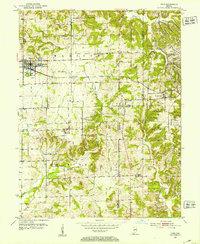 1950 Odon1953 Print · USGSDaviess and Martin counties are captured here in the early fifties, showing a region of quiet agricultural towns and developing industry. Researchers can find many family landmarks, including Walnut Hill Cem, Union Chapel, and the settlement of Raglesville.2 unique versions available
 - 1956 Map of Alfordsville, 1957 Print
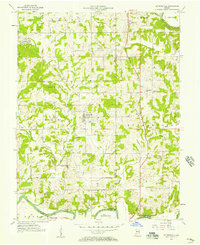 1956 Alfordsville1957 Print · USGSDaviess and Dubois counties come alive in the mid-1950s as a landscape of surface mines and river-bottom settlements. Genealogists and historians can trace family locations near Alfordsville, Truelove Ch, and the old river crossing at Portersville.2 unique versions available
 - 1956 Map of Loogootee, 1957 Print
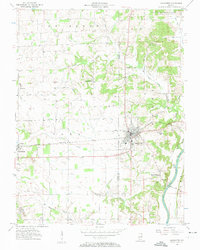 1956 Loogootee1957 Print · USGSLoogootee and Cannelburg sit at the heart of this mid-fifties survey of the Daviess and Martin County border. Researchers can trace ancestral roots at St Johns Cemetery, locate the rail-side industry of a Strip Mine, or follow the banks of the East Fork White River.2 unique versions available
 - 1956 Map of Vincennes, 1967 Print
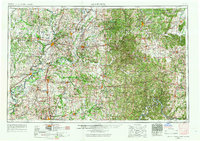 1956 Vincennes1967 Print · USGSSouthern Indiana and the Illinois borderlands are captured here in the mid-fifties, showing the region's dense network of river towns and rail lines. Researchers can trace historic river crossings along the Wabash River or locate landmarks like Wyandotte Cave and Lincoln State Park.4 unique versions available
 - 1957 Map of Vincennes
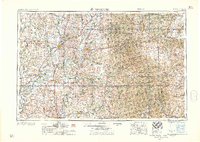 1957 Vincennes1957 Print · USGSSouthwest Indiana and the Illinois borderlands come alive in the late 1950s, a period of heavy rail traffic and expanding state forests. Genealogists and historians can trace the riverfronts and rail lines of Vincennes, New Harmony, and the vast Crane Naval Ammunition Depot.
 - 1957 Map of Plainville, 1958 Print
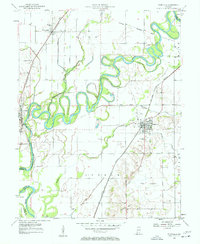 1957 Plainville1958 Print · USGSDaviess and Knox counties are captured here in the late fifties, showcasing the intricate meanders of the White River. Genealogists and local historians can trace the foundations of Plainville and Westphalia, locating old Oil Wells, Salem Ch, and the Plainville Cem.3 unique versions available
 - 1957 Map of Montgomery, 1958 Print
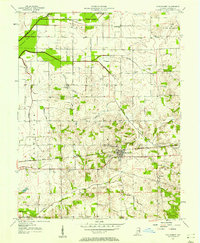 1957 Montgomery1958 Print · USGSDaviess County during the late 1950s shows a landscape of small railway towns and scattered oil extraction sites. Genealogists can locate family landmarks like Stoll Cem, Antioch Ch, and the rural Parsons Sch along the Baltimore and Ohio line.
 - 1957 Map of Scotland, 1958 Print
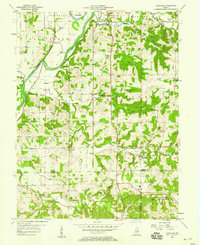 1957 Scotland1958 Print · USGSGreene County townships meet the northern edge of a major naval installation in the late fifties. Genealogists can trace family roots through numerous landmarks like Simpson Chapel, Hicks Cem, and the old settlement of Mineral City.2 unique versions available
 - 1957 Map of Washington, 1958 Print
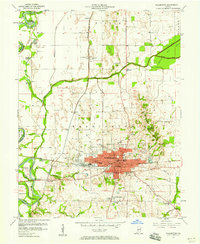 1957 Washington1958 Print · USGSDaviess County's rail and river economy is on full display during the late 1950s, centered on the bustling hub of WASHINGTON. Researchers can trace old family sites and civic roots at St Johns Cem, Sugarland Ch, and the BALTIMORE AND OHIO RAILROAD corridor.4 unique versions available
 - 1957 Map of Epsom, 1958 Print
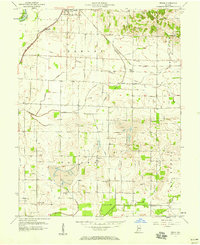 1957 Epsom1958 Print · USGSDaviess County was undergoing an industrial transition in the late fifties as coal mining and oil production moved into its rural townships. Genealogists and historians can trace family locations through Epsom, Cornettsville, and remote sites like Ochiltree Cem or Bethel Ch.
 - 1958 Map of Vincennes
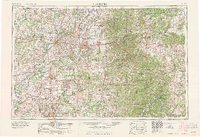 1958 Vincennes1958 Print · USGSSouthern Indiana and the Illinois borderlands are captured during a mid-century period of heavy rail traffic and military activity. Researchers can trace the sprawling bounds of the Crane Naval Ammunition Depot or locate historic settlements like New Harmony and French Lick.2 unique versions available
 - 1958 Map of Monroe City, 1959 Print
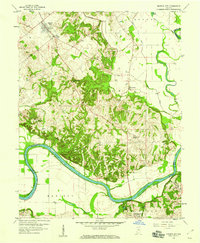 1958 Monroe City1959 Print · USGSThe White River valley and the Beech Hills are captured in the late 1950s, showing a landscape shaped by coal, oil, and the railroad. Genealogists can trace family landmarks like Hamline Chapel, Reels Chapel, and the settlement of Monroe City.2 unique versions available
 - 1958 Map of Sandborn, 1959 Print
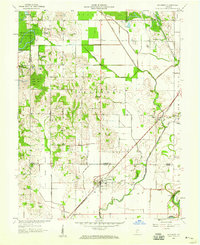 1958 Sandborn1959 Print · USGSThe Knox and Greene county borderlands come into focus in the late fifties, showing a rural landscape shaped by the White River and a network of drainage ditches. Researchers can trace historic family locations at Sandborn Cem and Marco, or locate the path of the Indian Treaty Boundary.2 unique versions available
 - 1958 Map of Glendale, 1959 Print
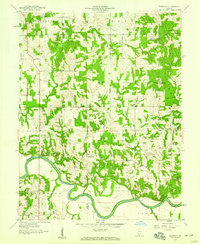 1958 Glendale1959 Print · USGSDaviess County's southern townships are captured in the late fifties, showing a landscape defined by the winding East Fork White River. Genealogists and local historians can locate rural landmarks like St Patricks Ch, Glencoe Cem, and the community of Glendale.
 - 1958 Map of Lyons, 1959 Print
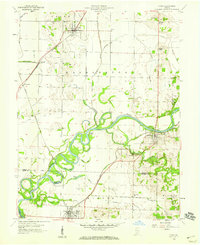 1958 Lyons1959 Print · USGSSouthern Indiana at the end of the 1950s was defined by the winding White River and its busy rail junctions. Genealogists and historians can trace family roots at Mt Zion Cem or explore the rail-dependent hamlets of Beehunter, Bushrod, and Ilene.
 - 1958 Map of Wheatland, 1959 Print
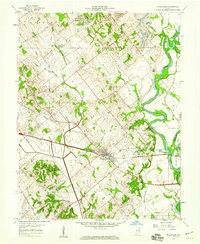 1958 Wheatland1959 Print · USGSThe Knox County countryside was a mix of rail-side industry and quiet settlements in the late fifties. Genealogists and local historians can trace family-named sites like Asbury Cem or follow the Baltimore and Ohio line through Wheatland.3 unique versions available
 - 1958 Map of Sandy Hook, 1960 Print
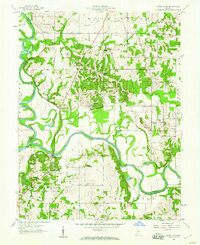 1958 Sandy Hook1960 Print · USGSDaviess County at the confluence of the White River forks shows its rural character during the late fifties. Genealogists can trace family connections through numerous landmarks like Union Cemetery, Letts School, and the settlement of Cumback.3 unique versions available
 - 1958 Map of Bicknell, 1960 Print
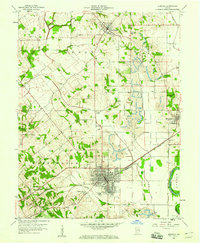 1958 Bicknell1960 Print · USGSKnox County was a hub of coal production and rail transport during the mid-century, with extensive excavations shaping the land. Researchers can trace the legacy of local families at Chambers Cem, explore the mining works near Johnstown, or locate the historic Bethel Ch.3 unique versions available
End of results
Showing maps 1-18 of 18
Top cities of Daviess County
- Washington historical maps
- Odon historical maps
- Elnora historical maps
- Plainville historical maps
- Montgomery historical maps
- Cannelburg historical maps
See more
Frequently asked questions
- What are the different types of historical maps available for Daviess County?
- What is the oldest map of Daviess County?
- Where can I purchase historical maps of Daviess County for my home or office?
- Where can I download high-res historical maps of Daviess County?
- Are there historical topographic maps available for Daviess County?
- Is there historical aerial imagery available for Daviess County?
- Where are historical maps of Daviess County sourced from?