Old Maps of Dearborn County, Indiana for Metal Detecting
Plan your next treasure hunt with 101 historic maps of Dearborn County. Find old homesites, ghost towns, trails, and gathering spots that may be lost to time — perfect for identifying promising metal detecting locations.
- Locate forgotten sites: Uncover places like long-lost settlements, abandoned rail lines, or gathering spots.
- Plan better hunts: Use map overlays combined with LiDAR or satellite views to narrow in on historically rich areas.
- Made for detectorists: Thousands of hobbyists use these maps to discover relics, coins, and hidden history.
Use these historic maps to boost your research and find new opportunities beneath the surface of Dearborn County.
Dearborn County, IN maps
(101)- 1915 Map of Lawrenceburg
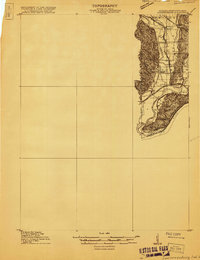 1915 Lawrenceburg1915 Print · USGSThe tri-state river junction between Indiana, Ohio, and Kentucky is captured just before the first World War during a peak era of rail expansion. Researchers can trace the legacy of local transit through Simmonson Station, the Suspension Bridge, and the tracks of the Electric line.
 - 1915 Map of Harrison
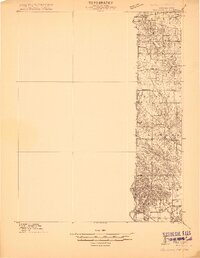 1915 Harrison1915 Print · USGSThe Indiana-Ohio borderlands come into focus during the mid-teens, showing a landscape of river-valley settlements and rural school districts. Genealogists can locate family landmarks like Vannatta School, Davis School, and the village of Okeana along the Dry Fork.
 - 1928 Map of Lawrenceburg, 1962 Print
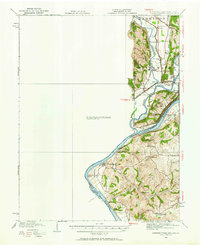 1928 Lawrenceburg1962 Print · USGSThe tri-state river valley at the end of the Roaring Twenties shows a landscape shaped by the Ohio River and bustling rail junctions. Researchers can trace historic ferries like the Lawrenceburg Ferry and find family-named landmarks like Commissary Corner or the Bullittsburg Ch.
 - 1932 Map of Lawrenceburg
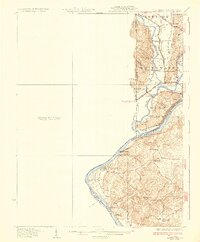 1932 Lawrenceburg1932 Print · USGSThe tri-state confluence of Indiana, Ohio, and Kentucky comes alive in this early 1930s survey of the river valleys. Genealogists can trace family roots through rural landmarks like Eighteenmile House, Bullittsville Ch, and the Woolper Sch.3 unique versions available
 - 1943 Map of Aberdeen
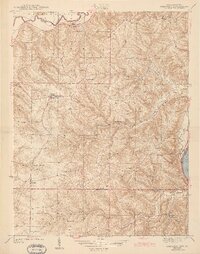 1943 Aberdeen1943 Print · USGSSoutheastern Indiana's river hills are captured here just before mid-century, showing a landscape of ridge-top farms and creek-side settlements. Researchers can locate family landmarks like Gillespie Cem, Bascom Corner, and several schools including Fisher Sch.2 unique versions available
 - 1943 Map of Aurora
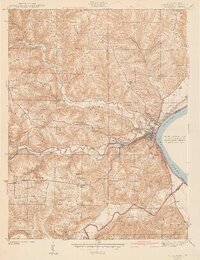 1943 Aurora1943 Print · USGSDearborn County as it appeared in the early 1940s shows a landscape where river commerce and rail lines defined the growth of Aurora. Genealogists and local historians can trace rural schoolhouses like Worley Sch, country churches such as Mt Tabor Ch, and the original Baltimore and Ohio rail route.2 unique versions available
 - 1943 Map of Hooven
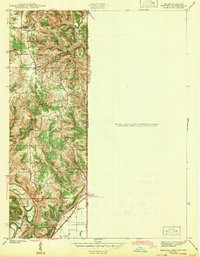 1943 Hooven1943 Print · USGSThe Indiana-Ohio borderlands come into focus in the early 1940s, showing a landscape defined by the Whitewater R and the New York Central rail line. Researchers can locate early family sites near Sugar Ridge Cem, the Full Gospel Mission, and the State Line Monument.
 - 1943 Map of Guilford
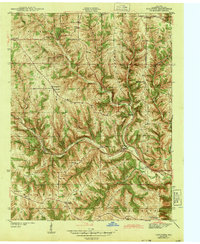 1943 Guilford1943 Print · USGSDearborn County's rural townships are shown here during the early war years, when life centered on ridge-top farms and valley villages. Researchers can trace family sites at Logan Cem, the remote Collier Sch, and the riverside hub of Guilford.2 unique versions available
 - 1943 Map of Lawrenceburg
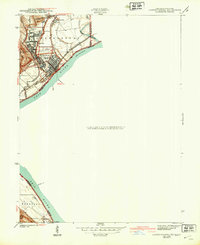 1943 Lawrenceburg1943 Print · USGSThe Indiana-Kentucky-Ohio tri-state border comes alive in this wartime-era survey of the Ohio River valley. Researchers can trace the rail-side growth of Lawrenceburg and Greendale or locate family plots in the Greendale Cem.
 - 1953 Map of Aberdeen, 1955 Print
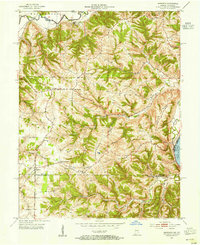 1953 Aberdeen1955 Print · USGSSoutheastern Indiana's rural character is preserved here in the early fifties, showing the upland ridges above the OHIO RIVER. Genealogists and historians can trace family locations near Aberdeen, Bovard Cem, and the Cass-Union Sch along the county lines.2 unique versions available
 - 1953 Map of Aurora, 1955 Print
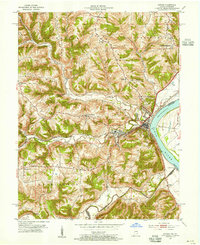 1953 Aurora1955 Print · USGSThe Ohio River valley near Aurora was a bustling corridor of rail and river commerce in the early 1950s. Genealogists and local historians can locate early landmarks such as the Riverview Cemetery and trace the paths of the Baltimore and Ohio railroad through Wilmington.2 unique versions available
 - 1953 Map of Guilford, 1955 Print
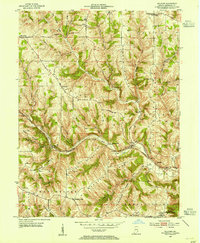 1953 Guilford1955 Print · USGSDearborn County's rural townships and creek-side settlements are captured here in the early fifties. Local historians can locate vanished landmarks like the Pelley Sch and family burial sites including Collier Cem and Huber-Briggs Cem.
 - 1953 Map of Cincinnati, 1965 Print
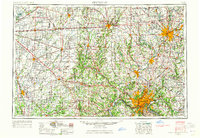 1953 Cincinnati1965 Print · USGSThe Ohio River valley and the industrial heartland of Indiana and Ohio are captured here during the mid-century peak of rail and river commerce. Genealogists and historians can trace connections between Cincinnati and outlying military sites like Camp Atterbury and Bakalar AFB.3 unique versions available
 - 1954 Map of Hooven, 1955 Print
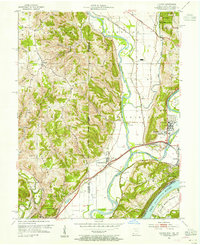 1954 Hooven1955 Print · USGSThe tri-state confluence of the Whitewater, Miami, and Ohio Rivers was a busy industrial and transit corridor in the 1950s. You can trace early family sites at Sugar Ridge Cem, follow the New York Central Railroad through Valley Junction, or locate the mid-century Gas Refinery.3 unique versions available
 - 1955 Map of Harrison, 1956 Print
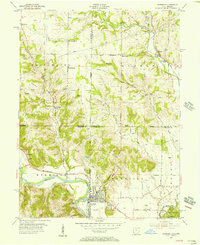 1955 Harrison1956 Print · USGSThe borderlands of Ohio and Indiana are captured here in the mid-fifties as the villages of Harrison and West Harrison thrive along the river. Researchers can trace family roots through numerous sites like Glen Haven Cem and the Township School.5 unique versions available
 - 1955 Map of Cedar Grove, 1957 Print
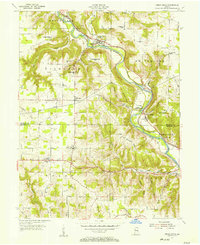 1955 Cedar Grove1957 Print · USGSThe Whitewater River valley in the mid-1950s reveals a network of riverside rail towns and upland farmsteads. Trace the paths of the New York Central Line through New Trenton and locate family landmarks like St Paul Cem Ch.
 - 1956 Map of Louisville, 1971 Print
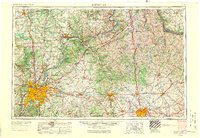 1956 Louisville1971 Print · USGSThe Ohio River valley and the Kentucky Bluegrass are captured here during a period of rapid mid-century growth and industrial activity. Genealogists and historians can trace rail-centered towns and military land use at Fort Knox and the Jefferson Proving Ground.2 unique versions available
 - 1957 Map of Cincinnati
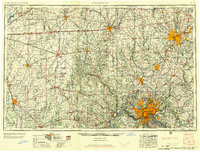 1957 Cincinnati1957 Print · USGSThe Ohio River valley and its surrounding highlands thrived during the mid-fifties industrial peak, centered on the bustling Cincinnati and Dayton metropolitan hubs. Researchers can trace the extensive rail networks and military sites like Wright-Patterson AFB and Camp Atterbury.
 - 1958 Map of Spades, 1959 Print
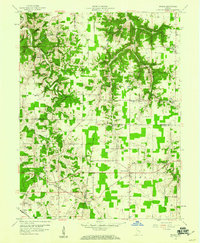 1958 Spades1959 Print · USGSSoutheastern Indiana in the late fifties was a patchwork of parish settlements and historic boundaries, notably the Greenville Treaty Line. Genealogists can trace family footprints through numerous landmarks like Klemmes Corner, St Stephens Ch, and the town of Spades.3 unique versions available
 - 1958 Map of Sunman, 1959 Print
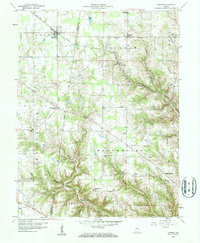 1958 Sunman1959 Print · USGSThe rural borderlands of Ripley and Dearborn counties are captured here in the late fifties, as traditional farming life centered around the New York Central railroad. Genealogists can locate family sites near St Johns Ch, the County Home, and small crossroads like Negangards Corner.3 unique versions available
 - 1958 Map of Dillsboro, 1960 Print
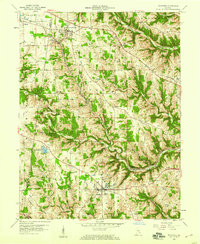 1958 Dillsboro1960 Print · USGSSoutheast Indiana's ridge-and-hollow terrain is meticulously detailed here in the late fifties, showing the interplay between small-town life and the rail corridor. Trace family histories at South Sparta Ch or Forest Hill Cem, and follow the line of the Baltimore and Ohio RR.3 unique versions available
 - 1959 Map of Bear Branch, 1960 Print
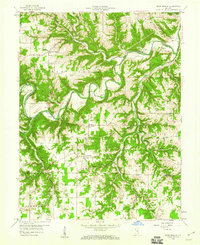 1959 Bear Branch1960 Print · USGSSoutheastern Indiana's rural townships are captured in the late fifties as a network of creek-side settlements and ridge-top farms. Genealogists and historians can trace dozens of family landmarks like Mt Hebron Cem, the Freedom Sch, and the winding path of Laughery Creek.3 unique versions available
 - 1959 Map of Cross Plains, 1960 Print
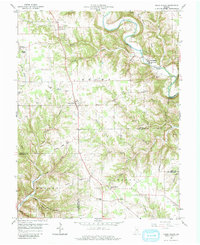 1959 Cross Plains1960 Print · USGSRipley County is captured in the late fifties, showing a rural landscape where high ridge farms meet deep creek valleys. Researchers can trace family history through sites like Township Sch, Wesley Chapel, and numerous burial grounds including Nickolson Cem and Connell Cem.4 unique versions available
 - 1964 Map of Louisville
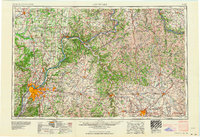 1964 Louisville1964 Print · USGSThe Ohio River valley and Kentucky Bluegrass are captured in the mid-1960s, showing a region balanced between industrial growth and its agrarian roots. Genealogists and historians can trace the development of county seats like Shelbyville and Paris, or locate established institutions such as Georgetown College and Bernheim Forest.
 - 1965 Map of Aberdeen, 1967 Print
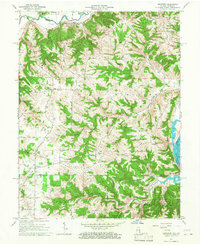 1965 Aberdeen1967 Print · USGSThe hills of Ohio and Switzerland counties are captured here in the mid-1960s, showing a landscape of high ridges and narrow creek bottoms. Genealogists can trace family landmarks and local centers like Aberdeen, Salem Ch, and the Grant Brothers Cem.3 unique versions available
Showing maps 1-25 of 101
Frequently asked questions
- What are the different types of historical maps available for Dearborn County?
- What is the oldest map of Dearborn County?
- Where can I purchase historical maps of Dearborn County for my home or office?
- Where can I download high-res historical maps of Dearborn County?
- Are there historical topographic maps available for Dearborn County?
- Is there historical aerial imagery available for Dearborn County?
- Where are historical maps of Dearborn County sourced from?