Old Maps of Fountain County, Indiana for Academic Research
Study the evolution of Fountain County with 107 high-resolution historic maps. Whether you're teaching, researching, or modeling changes in land use, these maps provide essential visual documentation of urban, environmental, and geographic change.
- Analyze long-term change: Track patterns in development, transportation, and natural features.
- Ideal for environmental or urban studies: Support academic projects with primary historical map data.
- Use in the classroom or lab: Educators and researchers rely on these maps to bring historical context to life.
These maps are a powerful tool for teaching, research, and visualizing how Fountain County has changed over the decades.
Fountain County, IN maps
(107)- 1948 Map of Wallace
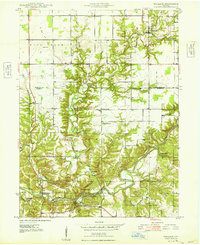 1948 Wallace1948 Print · USGSFountain and Parke Counties are captured here in the late 1940s as a landscape of rural crossroads and river bottomlands. Genealogists can trace family connections through sites like Cashet Cem, Lusk Chapel, and the early layout of Wallace.2 unique versions available
 - 1949 Map of Alamo
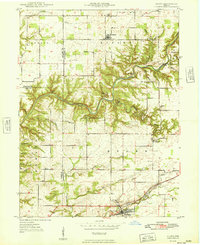 1949 Alamo1949 Print · USGSThe rugged valleys of Montgomery and Parke counties are documented here in the late 1940s, just as the area's natural landmarks gained prominence. Researchers can locate long-standing rural institutions like Liberty Sch, Freedom Ch, and the old grounds of Deer Mill.
 - 1953 Map of Danville, 1965 Print
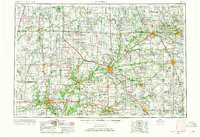 1953 Danville1965 Print · USGSIndiana and Illinois crossroads come to life in this mid-century survey as the interstate era begins to reshape the river-and-rail landscape. Genealogists and collectors can trace the historic paths of the Nickel Plate railroad or locate smaller communities like Veedersburg, Goodland, and Bismarck.3 unique versions available
 - 1953 Map of Indianapolis, 1965 Print
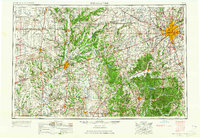 1953 Indianapolis1965 Print · USGSCentral Indiana and the Illinois borderlands are captured in the mid-sixties, showing the growth of Indianapolis and its industrial rail corridors. Genealogists and historians can trace the development of outlying towns like Zionsville or Beech Grove and find landmarks such as Atterbury AAF and Turkey Run State Park.4 unique versions available
 - 1955 Map of Danville
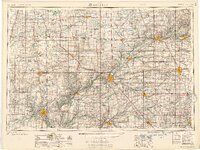 1955 Danville1955 Print · USGSThe Indiana-Illinois borderlands during the mid-fifties reveal a landscape of thriving rail hubs and university towns. Researchers can trace the legacy of Purdue University, the Tippecanoe Battlefield, and the path of the Pennsylvania RR.
 - 1955 Map of Kingman, 1956 Print
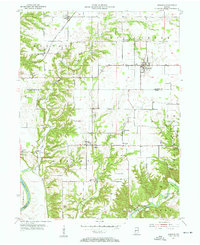 1955 Kingman1956 Print · USGSFountain and Parke Counties are mapped in the mid-1950s as a network of rail-connected towns and deep creek valleys. Genealogists can trace family landmarks like Bethel Cem, Township Sch, and the rail junction at Kingman.2 unique versions available
 - 1955 Map of Newport, 1957 Print
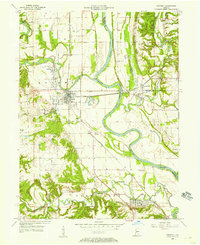 1955 Newport1957 Print · USGSVermillion and Fountain counties meet at the Wabash River during the mid-fifties, showing a landscape shaped by rail and river commerce. Genealogists can trace family names at the Collette Orphanage or find rural burial grounds like Groenendyke Cem and Isle Cem.
 - 1956 Map of Danville
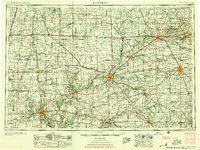 1956 Danville1956 Print · USGSMid-century Indiana and Illinois are captured here as the river-and-rail economy evolved into the modern highway era. Researchers can trace ancestral roots and old transport lines through Logansport, Battle Ground, and the dams at Lake Shafer.
 - 1956 Map of Indianapolis
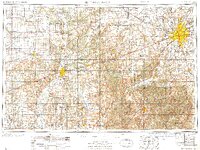 1956 Indianapolis1956 Print · USGSCentral Indiana in the mid-fifties is captured during a period of industrial growth and military presence. Genealogists and historians can trace the rail networks of the New York Central or locate regional landmarks like Fort Benjamin Harrison and Camp Atterbury.
 - 1957 Map of Indianapolis
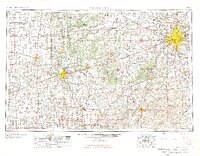 1957 Indianapolis1957 Print · USGSCentral Indiana in the mid-fifties is captured here as a crossroads of major rail lines and nascent federal highways. Genealogists and historians can trace family-named ridges like Poplar Ridge or locate strategic sites like Camp Atterbury and Speedway.2 unique versions available
 - 1958 Map of Stonebluff, 1959 Print
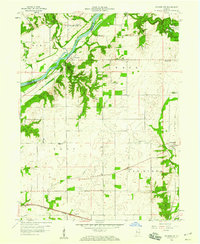 1958 Stonebluff1959 Print · USGSFountain County in the late fifties was a landscape of winding creek ravines and quiet rail junctions. Genealogists and local historians can locate early landmarks like Osborn Prairie Ch, the Township Sch, and the unique geological formation at Portland Arch.
 - 1958 Map of Veedersburg, 1959 Print
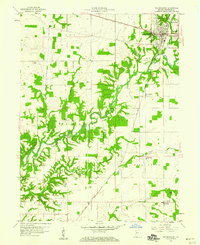 1958 Veedersburg1959 Print · USGSFountain County rural life in the late fifties centers on the rail junction at Veedersburg and the winding valley of Coal Creek. You can trace vanished landmarks like the Rabb Sch, locate family plots at Davis Cem, and explore the rail-side hamlet of Yeddo.
 - 1958 Map of Perrysville, 1960 Print
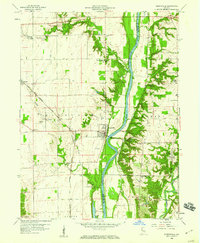 1958 Perrysville1960 Print · USGSVermillion and Fountain counties meet along the river in the late 1950s as a quiet network of rail lines and rural cemeteries defines the landscape. Trace local history through landmarks like Wabash Chapel, the Highland Airport, and the small settlement of Gessie.
 - 1958 Map of Covington, 1960 Print
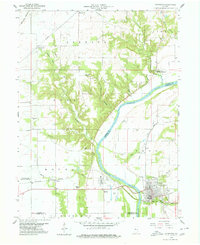 1958 Covington1960 Print · USGSCovington and the Wabash River valley appear here in the late fifties, showcasing a landscape defined by its river-and-rail industry. Researchers can trace the New York Central lines or locate legacy sites like Baltimore Cem, Foster, and Galloway Chapel.4 unique versions available
 - 1961 Map of Wallace, 1962 Print
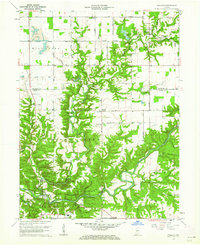 1961 Wallace1962 Print · USGSWestern Indiana during the early sixties reveals a landscape of deep creek valleys and traditional river crossings. Genealogists and historians can trace the locations of the Wilkins Mill Covered Bridge, Turkey Run School, and the rural community of Wallace.3 unique versions available
 - 1961 Map of Alamo, 1962 Print
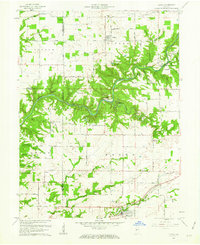 1961 Alamo1962 Print · USGSThe rural landscape of Montgomery County during the early sixties is dominated by the winding path of Sugar Creek and the southern edge of Shades State Park. Researchers can find fascinating relics of local history, from the Deer Mill and its Covered Bridge to the Pennsylvania rail line serving Waveland.3 unique versions available
 - 1962 Map of Indianapolis
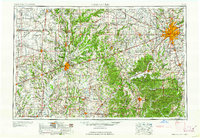 1962 Indianapolis1962 Print · USGSCentral Indiana and the Illinois borderlands are captured here in the early sixties, showing the region's dense rail networks and growing urban centers. Genealogists and historians can locate family-named landmarks and institutions like Crown Hill Cem, Indiana University, and the Indianapolis Motor Speedway.
 - 1962 Map of Williamsport, 1964 Print
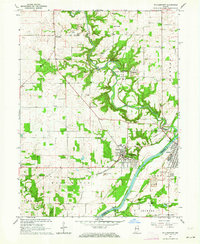 1962 Williamsport1964 Print · USGSWilliamsport and Attica anchor the Wabash River crossing in the early sixties, a time when mineral spring resorts and river industry shaped the county line. Researchers can trace family sites at McCabe Cem, visit the old Falls Sch, or locate the Mudlavia Springs grounds.3 unique versions available
 - 1962 Map of Waynetown, 1964 Print
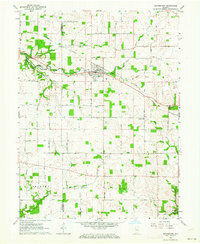 1962 Waynetown1964 Print · USGSThe Montgomery County countryside comes into focus in the early sixties as a network of rail and river commerce. Genealogists can trace family footprints through Masonic Cem, Fruits Cem, and the rural crossroads at Taylor Corner.2 unique versions available
 - 1962 Map of Mellott, 1964 Print
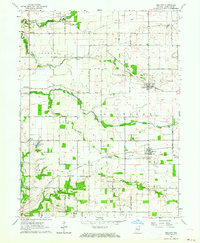 1962 Mellott1964 Print · USGSFountain County in the early sixties reveals a landscape of established rail towns and quiet country crossroads. Genealogists can trace family names at Old Baptist Cem and Newtown Cem, or follow the Chicago and Eastern Illinois rail line through Mellott.2 unique versions available
 - 1962 Map of Westpoint, 1964 Print
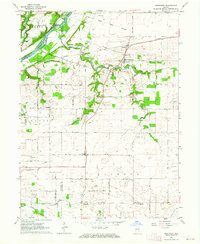 1962 Westpoint1964 Print · USGSTippecanoe and Fountain Counties are captured here in the early 1960s, a landscape defined by the winding Wabash River and legacy survey lines. Genealogists and local historians can trace the positions of the Salem Ch, Sherry Cem, and the settlement of Westpoint.
 - 1962 Map of Attica, 1964 Print
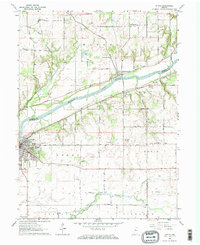 1962 Attica1964 Print · USGSThe banks of the Wabash River dominate this early 1960s Indiana landscape at the border of Fountain and Warren counties. Local historians can trace established homesteads near Attica, the rural crossroads of Banning Corner, and scattered landmarks like Bethel Ch and Riley Airfield.2 unique versions available
 - 1962 Map of Wingate, 1964 Print
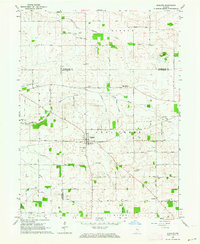 1962 Wingate1964 Print · USGSIndiana farmland in the early sixties centers on the rail junction at Wingate. Local historians can trace numerous family-named landmarks and rural burial grounds, from Oak Ridge Cem to the Coal Creek Central Sch.2 unique versions available
 - 1962 Map of Hillsboro, 1964 Print
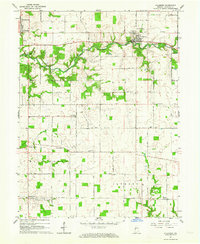 1962 Hillsboro1964 Print · USGSFountain County agriculture and transport intersect in the early sixties as the New York Central railroad serves rural townships. Genealogists and local historians can locate several rural burial grounds and churches, including Rose Hill Cemetery and Scotts Prairie Ch.2 unique versions available
 - 1964 Map of Perrysville, 1965 Print
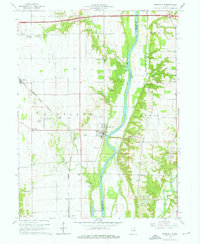 1964 Perrysville1965 Print · USGSThe Wabash River valley in the mid-1960s reveals a landscape of river-bend towns and busy rail corridors along the Indiana-Illinois border. Researchers can trace rural lineages through numerous landmarks like West Liberty Cem, the settlement of Gessie, and the Chicago and Eastern Illinois railroad.3 unique versions available
Showing maps 1-25 of 107
Top cities of Fountain County
- Attica historical maps
- Covington historical maps
- Veedersburg historical maps
- Kingman historical maps
- Hillsboro historical maps
- Mellott historical maps
See more
Frequently asked questions
- What are the different types of historical maps available for Fountain County?
- What is the oldest map of Fountain County?
- Where can I purchase historical maps of Fountain County for my home or office?
- Where can I download high-res historical maps of Fountain County?
- Are there historical topographic maps available for Fountain County?
- Is there historical aerial imagery available for Fountain County?
- Where are historical maps of Fountain County sourced from?