Old Maps of Huntington County, Indiana
Explore 117 old maps of Huntington County, spanning from 1950 to today. These high-resolution historic maps reveal how streets, neighborhoods, landmarks, and natural features evolved over time — perfect for genealogy, metal detecting, research, and local history exploration.
What you can do with these maps:
- See how Huntington County changed over time: Compare historical maps to modern-day views to trace roads, homesites, rail lines & more.
- View detailed metadata: Each map includes creators, publishers, year, scale, and archive source.
- Overlay maps with satellite & LiDAR: Visualize the past alongside modern tools to explore terrain & human change.
- Trusted historical sources: Maps sourced from the USGS, Library of Congress, and other archives.
- Access maps your way: View online, download high-res files, or order prints for personal or research use.
Start exploring old maps of Huntington County to uncover forgotten places, hidden landmarks, and the deep history beneath your feet.
Huntington County, IN maps
(117)- 1950 Map of Lagro, 1958 Print
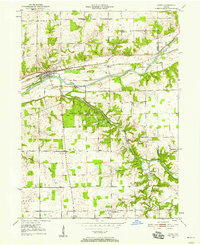 1950 Lagro1958 Print · USGSThe Wabash and Salamonie rivers meet in this 1950s Indiana survey, capturing the region's rail-and-river geography before later developments. Genealogists can trace family sites at Leedy Cem, Dora, and the rural Mt Hope Ch.
 - 1950 Map of Andrews, 1965 Print
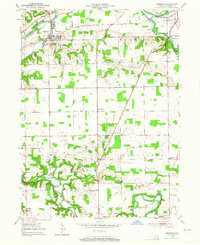 1950 Andrews1965 Print · USGSHuntington County's rural townships are documented in the early 1950s, showing a landscape shaped by the Wabash River and Wabash RR. Genealogists can trace family ties through Pleasant Grove Ch, Lancaster Twp Sch, and the winding Heineys Bend.
 - 1950 Map of Warren, 1965 Print
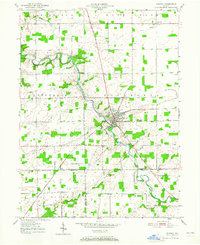 1950 Warren1965 Print · USGSMid-century Huntington County is defined by the river-and-rail intersection at Warren during a period of steady agricultural growth. Genealogists can trace family names and sites at Redmen Cem, Plum Tree, and the Water Methodist Home.
 - 1950 Map of Mount Etna, 1967 Print
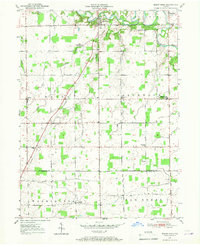 1950 Mount Etna1967 Print · USGSThe Huntington and Grant County line bisects this quiet agricultural landscape during the post-war era. Researchers can trace the development of rural social life through landmarks like Salem Ch, the Jefferson Twp Consolidated Sch, and the grounds of the Star Commonwealth For Boys.
 - 1951 Map of Mount Etna
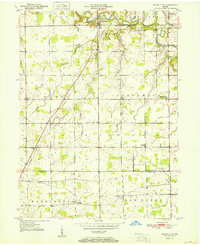 1951 Mount Etna1951 Print · USGSIndiana's rural heartland is meticulously mapped here in the early fifties, documenting a landscape of small farming communities and river valleys. Genealogists can trace family roots through sites like Pormance Cem, the Jefferson Twp Consolidated Sch, and the settlement at Banquo.2 unique versions available
 - 1951 Map of Andrews
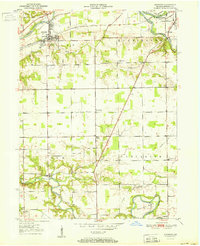 1951 Andrews1951 Print · USGSHuntington County's river valleys and rural crossroads are meticulously documented in the early fifties, showing the area's agricultural and rail-dependent landscape. Researchers can trace family sites near Monument City, Majenica, and country landmarks like Pilcher Chapel or Lancaster Twp Sch.
 - 1951 Map of Lagro
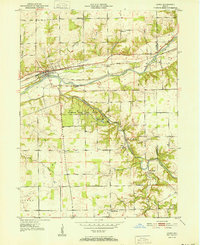 1951 Lagro1951 Print · USGSWabash and Huntington counties are shown at a mid-century crossroads where the Wabash River and Salamonie River meet. Genealogists can trace family names at Leedy Cem or locate the rural crossroads of Dora and Lincolnville.2 unique versions available
 - 1952 Map of Warren
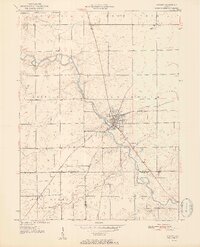 1952 Warren1952 Print · USGSNortheastern Indiana farmland surrounds the hub of Warren during the early fifties, as the river and rail economy remained the backbone of the county. Genealogists and local historians can locate early burial sites like Taylor Cem and Redmen Cem or trace the New York Chicago and St Louis rail line.2 unique versions available
 - 1952 Map of Majenica, 1953 Print
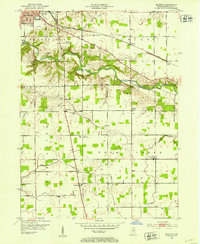 1952 Majenica1953 Print · USGSHuntington County and the southern reaches of the county seat are captured in the early fifties as the region balanced its agrarian roots with modern utility. Genealogists and local historians can locate the County Infirmary and trace sites like Loon Creek Ch or Yankeetown Cem.2 unique versions available
 - 1953 Map of La Fontaine, 1954 Print
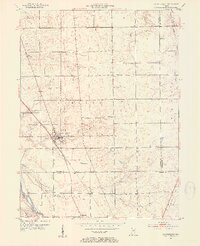 1953 La Fontaine1954 Print · USGSMid-century Wabash and Grant Counties come to life as small-town Indiana centers around the New York Central rail line. Genealogists can trace family roots through numerous burial sites like America Cem, Hale Cem, and the Boundary Line Ch.2 unique versions available
 - 1953 Map of Fort Wayne, 1963 Print
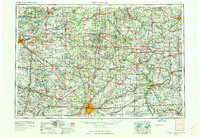 1953 Fort Wayne1963 Print · USGSNortheast Indiana and its neighboring borderlands in Michigan and Ohio appear here during a peak era of rail and road expansion. Researchers can trace the massive rail networks of the Nickel Plate Road and Wabash or locate lakeside landmarks like Lake Wawasee and Clear Lake.4 unique versions available
 - 1953 Map of Muncie, 1966 Print
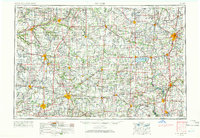 1953 Muncie1966 Print · USGSIndiana and Ohio borderlands thrive in the early fifties, showing a landscape defined by manufacturing cities and an intensive railroad network. Genealogists can trace family roots across the Indiana-Ohio line through Muncie, Celina, and Portland via the Pennsylvania railroad.5 unique versions available
 - 1955 Map of Markle, 1956 Print
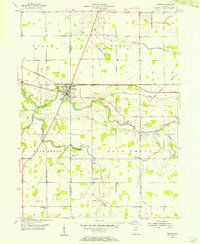 1955 Markle1956 Print · USGSMarkle and the surrounding townships of Huntington and Wells counties are shown here in the mid-fifties, centered on the intersection of the Erie RR and the Wabash River. Genealogists can locate family-named sites such as Spider Hill Cem, Emmanuel Ch, and the small settlement of Lesh.
 - 1955 Map of Bippus, 1957 Print
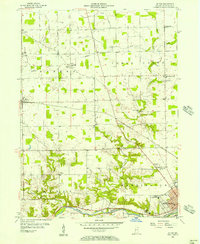 1955 Bippus1957 Print · USGSHuntington County's rural landscape is captured here in the mid-1950s as small farming communities and religious institutions defined the area. Researchers can trace historic cemeteries and schools like Clear Creek Center Sch or locate the sprawling grounds of the St Felix Monastery and Bippus.
 - 1956 Map of Muncie
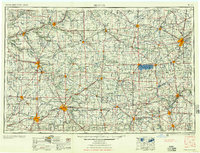 1956 Muncie1956 Print · USGSEastern Indiana and western Ohio are shown at a peak of rail-driven industry in the mid-fifties. Genealogists and rail historians can trace the paths of the Pennsylvania RR through Muncie or locate landmarks like Lake Saint Marys (Grand Lake Reservoir) and Frances Slocum State Forest.
 - 1956 Map of Fort Wayne
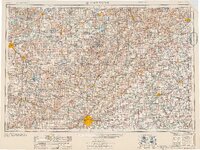 1956 Fort Wayne1956 Print · USGSThe tri-state borderlands of Indiana, Michigan, and Ohio are captured here in the mid-fifties, centered on the growing industrial hub of Fort Wayne. Researchers can trace the heavy rail lines of the New York Central and Pennsylvania alongside prominent water features like Lake Wawasee and the Maumee River.2 unique versions available
 - 1956 Map of Huntington, 1958 Print
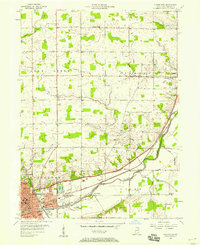 1956 Huntington1958 Print · USGSHuntington and its surrounding townships are shown here in the mid-fifties, during a peak era of rail-and-river industrial activity. Genealogists and local historians can locate specific landmarks like the France Cem, St Marys Sch Ch, and the route of the old Erie Canal.
 - 1961 Map of Arcola, 1963 Print
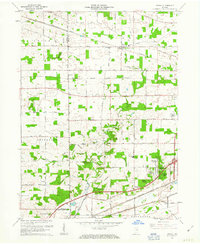 1961 Arcola1963 Print · USGSAllen County in the early sixties showcases a rural landscape evolving with new residential developments and established rail corridors. Genealogists can trace family heritage at St Patricks Cem, Bayliss Cem, or through the early settlement of Arcola and Dunfee.2 unique versions available
 - 1961 Map of Servia, 1963 Print
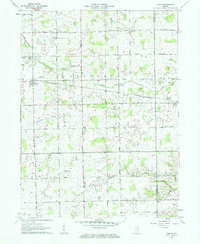 1961 Servia1963 Print · USGSWabash and Huntington Counties are captured here in the early sixties, showing a landscape of small farms and crossroads communities. Researchers can locate family landmarks such as Stockert Cem, Servia Landing Field, and the Erie-Lackawanna rail line.3 unique versions available
 - 1961 Map of Laud, 1963 Print
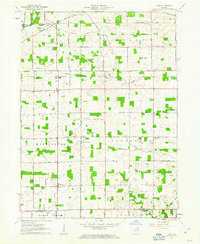 1961 Laud1963 Print · USGSWhitley and Huntington counties are shown here in the early sixties, highlighting a landscape of structured rural townships and rail-connected hamlets. Researchers can trace family history through the locations of St Catherine Ch, Jefferson Chapel, and the community of Laud.3 unique versions available
 - 1961 Map of Zanesville, 1963 Print
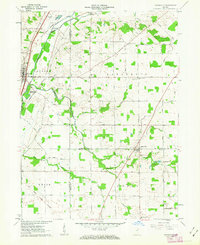 1961 Zanesville1963 Print · USGSZanesville and Roanoke are documented in the early sixties at a fascinating intersection of colonial-era surveying and mid-century rail infrastructure. Genealogists and historians can locate the Old Indian Treaty Boundary and several family landmarks like Shank Cem and Monson Chapel.
 - 1962 Map of South Whitley West, 1963 Print
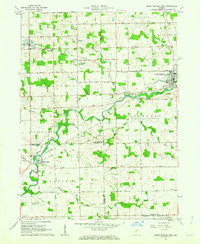 1962 South Whitley West1963 Print · USGSIndiana's Eel River valley comes into sharp focus during the early sixties as a thriving corridor of rail and river commerce. Genealogists and historians can trace the foundations of South Whitley, explore the grounds of Township Sch, or locate family plots in Glenwood Cem and Union Cem.2 unique versions available
 - 1962 Map of South Whitley East, 1963 Print
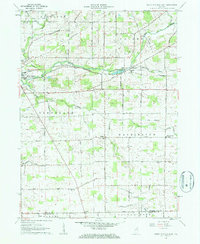 1962 South Whitley East1963 Print · USGSWhitley County agriculture and rail commerce thrived in the early sixties as the Eel River shaped the local economy. Genealogists can trace family roots through St Johns Ch, Eberhard Ch Cem, and the crossroads at Tunker.2 unique versions available
 - 1962 Map of Liberty Center, 1963 Print
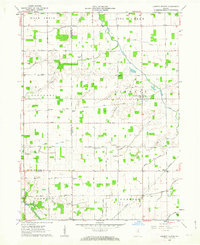 1962 Liberty Center1963 Print · USGSWells and Huntington counties in the early sixties reveal a landscape of family farms and rural crossroads. Genealogists can trace family roots through sites like Mossburg Cem, Boehmer Ch, and the settlement at Liberty Center.
 - 1969 Map of Majenica, 1971 Print
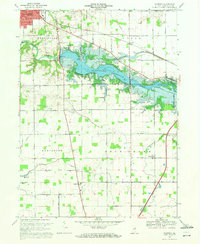 1969 Majenica1971 Print · USGSHuntington County at the end of the sixties reveals a landscape transformed by the new Huntington Reservoir and recreation areas. Researchers can trace rural family roots through the Loon Creek Ch and several local burial sites like Barnes Cem and Yankeetown Cem.3 unique versions available
Showing maps 1-25 of 117
Top cities of Huntington County
- Huntington historical maps
- Roanoke historical maps
- Warren historical maps
- Lancaster historical maps
- Andrews historical maps
- Mount Etna historical maps
Frequently asked questions
- What are the different types of historical maps available for Huntington County?
- What is the oldest map of Huntington County?
- Where can I purchase historical maps of Huntington County for my home or office?
- Where can I download high-res historical maps of Huntington County?
- Are there historical topographic maps available for Huntington County?
- Is there historical aerial imagery available for Huntington County?
- Where are historical maps of Huntington County sourced from?