1950s Maps of Lawrence County, Indiana
Explore 15 historic maps of Lawrence County from the 1950s. These maps offer a rare glimpse into what life looked like during the 1950s — showing old roads, neighborhoods, homes, and landmarks that have changed or disappeared over time.
Whether you're researching your family's past, planning a metal detecting trip, or studying how Lawrence County's landscape evolved across the 1950s, these high-resolution maps are a powerful tool for exploring the history of this region.
- Focus on a specific era: All maps on this page are from the 1950s, giving you a focused view of this time period.
- See what’s changed: Compare century-old streets, trails, and buildings to today's modern landscape using overlays and satellite layers.
- Research with precision: Use these maps for genealogy, historical research, land use analysis, or educational projects.
- View, download, or print: Maps are fully viewable online in high resolution, and can be downloaded or printed for your own records.
Start exploring Lawrence County's history through authentic maps from the 1950s. This is your window into the past.
Lawrence County, IN maps
(15)- 1950 Map of Mitchell
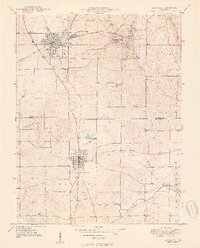 1950 Mitchell1950 Print · USGSMitchell and Orleans sit at a critical railroad junction in southern Indiana during the mid-twentieth century. Researchers can trace the karst landscape of Spring Mill State Park or locate family roots near Liberty Ch and Lawrenceport Cem.2 unique versions available
 - 1950 Map of Huron
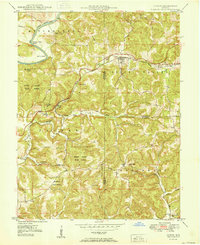 1950 Huron1950 Print · USGSSouthern Indiana's timbered hills and rail corridors are captured here in the mid-twentieth century. Genealogists and hikers can trace the Baltimore and Ohio line past Willow Tunnel or find the remote Acre Cem and Wiesbach Sch.
 - 1951 Map of Georgia
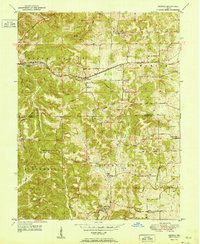 1951 Georgia1951 Print · USGSSouthern Indiana's rural landscape is captured here in the early fifties, where the Baltimore and Ohio rail line links the settlements of Georgia and Moorestown. Genealogists and local historians can trace family roots through numerous landmarks, from the Hindostan Sch to the Georgia Cem and Bonds Chapel.
 - 1956 Map of Vincennes, 1967 Print
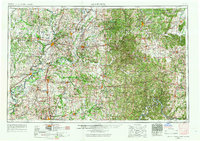 1956 Vincennes1967 Print · USGSSouthern Indiana and the Illinois borderlands are captured here in the mid-fifties, showing the region's dense network of river towns and rail lines. Researchers can trace historic river crossings along the Wabash River or locate landmarks like Wyandotte Cave and Lincoln State Park.4 unique versions available
 - 1957 Map of Vincennes
 1957 Vincennes1957 Print · USGSSouthwest Indiana and the Illinois borderlands come alive in the late 1950s, a period of heavy rail traffic and expanding state forests. Genealogists and historians can trace the riverfronts and rail lines of Vincennes, New Harmony, and the vast Crane Naval Ammunition Depot.
 - 1957 Map of Oolitic, 1958 Print
 1957 Oolitic1958 Print · USGSLawrence County limestone country is captured here in the late fifties, showing the industrial pulse of the quarries and rail lines. Researchers can trace the MONON railroad through Oolitic and find local landmarks like Beard Sch and the State Fish Hatchery.2 unique versions available
 - 1957 Map of Bedford West, 1958 Print
 1957 Bedford West1958 Print · USGSLawrence County's river-carved hills and limestone country are captured here during the late fifties as rural life and industry converged. Genealogists can trace family roots through numerous sites like Bryantsville, Eureka, and the Thomson Cem along the East Fork White River.2 unique versions available
 - 1957 Map of Campbellsburg, 1958 Print
 1957 Campbellsburg1958 Print · USGSSouthern Indiana farming and rail life are captured here in the late fifties, showing the Monon line threading through small towns. Genealogists can locate family landmarks like Stonington Ch, Fairview Sch, and the Freedom Cem.2 unique versions available
 - 1957 Map of Williams, 1958 Print
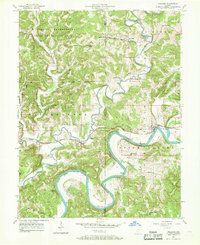 1957 Williams1958 Print · USGSThe East Fork White River winds through Lawrence County in the mid-1950s, a landscape defined by timbered ridges and rural rail lines. Trace family roots at Silverville or locate landmarks like Williams Bridge and the Mountain Spring Cem.2 unique versions available
 - 1957 Map of Owensburg, 1958 Print
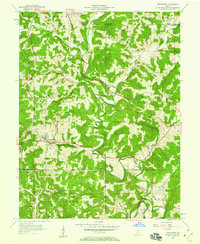 1957 Owensburg1958 Print · USGSSouthern Indiana's rural landscape is captured here in the late fifties, where the hill country of Greene County meets major federal installations. Researchers can locate family cemeteries like Lowder Cem, rural landmarks such as Bridge Ch, and the northern edge of the U S Naval Reservation Crane Ammunition Depot.2 unique versions available
 - 1958 Map of Vincennes
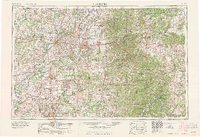 1958 Vincennes1958 Print · USGSSouthern Indiana and the Illinois borderlands are captured during a mid-century period of heavy rail traffic and military activity. Researchers can trace the sprawling bounds of the Crane Naval Ammunition Depot or locate historic settlements like New Harmony and French Lick.2 unique versions available
 - 1958 Map of Bartlettsville, 1959 Print
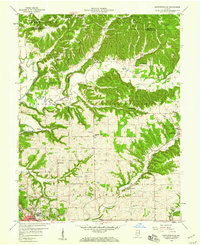 1958 Bartlettsville1959 Print · USGSLawrence and Monroe counties are shown in the late fifties as timbered ridges and creek valleys define the rural landscape. Researchers can locate family landmarks like Hillenburg Cem, the rail siding at Erie, and several country churches like Ramsey Ridge Ch.2 unique versions available
 - 1958 Map of Norman, 1959 Print
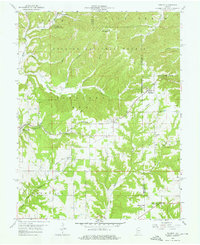 1958 Norman1959 Print · USGSLawrence County in the late fifties shows a landscape of ridge-top settlements and national forest land. Genealogists and local historians can locate the small communities of Norman, Zelma, and Yellowstone, and trace the winding course of Salt Creek.4 unique versions available
 - 1958 Map of Tunnelton, 1960 Print
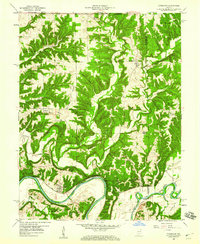 1958 Tunnelton1960 Print · USGSLawrence County at the end of the fifties reveals a landscape shaped by the East Fork White River and the busy Baltimore and Ohio rail line. Genealogists and local historians can trace the foundations of Tunnelton, Fort Ritner, and remote landmarks like Devils Backbone.2 unique versions available
 - 1958 Map of Bedford East, 1960 Print
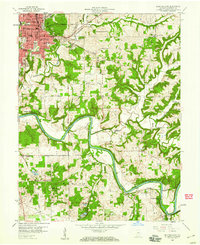 1958 Bedford East1960 Print · USGSLawrence County at the end of the 1950s shows the bustling hub of Bedford surrounded by the winding waters of the White River. Genealogists and local historians can trace rural family roots through numerous landmarks like Beech Grove Cem, Rabbitville, and Leatherwood Ch.2 unique versions available
End of results
Showing maps 1-15 of 15
Top cities of Lawrence County
- Bedford historical maps
- Mitchell historical maps
- Guthrie historical maps
- Oolitic historical maps
- Bono historical maps
Frequently asked questions
- What are the different types of historical maps available for Lawrence County?
- What is the oldest map of Lawrence County?
- Where can I purchase historical maps of Lawrence County for my home or office?
- Where can I download high-res historical maps of Lawrence County?
- Are there historical topographic maps available for Lawrence County?
- Is there historical aerial imagery available for Lawrence County?
- Where are historical maps of Lawrence County sourced from?