Old Maps of Indianapolis, Indiana for Metal Detecting
Plan your next treasure hunt with 111 historic maps of Indianapolis. Find old homesites, ghost towns, trails, and gathering spots that may be lost to time — perfect for identifying promising metal detecting locations.
- Locate forgotten sites: Uncover places like long-lost settlements, abandoned rail lines, or gathering spots.
- Plan better hunts: Use map overlays combined with LiDAR or satellite views to narrow in on historically rich areas.
- Made for detectorists: Thousands of hobbyists use these maps to discover relics, coins, and hidden history.
Use these historic maps to boost your research and find new opportunities beneath the surface of Indianapolis.
Indianapolis, IN maps
(111)- 1948 Map of Indianapolis East
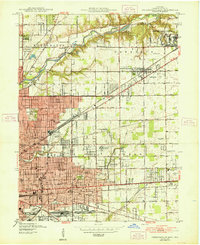 1948 Indianapolis East1948 Print · USGSNortheast Marion County is documented here during the post-war industrial boom, showing the expansion of Indianapolis toward Lawrence. Researchers can locate vanished landmarks like Brightwood Airport, the Naval Ordnance Plant, and numerous local sites like Browning Sch.2 unique versions available
 - 1948 Map of Maywood
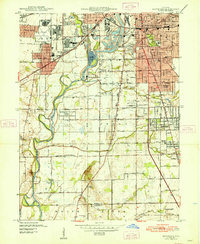 1948 Maywood1948 Print · USGSThe southern suburbs of Indianapolis are captured here in the post-war era as industrial centers and new neighborhoods expand toward the county line. Genealogists and historians can trace the foundations of Mars Hill, explore the campus of Indiana Central College, or locate family sites at Holy Cross Cem.2 unique versions available
 - 1948 Map of Beech Grove
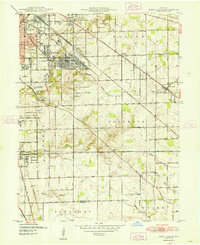 1948 Beech Grove1948 Print · USGSSoutheast Marion County is captured here in the late 1940s as its rail-towns and suburban fringes expanded. Researchers can trace the massive Indianapolis Union RR yards or locate family roots near New Bethel, Southport, and New Crown Cem.
 - 1948 Map of Indianapolis West
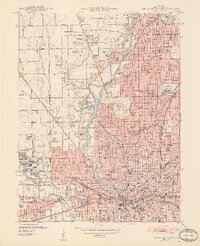 1948 Indianapolis West1948 Print · USGSIndianapolis and its western suburbs thrive in the late 1940s, revealing a landscape of bustling industry, grand civic centers, and emerging neighborhoods. Trace the early footprints of the Indianapolis Motor Speedway, the historic Crown Hill Cemetery, and the busy Hoosier Airport.2 unique versions available
 - 1952 Map of Cumberland, 1953 Print
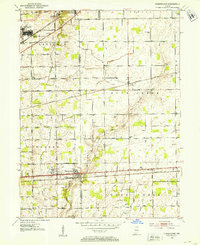 1952 Cumberland1953 Print · USGSThe rural borderlands of Marion and Hancock Counties are captured here in the early fifties, showing the footprint of Fort Benjamin Harrison alongside small farming hamlets. Researchers can locate numerous family burial sites like Snider Cem and Arnett Cem, or trace the path of the New York Central Railroad.
 - 1952 Map of Fishers, 1953 Print
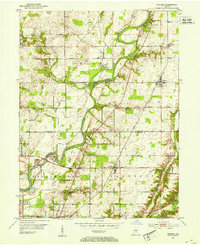 1952 Fishers1953 Print · USGSCentral Indiana in the early fifties shows a patchwork of fertile farmland and growing river towns along the White River. Genealogists and local historians can locate several family cemeteries like Eller Cem and early landmarks including White Chapel and the Township Sch.
 - 1952 Map of Carmel, 1953 Print
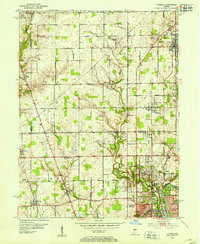 1952 Carmel1953 Print · USGSNorth of Indianapolis in the early 1950s, the landscape was a mix of quiet rural townships and new suburban communities. Genealogists can trace early homesteads near Eagle Village or locate historic markers like Poplar Ridge Cem and Clay Center Sch.
 - 1952 Map of Mc Cordsville, 1953 Print
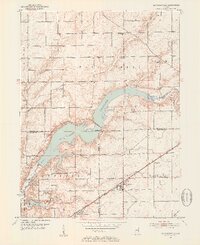 1952 Mc Cordsville1953 Print · USGSCentral Indiana in the early fifties shows the expansion of Geist Reservoir and the established rail lines. Genealogists can trace family landmarks and rural homesteads through McCordsville, Highland Cem, and Bethlehem Ch.2 unique versions available
 - 1953 Map of Acton, 1954 Print
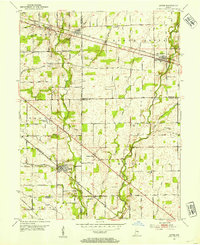 1953 Acton1954 Print · USGSSoutheastern Indiana farmland meets the rail lines of the early fifties in this detailed look at the rural landscape. Genealogists can locate family-named sites like Schildmeier Cem, Zion Sch, and the old rail stop at Acton.
 - 1953 Map of Bridgeport, 1954 Print
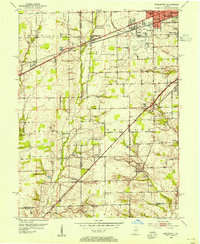 1953 Bridgeport1954 Print · USGSWestern Marion County in the early fifties is captured here at the cusp of suburban expansion along the historic National Road. Genealogists and researchers can trace family landmarks and early schools like St Joseph High Sch, Center Cem, and the community of West Newton.
 - 1953 Map of Zionsville, 1955 Print
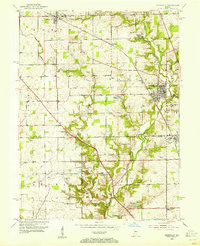 1953 Zionsville1955 Print · USGSZionsville and its surrounding townships are caught in a moment of mid-century growth along the New York Central rail line. Genealogists and local historians can locate early landmarks like McCord Cem, Macedonia Ch, and the Wilson Scout Camp along the banks of Eagle Creek.
 - 1953 Map of Clermont, 1956 Print
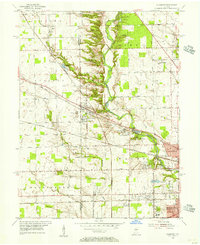 1953 Clermont1956 Print · USGSMid-century Marion County comes into focus as the suburban reach of Speedway meets the rail town of Clermont. Genealogists and local researchers can trace old family sites and institutions like Shiloh Church, Wood Haven Cemetery, and the Indiana Girls School.
 - 1953 Map of Cincinnati, 1965 Print
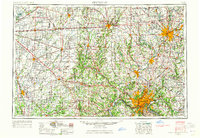 1953 Cincinnati1965 Print · USGSThe Ohio River valley and the industrial heartland of Indiana and Ohio are captured here during the mid-century peak of rail and river commerce. Genealogists and historians can trace connections between Cincinnati and outlying military sites like Camp Atterbury and Bakalar AFB.3 unique versions available
 - 1953 Map of Indianapolis, 1965 Print
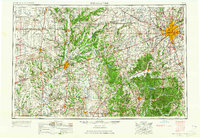 1953 Indianapolis1965 Print · USGSCentral Indiana and the Illinois borderlands are captured in the mid-sixties, showing the growth of Indianapolis and its industrial rail corridors. Genealogists and historians can trace the development of outlying towns like Zionsville or Beech Grove and find landmarks such as Atterbury AAF and Turkey Run State Park.4 unique versions available
 - 1956 Map of Indianapolis
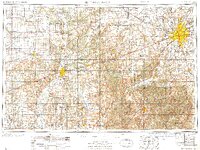 1956 Indianapolis1956 Print · USGSCentral Indiana in the mid-fifties is captured during a period of industrial growth and military presence. Genealogists and historians can trace the rail networks of the New York Central or locate regional landmarks like Fort Benjamin Harrison and Camp Atterbury.
 - 1957 Map of Indianapolis
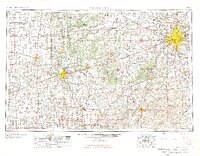 1957 Indianapolis1957 Print · USGSCentral Indiana in the mid-fifties is captured here as a crossroads of major rail lines and nascent federal highways. Genealogists and historians can trace family-named ridges like Poplar Ridge or locate strategic sites like Camp Atterbury and Speedway.2 unique versions available
 - 1957 Map of Cincinnati
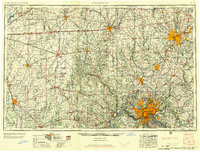 1957 Cincinnati1957 Print · USGSThe Ohio River valley and its surrounding highlands thrived during the mid-fifties industrial peak, centered on the bustling Cincinnati and Dayton metropolitan hubs. Researchers can trace the extensive rail networks and military sites like Wright-Patterson AFB and Camp Atterbury.
 - 1959 Map of Bridgeport, 1960 Print
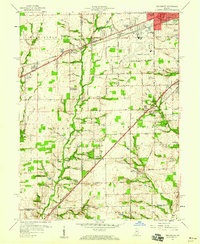 1959 Bridgeport1960 Print · USGSSouthwestern Marion County underwent significant suburban growth in the late fifties as Indianapolis expanded toward its southwestern townships. Researchers can trace the development of Valley Mills and West Newton or locate landmarks like Jameson Camp and the Old Ben Davis High Sch.
 - 1959 Map of Carmel, 1960 Print
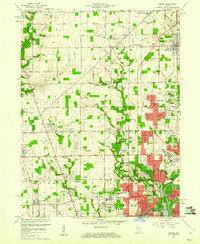 1959 Carmel1960 Print · USGSThe northern fringes of Indianapolis were rapidly transforming in the late fifties as subdivisions began to edge into the surrounding farmland. You can trace early neighborhood developments like Home Place and Meridian Hills alongside the Monon Railroad and the White River.
 - 1959 Map of Fishers, 1960 Print
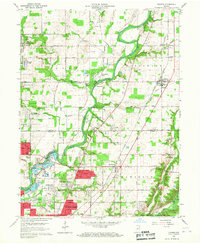 1959 Fishers1960 Print · USGSSuburban Indianapolis and rural Hamilton County meet here in the late fifties as residential growth begins to reshape the landscape. Genealogists and historians can trace the foundations of Fishers and New Britton or locate old burial grounds like Heady Cem.2 unique versions available
 - 1959 Map of Beech Grove, 1961 Print
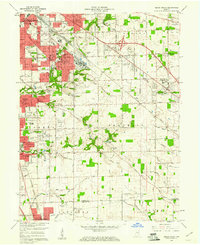 1959 Beech Grove1961 Print · USGSSoutheastern Indianapolis and the rail-centric hub of Beech Grove are caught in a period of mid-century suburban expansion. Genealogists and local historians can trace the foundations of neighborhoods like Twin Brooks and identify historic landmarks like Maple Hill Ch & Cem and Wheatcraft Airport.
 - 1959 Map of Clermont, 1961 Print
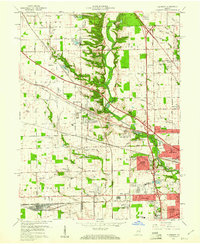 1959 Clermont1961 Print · USGSMarion County suburbs expand toward the countryside in the late fifties as residential tracks meet rural townships. Genealogists and historians can trace the development of Clermont, find the Bullard Cem, or locate the historic Indiana Girls Sch.
 - 1959 Map of Indianapolis West, 1961 Print
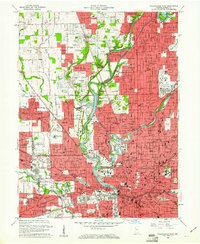 1959 Indianapolis West1961 Print · USGSMid-century Indianapolis is captured here as suburban growth begins to surround the legendary Indianapolis Motor Speedway. Researchers can trace established neighborhoods like Broad Ripple, locate family plots in Crown Hill Cemetery, or find long-standing institutions such as Butler University.
 - 1959 Map of Indianapolis East, 1961 Print
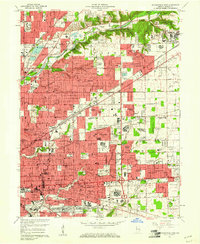 1959 Indianapolis East1961 Print · USGSThe eastern suburbs of Indianapolis were rapidly expanding in the late fifties as residential neighborhoods grew around established military and industrial hubs. Researchers can trace local heritage through numerous parochial sites like Holy Spirit Sch & Ch and major landmarks including the Fort Benjamin Harrison Military Reservation.
 - 1959 Map of Maywood, 1961 Print
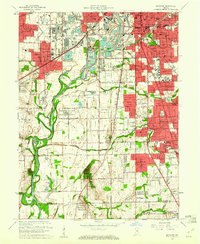 1959 Maywood1961 Print · USGSThe southern suburbs of Indianapolis and northern Johnson County are captured here during a period of rapid post-war growth. Researchers can trace family history through numerous landmarks like Indiana Central College, Union Stockyards, and Southport High Sch.
Showing maps 1-25 of 111
Top cities near Indianapolis
- Carmel historical maps
- Fishers historical maps
- Noblesville historical maps
- Greenwood historical maps
- Westfield historical maps
- Lawrence historical maps
See more
Top neighborhoods of Indianapolis
- Belle Arbor historical maps
- Hunters Crossing historical maps
- Indian Creek Estates historical maps
- Julietta historical maps
- Lakeside historical maps
- Drexel Gardens historical maps
See more
Frequently asked questions
- What are the different types of historical maps available for Indianapolis?
- What is the oldest map of Indianapolis?
- Where can I purchase historical maps of Indianapolis for my home or office?
- Where can I download high-res historical maps of Indianapolis?
- Are there historical topographic maps available for Indianapolis?
- Is there historical aerial imagery available for Indianapolis?
- Where are historical maps of Indianapolis sourced from?