1900s (20th Century) Maps of Rush County, Indiana
Explore 24 historic maps of Rush County from the 1900s (20th Century). These maps offer a rare glimpse into what life looked like during the 1900s — showing old roads, neighborhoods, homes, and landmarks that have changed or disappeared over time.
Whether you're researching your family's past, planning a metal detecting trip, or studying how Rush County's landscape evolved across the 1900s, these high-resolution maps are a powerful tool for exploring the history of this region.
- Focus on a specific era: All maps on this page are from the 1900s, giving you a focused view of this time period.
- See what’s changed: Compare century-old streets, trails, and buildings to today's modern landscape using overlays and satellite layers.
- Research with precision: Use these maps for genealogy, historical research, land use analysis, or educational projects.
- View, download, or print: Maps are fully viewable online in high resolution, and can be downloaded or printed for your own records.
Start exploring Rush County's history through authentic maps from the 1900s. This is your window into the past.
Rush County, IN maps
(24)- 1942 Map of Columbus
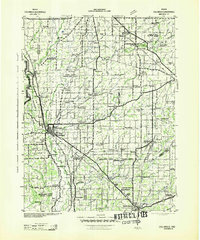 1942 Columbus1942 Print · USGSBartholomew and Shelby counties are shown during the early years of the war, as military installations and rail lines reshaped the rural Indiana landscape. Genealogists can trace family-named sites and established communities like St Louis Crossing, Hope, and the sprawling Camp Atterbury.
 - 1948 Map of Lewisville, 1966 Print
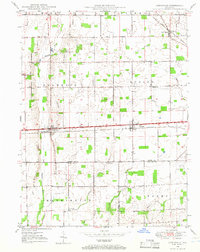 1948 Lewisville1966 Print · USGSHenry County and the surrounding farm country are captured here in the late 1940s as the rail-line communities of Lewisville and Straughn thrived. Genealogists can locate family-named landmarks and rural congregations like Rich Square Ch and Hopewell Ch.
 - 1950 Map of Dunreith
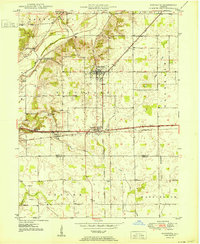 1950 Dunreith1950 Print · USGSSouthern Henry County in the mid-twentieth century reveals a landscape defined by the intersection of major rail lines and rural townships. Researchers can trace family history through several local burial sites like Shiloh Cem or locate the industrial works at Stone Quarry Mills.
 - 1950 Map of Lewisville
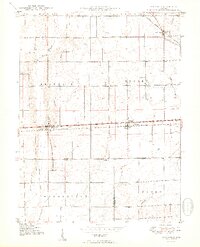 1950 Lewisville1950 Print · USGSEast-central Indiana farmland is documented here in the mid-twentieth century, centered on the railroad corridor through Lewisville. Genealogists can trace family roots through rural landmarks like Rich Square Ch, Ebenezer Ch, and the small settlement of Beacon.2 unique versions available
 - 1953 Map of Cincinnati, 1965 Print
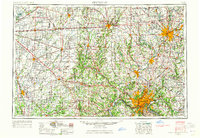 1953 Cincinnati1965 Print · USGSThe Ohio River valley and the industrial heartland of Indiana and Ohio are captured here during the mid-century peak of rail and river commerce. Genealogists and historians can trace connections between Cincinnati and outlying military sites like Camp Atterbury and Bakalar AFB.3 unique versions available
 - 1956 Map of Cleveland, 1957 Print
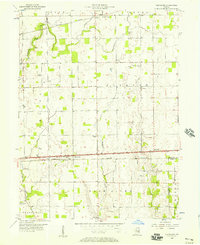 1956 Cleveland1957 Print · USGSHancock County farmland and small crossroads settlements are captured here in the mid-fifties along the historic National Road. Genealogists and local historians can locate several family cemeteries, including Pratt Cem and Hinchman Cem, alongside landmarks like Curry Chapel and Pope Airfield.2 unique versions available
 - 1956 Map of Morristown, 1957 Print
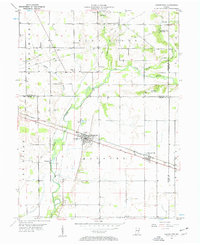 1956 Morristown1957 Print · USGSMid-century Shelby County is captured here as the Baltimore and Ohio railroad links small agricultural hubs. Genealogists can trace local roots at Asbury Cem, Shiloh Ch, and the school at Morristown.2 unique versions available
 - 1956 Map of Waldron, 1957 Print
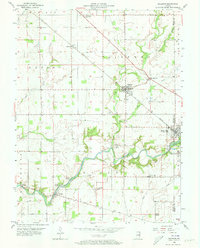 1956 Waldron1957 Print · USGSSoutheastern Shelby County comes alive in this mid-century survey of rural Indiana as it appeared before modern suburban sprawl. Researchers can locate family landmarks like Wesley Chapel, find the old Stone Quarry at Saint Paul, and trace the path of the New York Central railroad.5 unique versions available
 - 1956 Map of Rays Crossing, 1958 Print
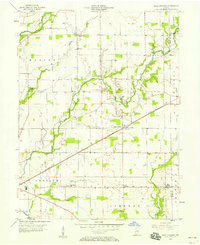 1956 Rays Crossing1958 Print · USGSShelby County farm country comes to life in this mid-century survey, showing the rail-dependent hamlets and river valleys before the modernization of Indiana's rural landscape. Genealogists can trace family footprints near Rays Crossing, the Township Sch, and Mt Pisgah Ch.5 unique versions available
 - 1957 Map of Cincinnati
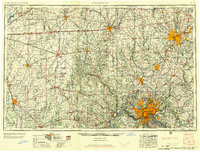 1957 Cincinnati1957 Print · USGSThe Ohio River valley and its surrounding highlands thrived during the mid-fifties industrial peak, centered on the bustling Cincinnati and Dayton metropolitan hubs. Researchers can trace the extensive rail networks and military sites like Wright-Patterson AFB and Camp Atterbury.
 - 1958 Map of Clarksburg, 1959 Print
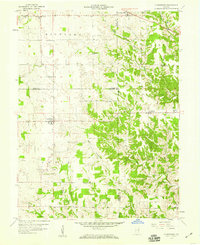 1958 Clarksburg1959 Print · USGSSoutheastern Indiana farmland and creek valleys meet in the late fifties at the junction of three counties. Genealogists can trace family names and sites at Clarksburg, Hamburg, and cemeteries like Old Brick Cem and Mt Carmel Cem.4 unique versions available
 - 1959 Map of Milroy, 1960 Print
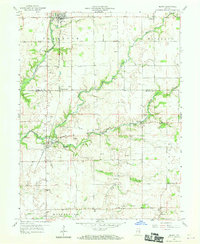 1959 Milroy1960 Print · USGSRush and Decatur Counties are captured in the late fifties, showing a rural landscape defined by the Flatrock River and rail lines. Genealogists can locate family sites at Bethesda Cem and Layton Cem or trace the New York Central railroad through Milroy.4 unique versions available
 - 1959 Map of Rushville, 1960 Print
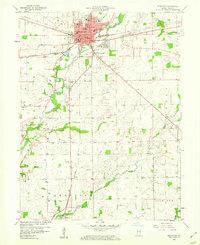 1959 Rushville1960 Print · USGSRush County in the late 1950s is a vibrant crossroads of rail and river, centered on the junction of three major railroads. Genealogists and local historians can trace rural roots through scattered landmarks like Laughlin Cem, the Webb Sch, and a Covered Bridge over the Flatrock River.4 unique versions available
 - 1959 Map of New Salem, 1960 Print
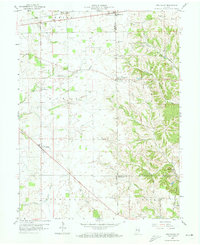 1959 New Salem1960 Print · USGSThe rural landscape of Rush County in the late fifties is defined by its small farming settlements and pioneer-era legacy. Genealogists can trace family roots through numerous burial grounds like Heaton Cem and Orange North Cem or locate the historic Indian Treaty Boundary.3 unique versions available
 - 1959 Map of Adams, 1960 Print
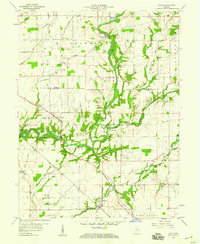 1959 Adams1960 Print · USGSSoutheastern Indiana's rural landscape is captured here in the late fifties, showing the river-carved borders of Rush and Decatur counties. Genealogists and researchers can locate several family-named landmarks and rural congregations, including Mt Hebron Cem, Star Ch, and the community of Downeyville.3 unique versions available
 - 1959 Map of Mays, 1960 Print
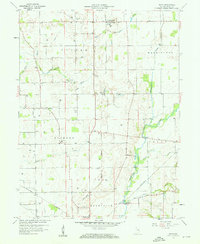 1959 Mays1960 Print · USGSRush County during the late fifties reveals a landscape defined by small rail-towns and an active natural gas field. Researchers can trace the heritage of Mays and Sexton, finding local landmarks like the Covered Bridge and the Mays High School.3 unique versions available
 - 1959 Map of Falmouth, 1960 Print
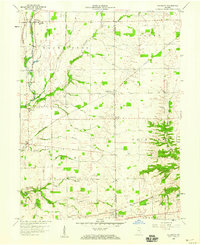 1959 Falmouth1960 Print · USGSRush and Fayette counties appear at the height of the mid-century agricultural era, shaped by the Flatrock River and the Pennsylvania Railroad. Genealogists can trace family footprints at Plum Creek Ch, Hinchman Cem, and the old Township Sch.2 unique versions available
 - 1960 Map of Manilla, 1961 Print
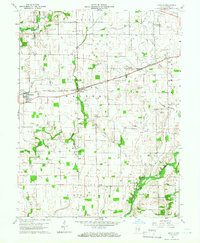 1960 Manilla1961 Print · USGSRush County's agricultural heartland is documented here in the early sixties, showing a landscape shaped by the Pennsylvania railroad and the Flat Rock River. Researchers can locate the Covered Bridge near Gowdy, as well as numerous family sites like Homer Cem and Bebout Cem.3 unique versions available
 - 1960 Map of Carthage, 1961 Print
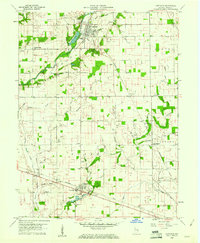 1960 Carthage1961 Print · USGSNorthwestern Rush County in the early sixties remains a landscape of rail-connected farming towns and river valleys. Researchers can trace the routes of the New York Central through Carthage or locate family sites near Walnut Ridge Ch and the Township Sch.2 unique versions available
 - 1960 Map of Knightstown, 1961 Print
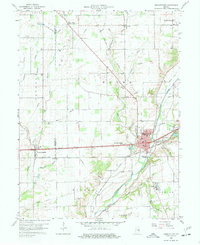 1960 Knightstown1961 Print · USGSKnightstown and the Big Blue River valley are captured in the early sixties as major rail lines and the historic National Road still defined local commerce. Researchers can trace family sites like Glencove Cem, the Morton Sch, and the small community of Raysville.3 unique versions available
 - 1970 Map of Dunreith, 1972 Print
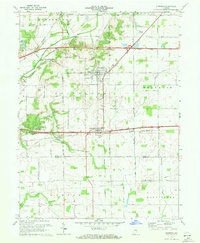 1970 Dunreith1972 Print · USGSHenry and Rush counties are captured here in the early 1970s, showcasing a landscape defined by historic transit and rural industry. Trace the intersections of the National Road with several rail lines and find local landmarks like Beard Sch and Stone Quarry Mills.3 unique versions available
 - 1970 Map of Lewisville, 1973 Print
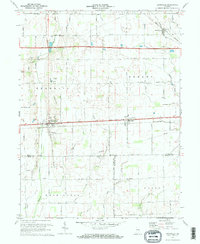 1970 Lewisville1973 Print · USGSEastern Indiana farmland transitions from the steam era to the late twentieth century in this detailed survey of Henry County. Researchers can trace historic family landmarks such as Ebenezer Cem, Rich Square Ch, and the corridor of the Penn Central railroad.2 unique versions available
 - 1986 Map of Greensburg
 1986 Greensburg1986 Print · USGSSoutheastern Indiana in the mid-eighties shows a balance of growing industrial centers and deeply rooted rural communities. Family historians can trace landmarks like the Highland Center School, South Park Cemetery, and the Bartholomew County Courthouse among the river forks.2 unique versions available
 - 1986 Map of New Castle
 1986 New Castle1986 Print · USGSEast Central Indiana remains a patchwork of thriving county seats and rail-side hamlets in the mid-eighties. Genealogists and historians can locate family landmarks such as East Hill Cemetery, Little Blue River Church, and the transit lines of the CONRAIL railroad.2 unique versions available
End of results
Showing maps 1-24 of 24
Top cities of Rush County
Frequently asked questions
- What are the different types of historical maps available for Rush County?
- What is the oldest map of Rush County?
- Where can I purchase historical maps of Rush County for my home or office?
- Where can I download high-res historical maps of Rush County?
- Are there historical topographic maps available for Rush County?
- Is there historical aerial imagery available for Rush County?
- Where are historical maps of Rush County sourced from?