1960s Maps of Wayne County, Indiana
Explore 15 historic maps of Wayne County from the 1960s. These maps offer a rare glimpse into what life looked like during the 1960s — showing old roads, neighborhoods, homes, and landmarks that have changed or disappeared over time.
Whether you're researching your family's past, planning a metal detecting trip, or studying how Wayne County's landscape evolved across the 1960s, these high-resolution maps are a powerful tool for exploring the history of this region.
- Focus on a specific era: All maps on this page are from the 1960s, giving you a focused view of this time period.
- See what’s changed: Compare century-old streets, trails, and buildings to today's modern landscape using overlays and satellite layers.
- Research with precision: Use these maps for genealogy, historical research, land use analysis, or educational projects.
- View, download, or print: Maps are fully viewable online in high resolution, and can be downloaded or printed for your own records.
Start exploring Wayne County's history through authentic maps from the 1960s. This is your window into the past.
Wayne County, IN maps
(15)- 1960 Map of Liberty, 1961 Print
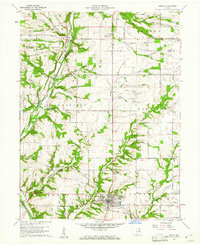 1960 Liberty1961 Print · USGSThe eastern Indiana countryside around the town of Liberty is shown here in the early sixties, just as the local landscape was being shaped by the new Whitewater State Park. Researchers can locate numerous family landmarks and burial sites, including Potter Cem, Woods Chapel, and the Baltimore and Ohio rail line.
 - 1960 Map of Fairhaven, 1961 Print
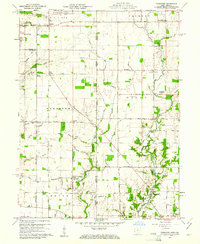 1960 Fairhaven1961 Print · USGSThe Indiana-Ohio state line was a landscape of quiet agricultural hamlets and steam-era rail lines in the early sixties. Genealogists can trace the rural communities of Fairhaven and Goodwins Corner, along with the Sugar Grove Ch and several local cemeteries.2 unique versions available
 - 1960 Map of Carlos, 1961 Print
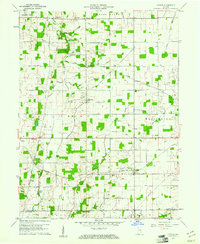 1960 Carlos1961 Print · USGSRandolph County's rural townships are captured here in the early sixties, showing the agricultural heartland of eastern Indiana. Researchers can trace historical property lines along the Indian Treaty Boundary and locate small communities like Huntsville, Unionport, and Carlos.3 unique versions available
 - 1960 Map of Hagerstown, 1961 Print
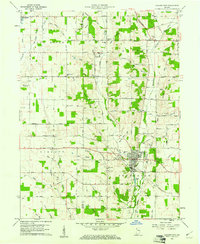 1960 Hagerstown1961 Print · USGSHagerstown and the surrounding Wayne County farmland are captured here in the early sixties, showing a landscape defined by the Whitewater River and the Pennsylvania Railroad. Genealogists can locate specific sites like the Wilbur Wright Memorial, Township School, and West Lawn Cemetery.2 unique versions available
 - 1960 Map of Spartanburg, 1961 Print
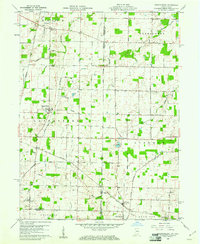 1960 Spartanburg1961 Print · USGSThe Indiana-Ohio borderlands at the start of the 1960s reveal a landscape of well-ordered farms and quiet railroad hamlets. Researchers can locate family landmarks like Beech Cemetery and Bartonia Cemetery or trace the New York Central through Crete.2 unique versions available
 - 1960 Map of Fountain City, 1961 Print
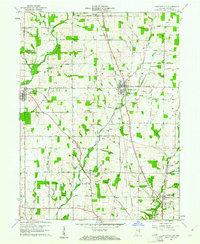 1960 Fountain City1961 Print · USGSWayne County farming communities thrive in the early 1960s amidst a landscape carved by the Whitewater River and Nolands Fork. Genealogists can trace family roots at Old Concord Cem or Hopewell Ch, while discovering landmarks like the Covered Bridge on Quill Creek.
 - 1960 Map of Lynn, 1961 Print
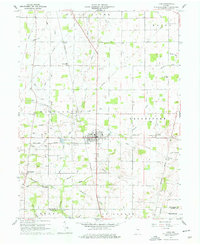 1960 Lynn1961 Print · USGSEastern Indiana at the start of the sixties reveals a landscape of thriving rail hubs and quiet country crossroads. Genealogists and historians can locate family landmarks like Quaker Lynn Cem, the New York Central Line, and the town of Bloomingport.4 unique versions available
 - 1960 Map of Richmond, 1961 Print
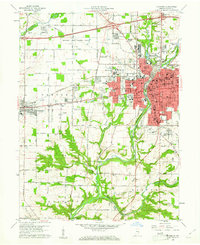 1960 Richmond1961 Print · USGSRichmond and Centerville are captured at a point of mid-century growth when rail lines still defined the local economy. Researchers can trace the grounds of Earlham College, find family plots at Earlham Cemetery, and locate vanished neighborhood landmarks like Sevastopol Sch.2 unique versions available
 - 1960 Map of Jacksonburg, 1961 Print
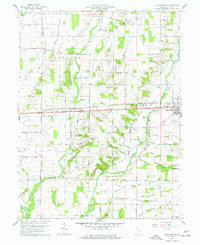 1960 Jacksonburg1961 Print · USGSWayne County is captured in the early sixties as a thriving landscape of rural churches and agricultural hubs along the historic National Road. Researchers can locate family roots at Doddridge Chapel, Hoover Mill, and cemeteries like Crown Hill Cem or West Cem.3 unique versions available
 - 1960 Map of Whitewater, 1961 Print
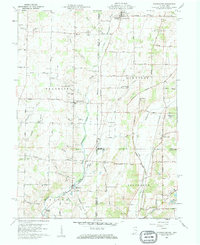 1960 Whitewater1961 Print · USGSThe Indiana-Ohio borderlands at the start of the sixties reveal a landscape of thriving crossroads and river-valley farms. Genealogists can trace family footprints through the Middleboro settlement, Friendship Ch, and several rural burial grounds like Bethel Cem.3 unique versions available
 - 1960 Map of New Paris, 1961 Print
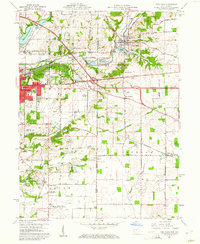 1960 New Paris1961 Print · USGSThe Indiana-Ohio border comes alive in the early sixties as the city of Richmond expands toward New Paris. Genealogists and historians can trace family locations through Smyrna Ch, Spring Lawn Cemetery, and the many farms along the historic National Road.4 unique versions available
 - 1960 Map of Modoc, 1961 Print
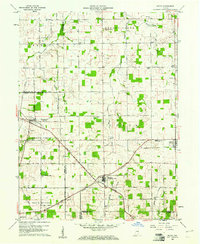 1960 Modoc1961 Print · USGSRandolph and Henry Counties appear here in the early sixties, centered on the vital rail junctions of the eastern Indiana plains. Genealogists and local historians can trace the locations of Bronson, Blountsville, and rural sites like Grace Chapel.
 - 1960 Map of Greens Fork, 1961 Print
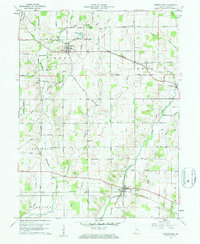 1960 Greens Fork1961 Print · USGSWayne County farming life is captured here in the early sixties, showing the well-defined townships and family-named roads. Genealogists can trace family roots through landmarks like Sugar Grove Ch, Fairfield Cem, and the Old Indian Treaty Bdy.2 unique versions available
 - 1960 Map of Cambridge City, 1961 Print
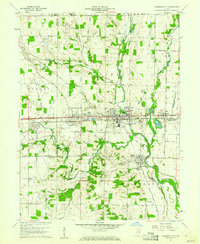 1960 Cambridge City1961 Print · USGSThe Whitewater Valley and the historic National Road are captured here during the early sixties, showing a landscape defined by rail and river. Researchers can trace the layout of Cambridge City and Milton, locating family sites near Locust Grove Cem or Zion Ch.2 unique versions available
 - 1969 Map of Modoc, 1970 Print
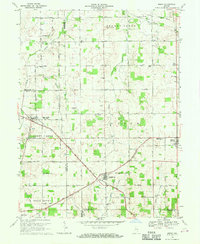 1969 Modoc1970 Print · USGSRandolph and Henry Counties are captured here in the late sixties, showing a landscape defined by intersecting railroads and rural crossroads. Genealogists and local historians can locate family landmarks like Poplar Run Cem, Union Ch, and the settlement of Blountsville.
End of results
Showing maps 1-15 of 15
Top cities of Wayne County
- Richmond historical maps
- Centerville historical maps
- Cambridge City historical maps
- Hagerstown historical maps
- Webster historical maps
- Abington historical maps
See more
Frequently asked questions
- What are the different types of historical maps available for Wayne County?
- What is the oldest map of Wayne County?
- Where can I purchase historical maps of Wayne County for my home or office?
- Where can I download high-res historical maps of Wayne County?
- Are there historical topographic maps available for Wayne County?
- Is there historical aerial imagery available for Wayne County?
- Where are historical maps of Wayne County sourced from?