Old Maps of Corning, Iowa for Metal Detecting
Plan your next treasure hunt with 33 historic maps of Corning. Find old homesites, ghost towns, trails, and gathering spots that may be lost to time — perfect for identifying promising metal detecting locations.
- Locate forgotten sites: Uncover places like long-lost settlements, abandoned rail lines, or gathering spots.
- Plan better hunts: Use map overlays combined with LiDAR or satellite views to narrow in on historically rich areas.
- Made for detectorists: Thousands of hobbyists use these maps to discover relics, coins, and hidden history.
Use these historic maps to boost your research and find new opportunities beneath the surface of Corning.
Corning, IA maps
(33)- 1954 Map of Omaha, 1967 Print
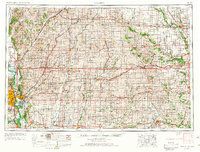 1954 Omaha1967 Print · USGSMid-century development radiates from the river bluffs into the agricultural heartland during this period of post-war growth. Genealogists and historians can trace rail-connected towns like Atlantic and Red Oak or locate the sprawling grounds of Offutt Air Force Base and Manawa Lake.3 unique versions available
 - 1955 Map of Nebraska City, 1967 Print
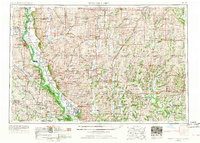 1955 Nebraska City1967 Print · USGSThe four-state region surrounding the Missouri River valley appears here in the mid-1950s, a landscape of rail-dependent market towns and rural school districts. Genealogists can locate family landmarks like the Rock Bluff School, St Oswald Church, and the Clarinda State Hospital.3 unique versions available
 - 1957 Map of Nebraska City
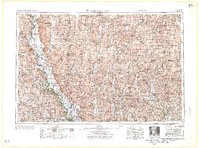 1957 Nebraska City1957 Print · USGSThe four-state junction of Nebraska, Iowa, Missouri, and Kansas comes alive in this mid-fifties survey of the Missouri River valley. Genealogists and historians can trace the rail-and-road networks connecting Nebraska City, Maryville, and the Squaw Creek National Wildlife Refuge.
 - 1957 Map of Omaha
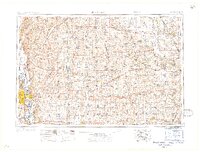 1957 Omaha1957 Print · USGSWestern Iowa and the Missouri River valley are seen here in the mid-fifties during the height of the rail-and-road era. Researchers can trace the sprawling rail lines of the Chicago And North Western or locate Cold War landmarks like Offutt Air Force Base.
 - 1958 Map of Omaha
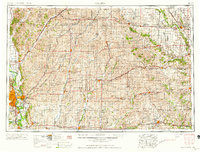 1958 Omaha1958 Print · USGSOmaha and Council Bluffs stand at the center of this mid-fifties landscape, where the Missouri River splits the urban plains of Nebraska from the rolling hills of western Iowa. Genealogists can trace the rail lines of the Wabash RR and Illinois Central RR to rural settlements like Missouri Valley and Red Oak.2 unique versions available
 - 1958 Map of Nebraska City
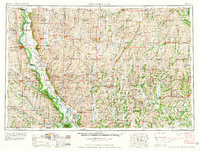 1958 Nebraska City1958 Print · USGSThe Missouri River Valley and its fertile four-state borderlands are captured here during the mid-century expansion of the regional highway and rail networks. Genealogists can trace family roots through numerous rural landmarks like Moulton School, Shady Grove Church, and the Clarinda State Hospital.
 - 1980 Map of Corning South
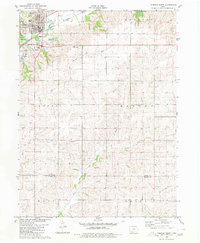 1980 Corning South1980 Print · USGSThe hill country south of Corning is captured here in the late seventies, showing a landscape defined by the Burlington Northern line and the East Nodaway River. Genealogists can locate Walnut Grove Cemetery and Oak Hill Cem, or trace the One Hundred and Two River through the southern townships.
 - 1980 Map of Corning North, 1981 Print
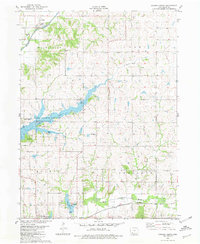 1980 Corning North1981 Print · USGSAdams County farmland meets modern water recreation in the early 1980s as the Lake Icaria reservoir system reshapes the landscape. Researchers can locate local landmarks like Mt Etna Cem, the Burlington Northern line, and the northern edge of Corning.
 - 1980 Map of Brooks, 1981 Print
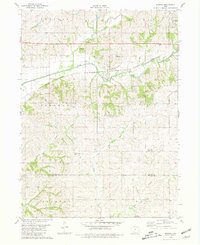 1980 Brooks1981 Print · USGSSouthwestern Iowa in the early eighties remains a landscape defined by its river valleys and rail lines. Genealogists can locate family landmarks like Methodist Grove Cem, the settlement of Brooks, and the headwaters of the uniquely named One Hundred and Two River.
 - 1980 Map of Carbon, 1981 Print
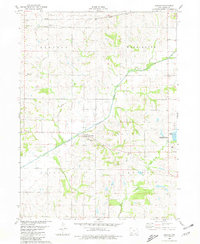 1980 Carbon1981 Print · USGSAdams County in the early 1980s reveals a transition from traditional rural townships to modern water management. Genealogists and local historians can trace family roots through the Quincy Cem and Oakland Cem or explore the growth of Lake Icaria.
 - 1985 Map of Creston
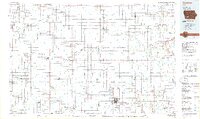 1985 Creston1985 Print · USGSSouthwest Iowa in the mid-eighties shows a landscape of established farm towns and growing regional hubs connected by vital rail lines. Genealogists and local historians can trace landmarks like Graceland Cem, the Southwestern Community College campus, and the Burlington Northern railroad route.
 - 1985 Map of Mount Ayr
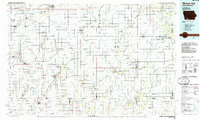 1985 Mount Ayr1985 Print · USGSThe Iowa-Missouri borderlands are captured here in the mid-eighties, showing a landscape defined by the branching forks of the Platte River and Grand River. Researchers can trace the heritage of rural communities and conservation sites like Lake of Three Fires State Park and Rose Hill Cemetery.2 unique versions available
 - 1993 Map of Creston
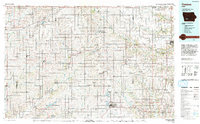 1993 Creston1993 Print · USGSSouthwestern Iowa in the early nineties shows a landscape of established farm towns and modern water reservoirs. Genealogists and local historians can trace the streets of Creston and Winterset, or find rural landmarks like Graceland Cem and Arbor Hill.
 - 2010 Map of Carbon, 2010 Print
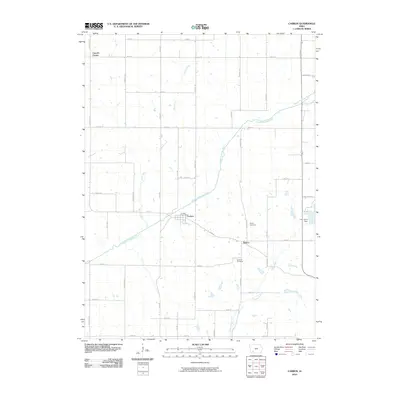 2010 Carbon2010 Print · USGSAdams County rural life is documented here in the early twenty-first century, centered on the Middle Nodaway River. Researchers can locate family roots at the Quincy Cemetery or trace the early community of Carbon.
 - 2010 Map of Corning North, 2010 Print
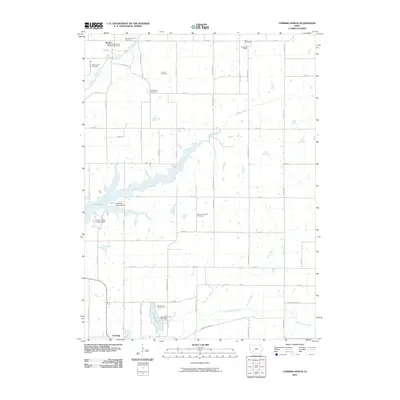 2010 Corning North2010 Print · USGSAdams County at the turn of the decade reveals a rural landscape anchored by the villages of Mount Etna and Carl. Genealogists and local historians can trace numerous family burial sites, including the Queen City Cemetery and Forest Hill Cemetery, alongside the waters of Lake Icaria.
 - 2010 Map of Corning South, 2010 Print
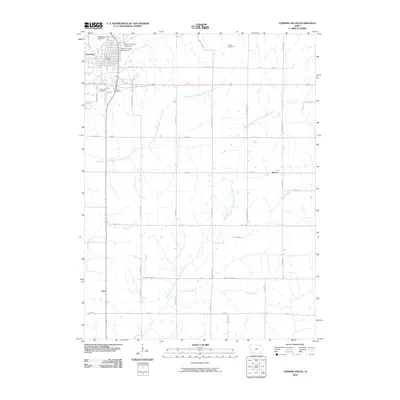 2010 Corning South2010 Print · USGSCorning and the rural reaches of Adams County are documented here during the first decade of the 2000s. Genealogists and historians can trace family plots at Icarian Cemetery or Oak Hill Cemetery and locate community sites like Mercer or the Adams County Fairgrounds.
 - 2010 Map of Brooks, 2010 Print
 2010 Brooks2010 Print · USGSAdams County at the start of the 2010s reveals a structured landscape of farm-to-market roads and quiet river valleys. Researchers can locate family burial sites at Old Brooks Cemetery or Prairie Rose Cemetery and trace the paths of Long Branch and the East Nodaway River.
 - 2013 Map of Brooks, 2013 Print
 2013 Brooks2013 Print · USGSThe rural landscape of Adams County, Iowa, is captured here in the early twenty-first century as agricultural traditions meet modern infrastructure. Genealogists and local historians can trace the roads connecting Brooks and Iveyville, crossing the E Nodaway River and Snider Bridge.
 - 2013 Map of Corning South, 2013 Print
 2013 Corning South2013 Print · USGSSouthwestern Iowa farmland and river bottoms are captured here in the early twenty-first century, centered between the towns of Corning and Holt. Local historians can trace the course of the W Fork One Hundred and Two River and locate the Adams County Fairgrounds.
 - 2013 Map of Carbon, 2013 Print
 2013 Carbon2013 Print · USGSAdams County in the early 2010s remains a landscape of river-fed valleys and quiet rural junctions. Researchers can trace the local road networks surrounding Carbon and Quincy, or follow the banks of the Middle Nodaway River and Show Cr.
 - 2013 Map of Corning North, 2013 Print
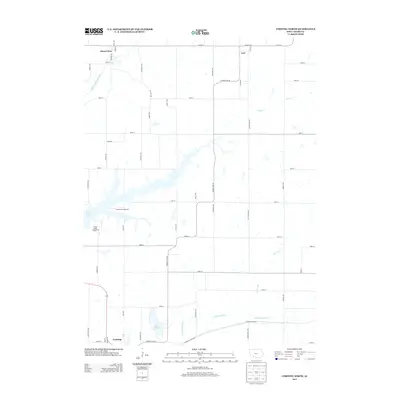 2013 Corning North2013 Print · USGSIn the rural hills of Adams County during the early 2010s, this landscape centers on the sprawling Lake Icaria and its recreational shoreline. Researchers can trace local landmarks like Mount Etna, Carl, and the campsites at Timber Ridge Campground.
 - 2015 Map of Carbon, 2015 Print
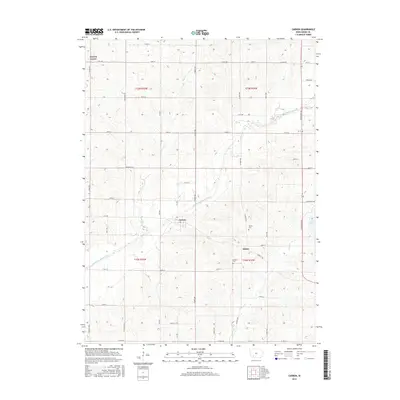 2015 Carbon2015 Print · USGSAdams County land and waterways are captured here in the mid-2010s, showing the rural structure of western Iowa. Family historians can trace the vicinity of Carbon and Quincy, locating landmarks like Quincy Cem and the banks of the Middle Nodaway River.
 - 2015 Map of Corning North, 2015 Print
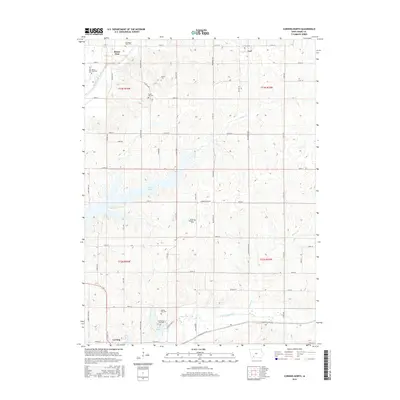 2015 Corning North2015 Print · USGSAdams County rural life in the mid-2010s is defined here by its small communities and legacy burial grounds. Genealogists can trace family footprints at Old Queen City Cem or Homan Cem while exploring the banks of the Middle Nodaway River.
 - 2015 Map of Brooks, 2015 Print
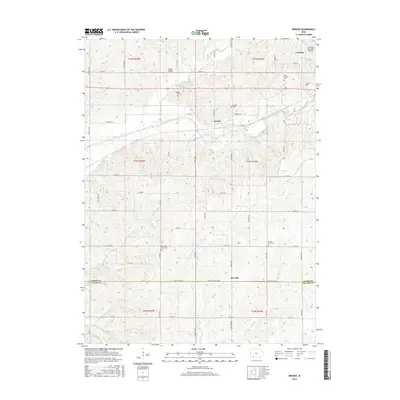 2015 Brooks2015 Print · USGSSouthwestern Iowa farm country is captured here during the mid-2010s, centered on the community of Brooks. Genealogists can trace several local burial sites including Old Brooks Cem and Prairie Rose Cem across this rural landscape.
 - 2015 Map of Corning South, 2015 Print
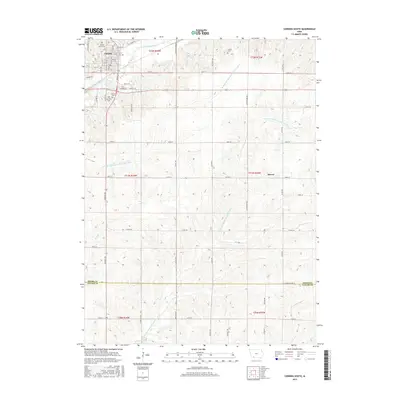 2015 Corning South2015 Print · USGSCorning and the surrounding farm country of Adams and Taylor Counties are captured here in the mid-2010s. Genealogists and local historians can locate significant burial sites like Icarian Cem and Walnut Grove Cem or trace the many branches of the One Hundred and Two River.
Showing maps 1-25 of 33
Top cities near Corning
- Lenox historical maps
- Villisca historical maps
- Prescott historical maps
- Nodaway historical maps
- Sharpsburg historical maps
- Carbon historical maps
Frequently asked questions
- What are the different types of historical maps available for Corning?
- What is the oldest map of Corning?
- Where can I purchase historical maps of Corning for my home or office?
- Where can I download high-res historical maps of Corning?
- Are there historical topographic maps available for Corning?
- Is there historical aerial imagery available for Corning?
- Where are historical maps of Corning sourced from?